
Desk Report
Oniket Desk
Overview
A recent column by Sajid Mahbub of Bangladesh Brand Forum(Published in the Daily Star, May 2026) raises a critical question for the country’s marketing and branding industry: is Bangladesh prepared to move beyond the traditional, linear model of marketing? Drawing on insights from Brand Forum dialogues, the piece argues that a fundamental paradigm shift is underway, one that demands not only strategic recalibration by brands, but also a broader institutional and policy response to ensure the transition yields equitable and sustainable outcomes.
The Non-Linear Model: What Has Changed
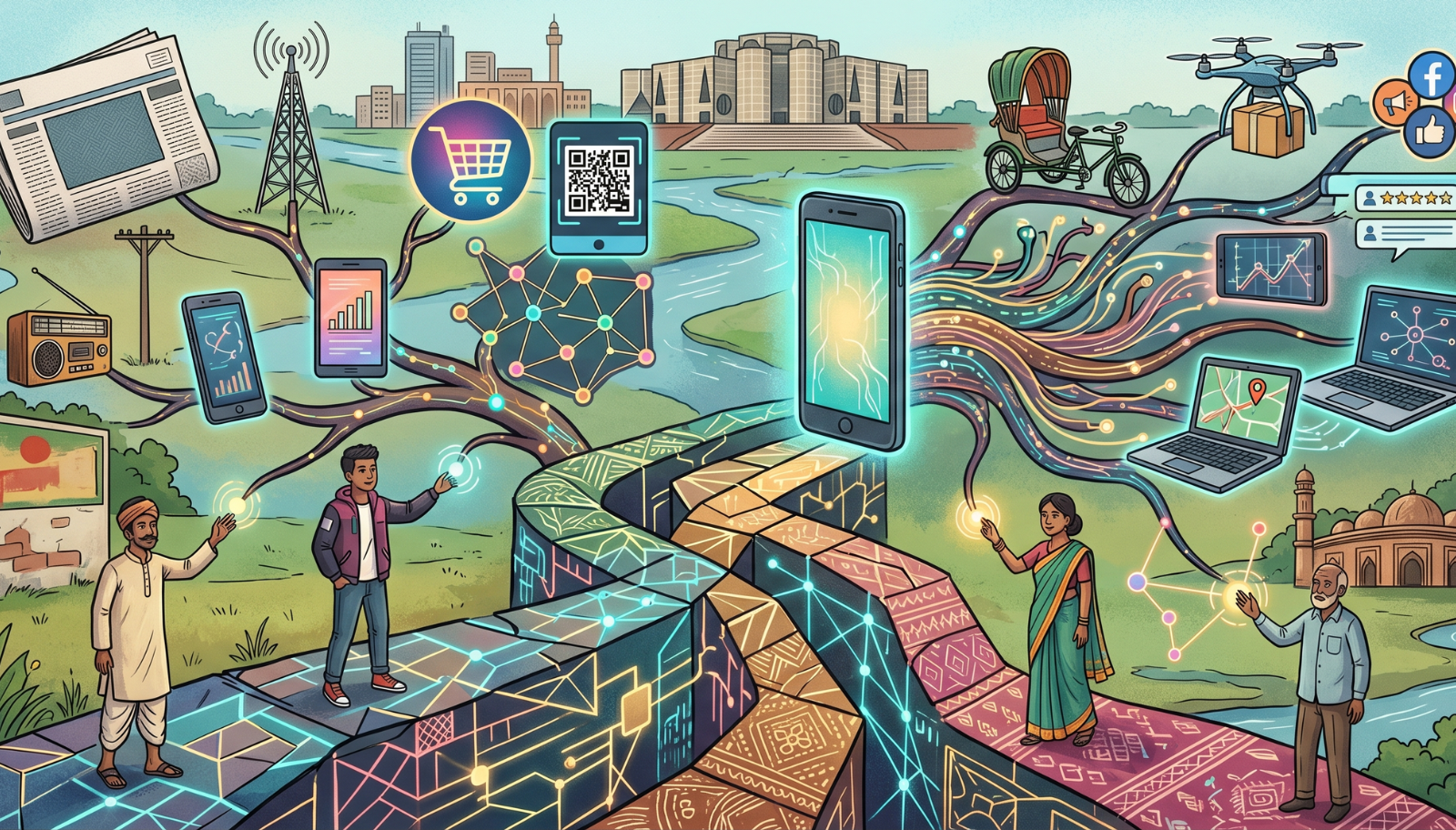
For decades, marketing operated on a straightforward linear logic design, brands create content, and audiences consume it. This model was efficient, controllable, and scalable. However, it is now structurally failing. Nearly 90% of digital content is ignored; consumers scroll past advertisements, skip videos, and actively block messaging. Trust in conventional advertising is in measurable decline.
The emerging non-linear model replaces this one-way broadcast paradigm with a dynamic loop of co-creation, real-time interaction, and AI-powered personalisation. Audiences are no longer passive recipients, they are active collaborators who engage, respond, remix, and contribute to brand narratives. Campaigns evolve continuously based on audience feedback, while artificial intelligence processes data at scale to ensure contextual relevance. The defining philosophy of this model is captured in the equation: Reach = (AI Scale × Personalisation) × (Human Authenticity × Co-Creation).
Key Challenges of the Transition
The transition to a non-linear marketing model is not straightforward, and several structural and operational challenges stand in the way:
- Authenticity erosion: Overreliance on AI-generated content risks hollowing out a brand’s human voice, producing communication that feels formulaic and disengaging rather than genuine.
- Forced participation: Co-creation, if poorly executed, can appear artificial or extractive. Audiences are perceptive, if participation feels scripted, it accelerates disengagement rather than fostering loyalty.
- Data trust deficit: The non-linear model is data-intensive by design. However, mishandling consumer data, whether through opaque practices or security failures, can critically erode the very trust the model seeks to build.
- Mindset and capacity gap: Bangladeshi marketers, many of whom are accustomed to campaign-centric, broadcast-driven strategies, face a significant learning curve. The shift requires not just new tools but a fundamentally different strategic philosophy.
- Attention scarcity: In an environment where attention is scarce and fragmented across multiple platforms, sustaining meaningful engagement over time, rather than achieving one-off viral reach, represents a persistent challenge.
Policy and Institutional Support Required
Achieving an optimal outcome from this transition requires deliberate policy and institutional action at multiple levels:
- Data governance frameworks: Clear, enforceable regulations on consumer data collection, usage, and transparency are essential. Policies must ensure that AI-driven personalisation operates within ethical boundaries and that consumers retain meaningful agency over their data.
- Industry dialogue and standard-setting: Platforms such as the Bangladesh Brand Forum must be formally recognised and supported as convening bodies that develop industry-wide standards for responsible AI use, co-creation ethics, and authenticity benchmarks.
- Talent development and digital literacy: Government and industry bodies should invest in reskilling programmes that equip marketing professionals with AI literacy, data analytics capabilities, and the strategic thinking required by the non-linear model.
- Support for SME transition: The resource demands of AI-powered, co-creative marketing risk marginalising smaller brands. Targeted support, including subsidised tools, shared platforms, and training access, is necessary to prevent a concentration of competitive advantage among large firms only.
- Trust infrastructure: Regulatory frameworks governing advertising authenticity, AI disclosure requirements, and digital platform accountability will underpin the consumer trust that the entire non-linear model depends upon.
Conclusion
The non-linear marketing model is not a distant aspiration; it is an immediate operational reality for brands in Bangladesh and globally. The brands that will define the next decade are those that build with their audiences rather than broadcasting on them. However, without coordinated policy support, robust data governance, and investment in human capacity, the transition risks being uneven, exploitative, or superficial. The opportunity is significant; the preparedness required to seize it is substantial.