
Sumaiya Hasi
Oniket Research Group
The summer in Bangladesh is like a marvellous watercolour painting by nature. With its scorching sun, dusty roads, the scent of ripe fruit, and the fiery red of the Flame of the Forest, the season is as warm as it is vibrant,
On the other hand, it is equally vibrant. From Boisakh to Joishtho, the people of this country revel in various religious, cultural and traditional festivities. Summer, therefore, is not merely a season; it is a radiant celebration of Bangladesh’s very identity.
New Year’s Dawn: A Bright Start to Bangla Heritage
The Bangla New Year arrives in the first moments of summer. Pohela Boishakh is the timeless festival of the Bangladeshi, where cultural unity becomes the defining identity, transcending religious affiliations.
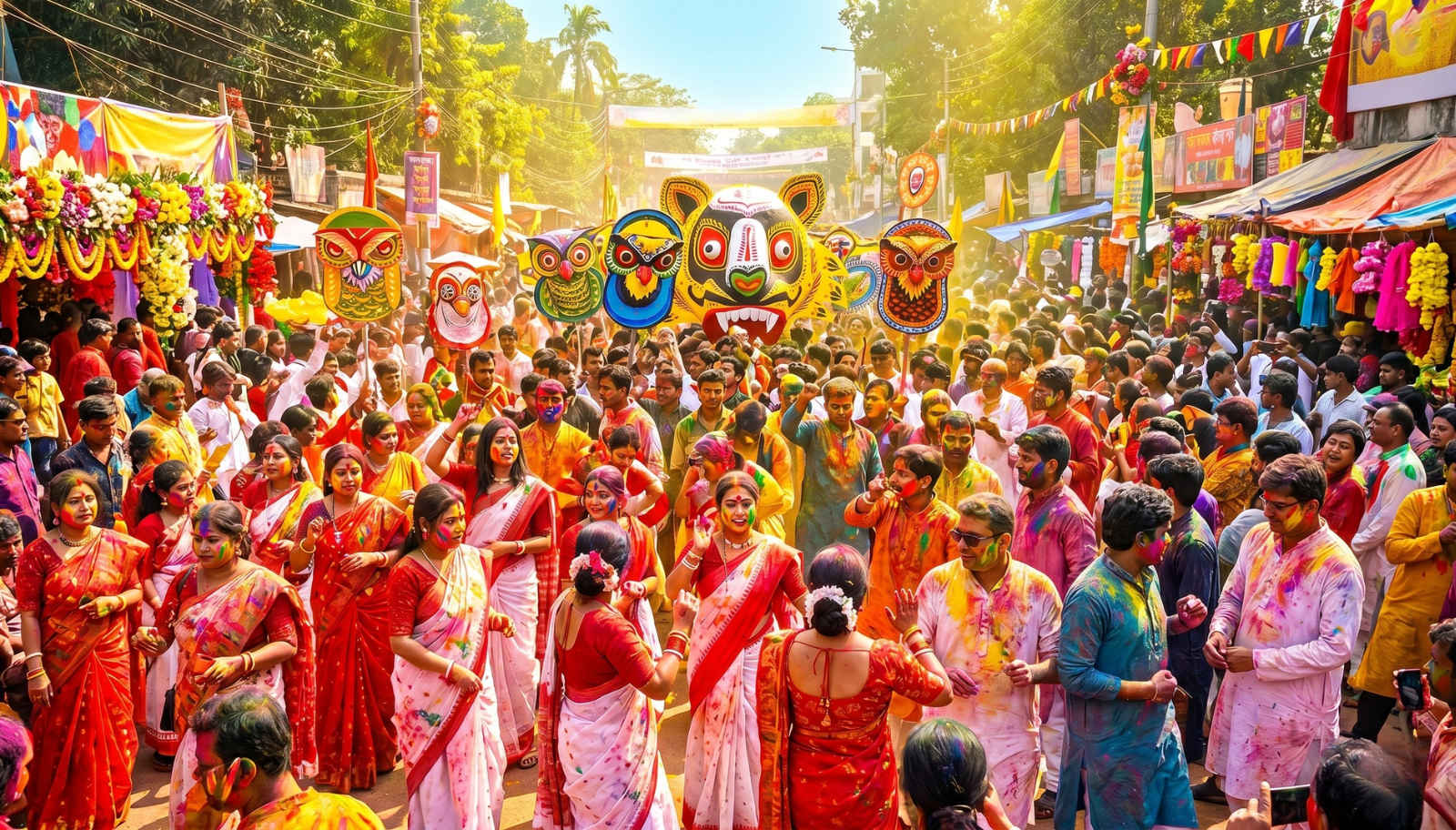
The new year’s journey begins at first light with songs, poetry, and greetings. From city to village, a stunning spectacle is created everywhere with red and white attire, masks, “alpona” (traditional floor decorations) and folk art. With the crimson shade of the “Krishnochura” flower and the shimmering colours of the “Sonali” (golden), nature itself seems to welcome the New Year.
The Joy of Eid: A Scent of Affection Amidst Warmth
This year, Eid has come on a summer’s day with a message of peace and love. At the end of the month of fasting comes Eid al-Fitr, and Eid al-Adha with its lesson of sacrifice; both festivals strengthen family and social bonds in Bangladesh, and this year, both Eids have arrived at the end of spring and in the middle of summer.
A morning prayer followed by greetings, the excitement of children, and the aroma of vermicelli and pulao in every home, all combined to make Eid a grand festival of shared joy. Flower garlands, the colour of henna, new clothes, and the presence of loved ones soften even the summer sun.
As the chariot’s wheels turn: A Journey of Faith and Harmony
Another significant summer religious festival is the Roth Jatra. The massive chariot, adorned with flowers, cloth, and lights, moves forward amidst the devotion and joy of the people.The special beauty of this festival lies in its social participation. People from different communities gather to share the joy. As the wheels of the chariot turn forward, so too do the bonds of mutual respect and compassion.
A Festival of Flowers and Fruits: Nature’s Colourful Language
In the summer of Bangladesh, nature itself seems to take on the role of an artist. The red of the Krishnochura, the purple of the Jarul, the yellow of the Sonal, and the whiteness of the Bel, all combine to make the festive atmosphere even more vibrant.
These flowers are not merely decorations; they are symbols of joy, purity, love, and hope. From religious ceremonies to social gatherings, these colourful gifts of nature are woven into the fabric of every occasion, like a silent beauty.
Summer means an abundance of mango, jackfruit, lychee, jamun and watermelon. The sweet taste of the fruits makes the festive joy more complete. From welcoming guests and family gatherings to leisurely afternoons, summer fruits become an indispensable part of the celebration.
A Bond of Diversity: The True Identity of Bangladesh
The true beauty of Bangladesh’s summer festivals lies in the warmth of its people. By participating in one another’s celebrations, exchanging greetings, and sharing in the joy, a unique social unity is forged.
Here, just as Eid semai finds its way to a neighbour’s home, the prasad from the Rath Yatra is also shared amongst everyone. This simple camaraderie is the true strength of Bangladesh.
In the bright summer sun, the palette of flowers, the rhythm of festivals, and the warmth of human kindness bring forth an extraordinary Bangladesh. This is a land where diversity does not create division but rather adds a new dimension to its beauty.
This is the Bangladesh…
Radiant in the heat of the sun,
Adorned with the colours of flowers,
Resounding with the joy of the festival,
And forever bright with the love of its people.