
Desk Report
Oniket Desk
A proper understanding of social inclusion means recognizing that treating disadvantaged communities differently is not part of the equation. The objective is to eliminate the structural barriers that prevent them from participating in society on equal terms. However, Bangladesh’s mainstream media has developed a deeply entrenched habit of conflating the two … producing coverage that is superficially sympathetic but functionally patronizing, and that inadvertently reinforces the marginalization it claims to challenge.
The ‘Inspiring Disabled Person’ Trap
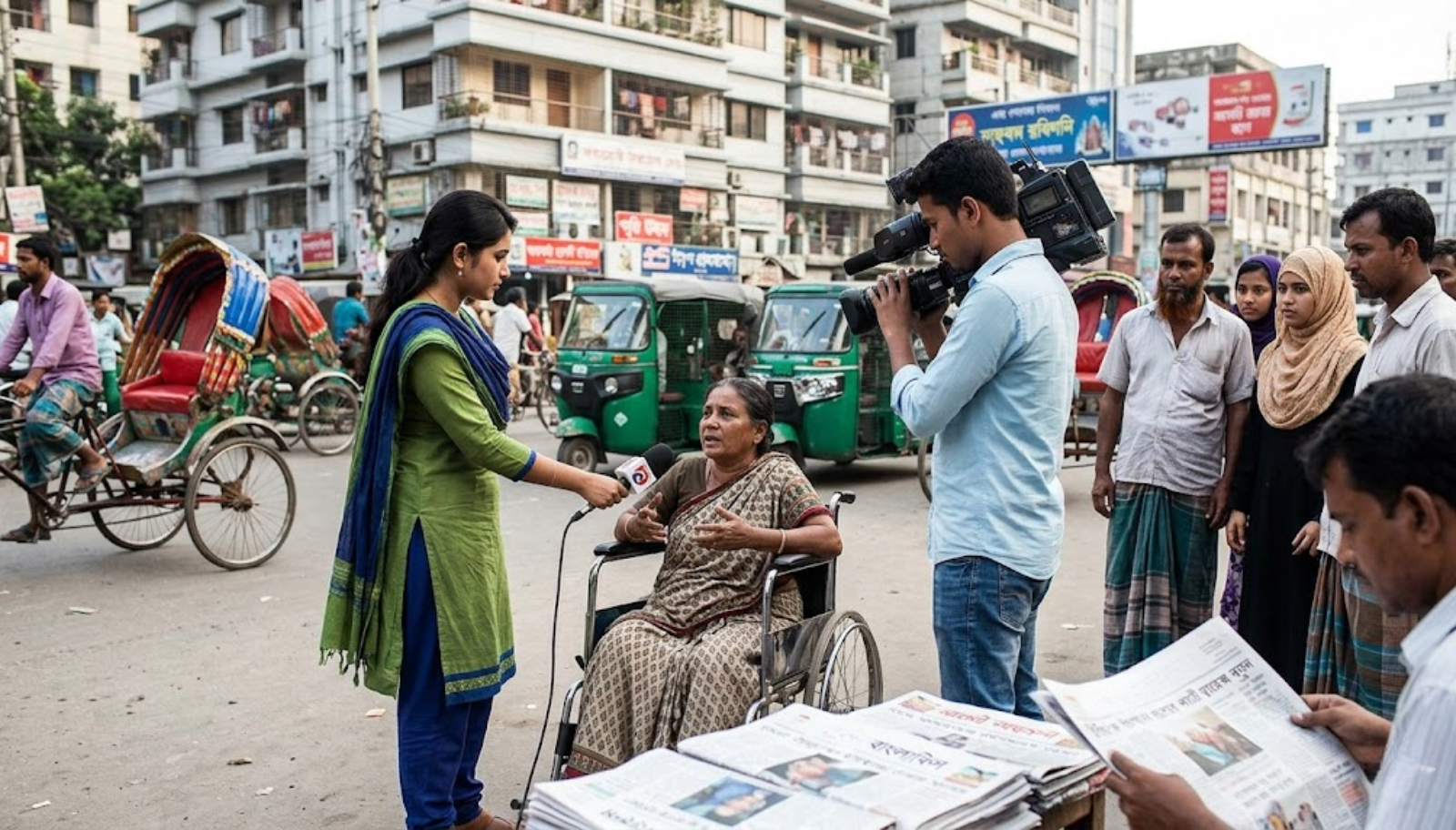
In the context of Bangladeshi media, the disability inspiration narrative is perhaps the most overused and potentially damaging template. Newspapers and television channels frequently feature stories of wheelchair users who have passed the SSC examination, blind students who have earned a university degree, and deaf artisans who have established small businesses. These achievements are often presented as exceptional examples of personal determination.
The implicit message in this framing is problematic: it suggests that the person overcame their disability, rather than that they overcame a built environment, an education system, and an employment market that was never designed to include them. The structural failure is no longer a part of the narrative. The individual’s resilience is the focal point of the composition. Readers are moved; nothing changes. Bangladeshi cities continue to be among the least accessible in the region for persons with disabilities. Media coverage that celebrates individual triumphs without examining systemic exclusion is partly responsible for this state of affairs.
Women Leaders as Curiosities, Not Professionals
Coverage of women in positions of professional authority follows a similarly distorting logic. When a woman is appointed to a senior judicial, corporate, or administrative role, the dominant news frame almost invariably leads with her gender. Headlines announce the ‘first woman’ appointed to this position or that committee, and profiles extensively cover how she ‘balances’ family and career. However, the subtext, rarely examined, is that her presence in a leadership role is newsworthy precisely because it is unexpected.
This approach does not align with principles of inclusive leadership. The media is expressing astonishment at the competence displayed. True inclusion would regard a woman’s appointment as unremarkable and worthy of coverage on the same terms as her male counterpart’s: her qualifications, her agenda, her track record. The ‘first woman’ frame, which is repeatedly employed in Bangladeshi broadcasting and print media, communicates to audiences that female leadership remains an exception, necessitating special acknowledgement. This cultural norm is precisely what inclusion policy aims to dismantle.
Indigenous Communities as Performers, Not Citizens
The media’s treatment of Bangladesh’s indigenous communities (the Chakma, Marma, Tripura, Garo, and others) reveals another dimension of this problem. The program’s content primarily focuses on festivals, traditional attire, and cultural performances, with a particular emphasis on events such as Boisabi or Wangala. The communities are presented as living museums of heritage, and their visibility in the media is almost entirely contingent on their willingness to showcase their cultural distinctiveness for a Bangali audience.
Coverage of the land rights disputes in the Chittagong Hill Tracts, the unresolved implementation of the 1997 Peace Accord, the displacement of indigenous families by state and private development projects, and the barriers indigenous students face in mainstream higher education are structurally excluded from the dominant frame. The media tends to include these communities on the condition that they remain exotic and unthreatening. However, when these individuals begin to assert legal rights or political claims, they often lose their access to favorable media coverage.
Charity as a Substitute for Rights
Perhaps the most significant distortion is the media’s systematic preference for narratives focused on charity over those centered on rights. Telethons raising funds for acid attack survivors, Ramadan food drives for street children, and corporate social responsibility features on companies donating to orphanages are all examples of initiatives that generate positive coverage and strong ratings.
In contrast, investigative reporting on the reasons why acid attack perpetrators continue to receive lenient sentences, why child labor enforcement remains structurally weak, or why social protection budgets fall far below regional benchmarks is rare. The concept of charity suggests that the beneficiary is a passive recipient of another’s generosity. Rights imply that the beneficiary is a citizen owed something by the state and by society.
The distinction is not semantic. A media culture that consistently prioritizes the charity frame over the rights frame instructs its audience and its policymakers that the appropriate response to social exclusion is compassion, not accountability.
A Different Standard of Inclusion
Bangladesh media’s inclination to highlight underprivileged communities is not malicious. However, it is important to note that good intentions alone are not sufficient to ensure the quality of the results. Authentic social inclusion coverage inquisits not “what remarkable feat has this marginalized individual accomplished despite their circumstances?” but rather “what circumstances have rendered their path unnecessarily arduous, and who is responsible for ameliorating them?” Until there is a change in perspective, media sympathy will likely continue to have a calming effect on audiences, while the underlying structures of exclusion remain in place.