Desk Report
Oniket Desk
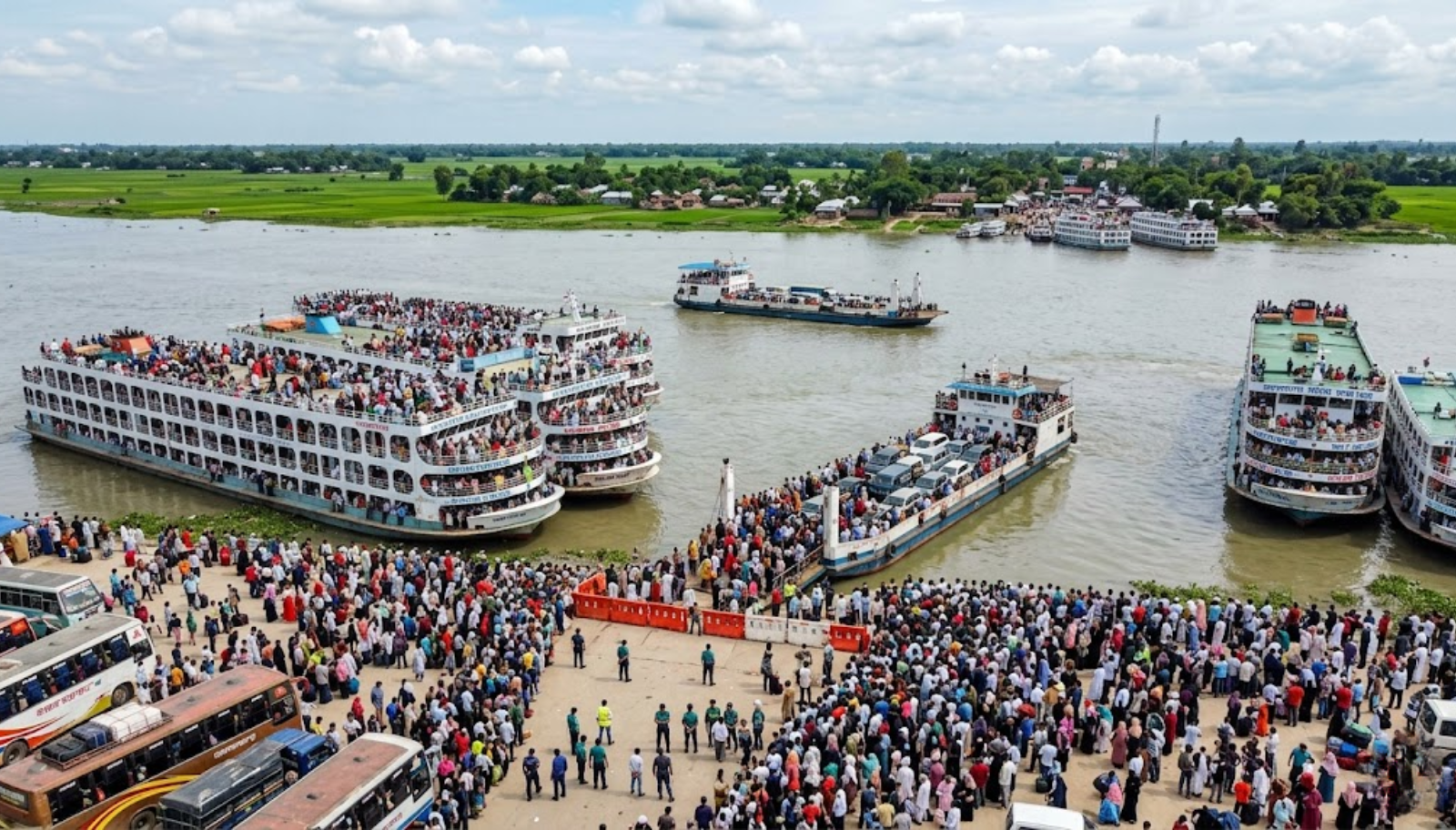
On an annual basis, Bangladesh experiences one of the largest human migrations in Asia. During the evening rush hour, tens of millions of people converge on transportation hubs, such as highways, ferries, and train stations. It is a significant social ritual and a recurring public safety concern. The combination of overloaded buses and launches, poorly maintained rural roads, overstretched emergency services, and chaotic ticketing systems results in an annual toll of accidents, delays, and preventable deaths. This situation is unacceptable and should not be celebrated.
The dangers are systemic rather than incidental. During Eid windows, transport operators frequently exceed safe capacity because the formal sector is unable to meet demand in a timely manner. When licensed buses and trains reach capacity, informal operators often enter the market, offering substandard vehicles and drivers who lack proper training. Waterways present hazards: ferries and river launch frequently carry more passengers and cargo than their maximum capacity, making capsizing a genuine and recurring risk.
In the context of road transportation, lax enforcement of vehicle fitness inspections, driver licensing criteria, and load restrictions enable the ongoing operation of unsafe vehicles. Corruption and resource constraints within regulatory agencies often result in discrepancies between the rules that are formally established and their practical implementation at the terminal or ferry ghat.
Any substantial reform initiative must address this enforcement gap with transparency, which is likely to encounter resistance. Operators with established informal arrangements have little incentive to comply, and legal challenges to new penalty regimes or fast-track prosecutions are predictable, particularly where licensing frameworks are inconsistent or where procedural rights for operators have not been clearly codified in transport legislation.
It is both possible and urgent to implement reforms. A national Eid mobility plan, coordinated across the ministries responsible for road and water transport, would allow authorities to anticipate demand using historical data and commission vetted additional services in advance. This would prevent authorities from having to react to chaos after it erupts. The modernization of ticketing through the implementation of mandatory e-ticketing and real-time capacity dashboards would contribute to a significant reduction in the desperation that leads travelers to resort to unlicensed alternatives.
Strategically positioning ambulances, trauma teams, and rescue vessels at high-risk locations prior to the surge in traffic during the holiday season could significantly reduce the number of fatalities in the event of accidents. It is recommended that informal operators be incorporated into simplified, time-limited licensing pathways. This approach would expand safe capacity while gradually reducing the unregulated fringe.
Bangladesh’s institutional capabilities extend to all the aforementioned areas. The political determination to prioritize Eid travel as a matter of national safety, supported by targeted investment and rigorously enforced standards, has been lacking. The homecoming tradition merits better than the losses it currently demands.