
Farah Zahir
Editor, Oniket Research Group
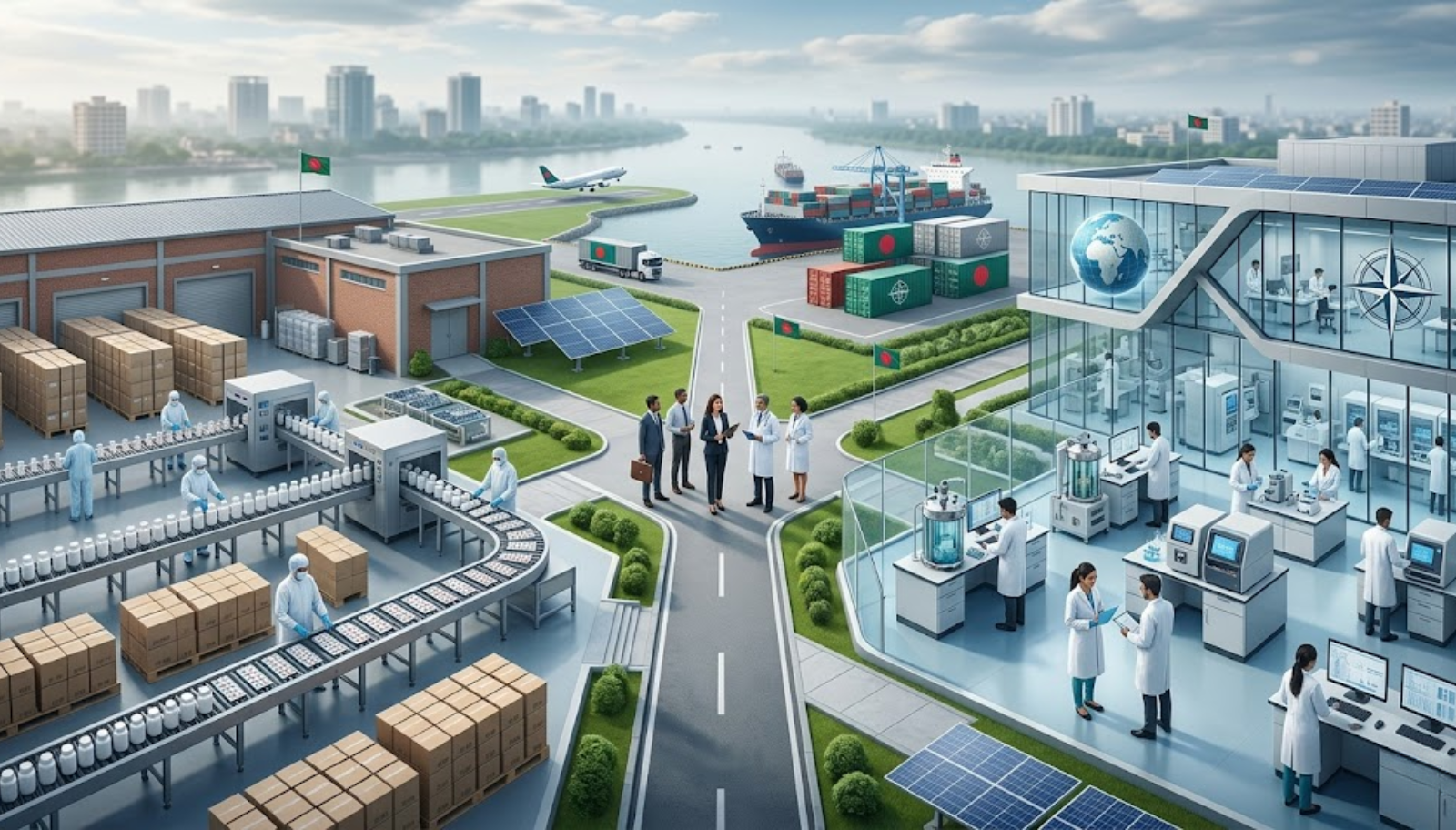
Bangladesh’s pharmaceutical industry has travelled an extraordinary path, evolving from a modest domestic supplier into a regional powerhouse that delivers affordable generics to millions at home and across the developing world. Yet as the country moves deeper into the 2020s, the sector finds itself at a decisive inflection point.
Rising domestic healthcare demand, regulatory maturation, export ambitions, and rapid technological disruption are reshaping the landscape, and the policy choices made now will determine whether Bangladesh becomes a global biopharmaceutical hub or remains anchored to low margin generic production. Beyond economic considerations, the sector occupies a central position in the country’s ability to achieve Sustainable Development Goal 3, which seeks to ensure healthy lives and promote well-being for all at all ages. Access to safe, effective, and affordable medicines remains one of the most important foundations of any modern healthcare system, making the future of the pharmaceutical industry inseparable from the future of public health in Bangladesh.
The market fundamentals are compelling. Demographic growth and rising incomes are swelling domestic demand for medicines, while public health priorities such as universal health coverage, non-communicable disease management, and pandemic preparedness demand broader and higher quality pharmacotherapy. Bangladesh’s large pool of cost competitive manufacturers and improving regulatory framework position it well to scale. Export potential is significant, and with compliance upgrades such as WHO GMP certification and regulatory harmonization, the country can access more lucrative regulated markets. Biologics and biosimilars represent a high growth frontier where early investment in biotech capabilities could capture premium value.
Yet an important policy gap remains. While the industry’s growth is often measured in export earnings and production capacity, far less attention is paid to how that growth translates into equitable access to medicines for vulnerable populations. Achieving SDG 3 requires not only a successful pharmaceutical industry but also one that contributes directly to reducing health inequalities, expanding treatment access, and improving outcomes for patients in both urban and rural communities.
However, several structural constraints threaten to blunt this trajectory. Heavy dependence on imported active pharmaceutical ingredients, primarily from India and China, exposes firms to supply chain shocks and input price volatility. Limited research and development capacity, weak industry academic linkages, and low domestic investment in innovation keep the sector concentrated on formulation rather than novel therapeutics. Many manufacturers still fall short of good international manufacturing practice standards required for high value markets. Pricing controls and procurement policies designed to protect affordability can squeeze margins, discouraging the very quality upgrades the industry needs, while regulatory and pharmacovigilance systems, though improving, require further professionalization to earn global trust.
These challenges are not merely industrial concerns. They carry direct consequences for public health security. Supply disruptions, inconsistent quality standards, and insufficient pharmacovigilance can undermine patient confidence and restrict access to essential medicines. A resilient pharmaceutical sector is therefore not only an economic asset but also a critical pillar of national health preparedness, particularly in the face of future pandemics, emerging diseases, and the growing burden of chronic illnesses.
Navigating these challenges calls for a coordinated package of reforms. Securing upstream production through targeted incentives such as tax holidays, subsidized credit, and public private partnerships can catalyze local API and excipient manufacturing, reduce import dependence, and build resilience. Upgrading manufacturing quality and regulatory compliance demands phased grant and loan programs for GMP improvements, alongside bolstering the Directorate General of Drug Administration with resources, inspector training, and digital inspection tools to accelerate certifications and strengthen international credibility.
From the perspective of SDG 3, stronger regulation and higher manufacturing standards are essential because medicine accessibility without assured quality can never deliver meaningful health outcomes. Patients must have confidence that the medicines they receive are safe, effective, and manufactured according to internationally accepted standards. Regulatory excellence should therefore be viewed not as a compliance burden but as a public health investment.
Innovation and the transition to biotech must be actively fostered. Translational research funds, industry university incubators, R&D tax credits, and matching grants for biosimilars and novel delivery systems can shift the sector up the value chain, while licensing partnerships with global firms can accelerate technology transfer. On the trade front, negotiating mutual recognition agreements, participating in regional regulatory harmonization, and providing export promotion services and credit guarantees for SMEs will open new markets and reduce non-tariff barriers.
At the same time, innovation policy should be guided by national health priorities. Bangladesh faces a rising prevalence of diabetes, cardiovascular disease, cancer, and other non-communicable diseases that require long term access to affordable treatment. Greater investment in research and biotechnology should therefore support not only export competitiveness but also the development of therapies that address the country’s most pressing health challenges. This alignment between innovation and public health is fundamental to advancing SDG 3.
Reforming public procurement to include quality weighted scoring rather than price alone, alongside transparent pricing policies that balance affordability with sustainable margins, will incentivize investment in capacity and innovation. Investing in pharmaceutical education, regulatory science, and bioprocessing skills while strengthening governance and anti-corruption measures will build both human capital and investor confidence. Finally, promoting cleaner production through incentives for energy efficient plants, solvent recovery, and waste treatment will ensure Bangladeshi manufacturers meet tightening global environmental standards.
There is also a growing recognition globally that health and environmental sustainability are deeply interconnected. Pharmaceutical manufacturing practices that reduce pollution and improve resource efficiency contribute not only to environmental goals but also to healthier communities. Cleaner production systems can help protect water sources, reduce exposure to harmful waste, and support the broader well-being objectives embodied in SDG 3.
Bangladesh possesses the essential ingredients to advance from a regional generics supplier to an innovation driven, export oriented pharmaceutical sector. With coordinated public and private action, the country can translate its cost advantages into sustainable competitiveness, improve domestic health outcomes, and capture far greater value in the global pharmaceutical chain.
The ultimate measure of success, however, should not be export revenues alone. It should also be the extent to which the pharmaceutical sector strengthens the health and well-being of the Bangladeshi people. If industrial expansion, scientific innovation, regulatory excellence, and equitable access to medicines can advance together, Bangladesh will not only build a globally respected pharmaceutical industry but also make meaningful progress toward achieving Sustainable Development Goal 3 and securing a healthier future for all.