
Farah Zahir
Editor, Oniket Research Group
The purpose of this article is to examine how the growing prevalence of online illicit relationships in Bangladesh affects mental health, family stability, social harmony, and individual dignity, while exploring practical ways to promote personal responsibility, ethical digital behaviour, and community well-being.
In summary, the article finds that these relationships are not driven by a single cause but by a combination of emotional attraction, loneliness, psychological distress, and the ease of anonymous online communication. Their effects reach beyond the individuals involved, touching spouses, children, families, workplaces, and communities. Consequences include emotional distress, declining family trust, cyber exploitation such as fraud and blackmail, and broader concerns about social cohesion.
As a suggestion, the article argues that meaningful reform should not simply restrict personal freedom but should instead strengthen mental health support, family communication, digital literacy, and respect for the dignity of all members of society, especially women who often bear a disproportionate social cost.
The Changing Digital Landscape
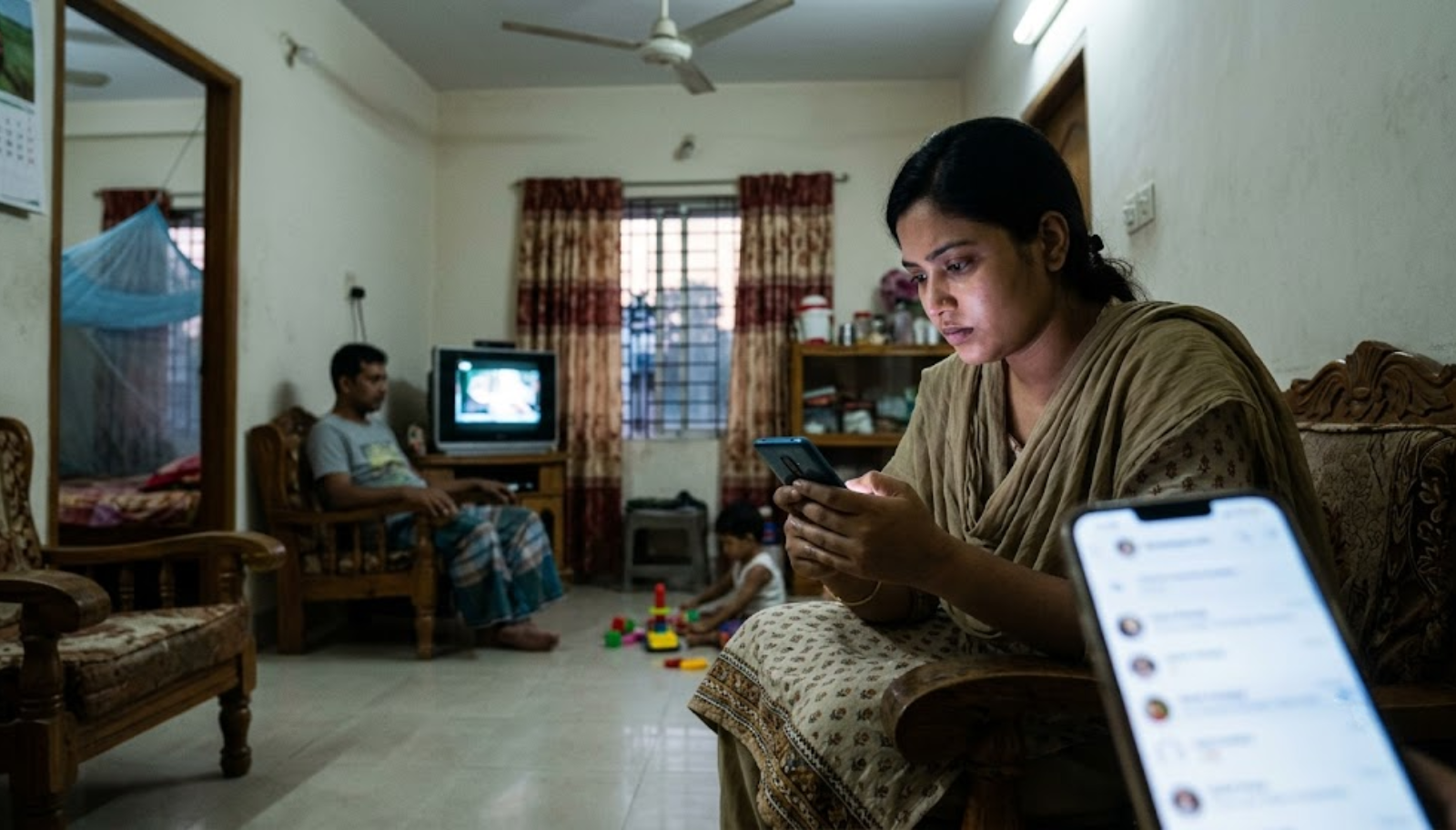
Widespread smartphone access, affordable internet, and social platforms have transformed how relationships form, extending communication far beyond traditional social and geographic boundaries. While this shift has brought real benefits, it has also enabled relationships that develop with little social accountability. Emotional intimacy can build quickly through continuous online contact, often unknown to spouses or family, since digital privacy makes secrecy easier than it would be in traditional settings.
Why People Turn to These Relationships: The Psychological Roots
At the heart of this phenomenon lies a quiet emotional struggle that rarely gets acknowledged. People do not usually enter illicit online relationships out of simple attraction; they often enter them carrying loneliness, marital dissatisfaction, emotional neglect, low self-esteem, or a sense of invisibility within their own lives. For many, an online conversation becomes the first place in years where they feel truly heard, and that feeling of being noticed can be more powerful than any physical attraction.
The anonymity of a screen lowers inhibition and removes the fear of judgement that usually keeps people cautious, allowing emotional walls to fall faster than they ever would face to face. Curiosity, the search for validation, and a longing for excitement missing from daily life all play a part, but underneath these motives is usually an unmet emotional need seeking somewhere, anywhere, to be filled. Recognising these undercurrent psychological matters because punishing behaviour without addressing the loneliness or distress behind it rarely changes anything in the long run.
Consequences of Mental Health
Maintaining secret relationships often produces persistent anxiety, guilt, fear of discovery, and emotional instability, as individuals struggle to manage conflicting commitments while hiding their activities from family. When such relationships are exposed, the psychological toll can intensify sharply. Marital conflict, separation, and social embarrassment frequently contribute to depression, anxiety, sleep disturbance, and reduced emotional resilience, while children in conflict-ridden households may face insecurity, behavioural problems, and declining academic performance. In more severe cases, exposure, rejection, financial exploitation, or public humiliation has been linked to self-harm and other serious mental health crises.
Family Stability and Social Harmony
Trust, mutual respect, and commitment remain the foundation of family life in Bangladesh. Illicit online relationships often erode this foundation by introducing suspicion, deception, and emotional distance between spouses, with conflict frequently spreading through the extended family. As these patterns become more common across communities, they gradually weaken shared social values and interpersonal trust, ultimately affecting broader social harmony.
Cyber Risks and Exploitation
The rise of online intimate relationships has also widened opportunities for cyber-enabled crime, including identity theft, financial fraud, honey traps, extortion, blackmail, and the non-consensual sharing of private images or messages. Fear of social exposure often discourages victims from reporting these crimes, allowing perpetrators to continue unchecked. These risks show that the issue extends well beyond morality into cyber security and public safety.
Human Dignity and Social Respect
When private relationships become public, individuals often face humiliation, damaged reputations, and lasting psychological harm. Women tend to bear a disproportionate share of this cost due to persistent gender bias, facing harsher public criticism, victim-blaming, and online harassment than men in comparable situations. Addressing this imbalance requires promoting equal standards of accountability and respect for both women and men, while firmly rejecting harmful stereotypes.
Freedom of Choice and Social Responsibility
Individual freedom is an important social value, but it exists alongside responsibility toward partners, families, and communities. Choices that significantly harm the emotional well-being or rights of others inevitably become matters of broader social concern. Constructive reform should therefore not aim to control private lives unnecessarily, but instead encourage informed decision-making, ethical behaviour, and respect for the dignity of others.
Pathways for Positive Change
Lasting change requires long-term social investment rather than short-term punitive responses. Mental health services should become more accessible so people facing loneliness, depression, or marital stress can receive timely support. Schools should strengthen digital citizenship education covering responsible online behaviour and emotional intelligence, while families benefit from relationship education promoting communication and empathy. Community organisations, religious institutions, and cultural leaders can contribute through compassion and dialogue rather than stigma alone. At the policy level, stronger cybercrime prevention, accessible counselling, public awareness campaigns, and cooperation among government, educational institutions, civil society, and technology companies can build safer digital environments while protecting individual rights.
Conclusion
Online illicit relationships represent a complex social challenge shaped by technological change, emotional vulnerability, and shifting patterns of interaction. Their effects extend beyond individual choices, touching mental health, family relationships, cyber security, social trust, and personal dignity. Bangladesh’s response should focus not only on reducing harmful behaviour but on strengthening the conditions that support healthy relationships, resilient families, ethical digital citizenship, and psychologically healthy communities, balancing personal freedom with personal responsibility.




Comments on “Online Illicit Relationships in Bangladesh: Implications for Mental Health, Social Harmony, and Human Dignity”