
Ruksana Akhter
Freelance Architect
Bangladesh’s poultry industry is often described as a pillar of national food security. Roughly eight million people depend on it directly or indirectly, nearly one million entrepreneurs run poultry-based livelihoods, and the sector produces close to 23 billion eggs and 1.46 million tonnes of meat every year (TOB, 2026).
On paper, this scale looks like genuine progress toward Sustainable Development Goal 2, Zero Hunger, which calls for reliable access to safe, nutritious and affordable food for all. Yet when the sector’s actual operating standards are placed next to the broader ambitions embedded in the UNSDG framework, particularly around sustainable production, decent work, climate resilience and responsible consumption, the distance still to travel becomes clear. This article builds on a recent article in the same bulletin, and extends the analysis towards a comparative analysis of benchmarks.
Food Security: Volume Without Full Assurance
SDG 2 is not only about producing enough food. It asks for year-round access and nutritional adequacy for everyone, including the most vulnerable. Bangladesh’s poultry output has grown at nearly 15 percent annually, which suggests the volume target is within reach. But production costs have at times overtaken market prices, with broiler costs reaching about BDT 160 per kilogram against sale prices of roughly BDT 130.
When farmers absorb losses at this scale, supply becomes unstable, and affordability for consumers cannot be guaranteed either. A food system aligned with SDG 2 needs price stability and farmer viability built in, not treated as an afterthought. Bangladesh’s current model, still heavily reliant on imported maize and soybean meal, remains exposed to global price shocks in a way that a food secure system, by SDG definition, should not be.
Livestock Sustainability: Climate and Biosecurity Gaps
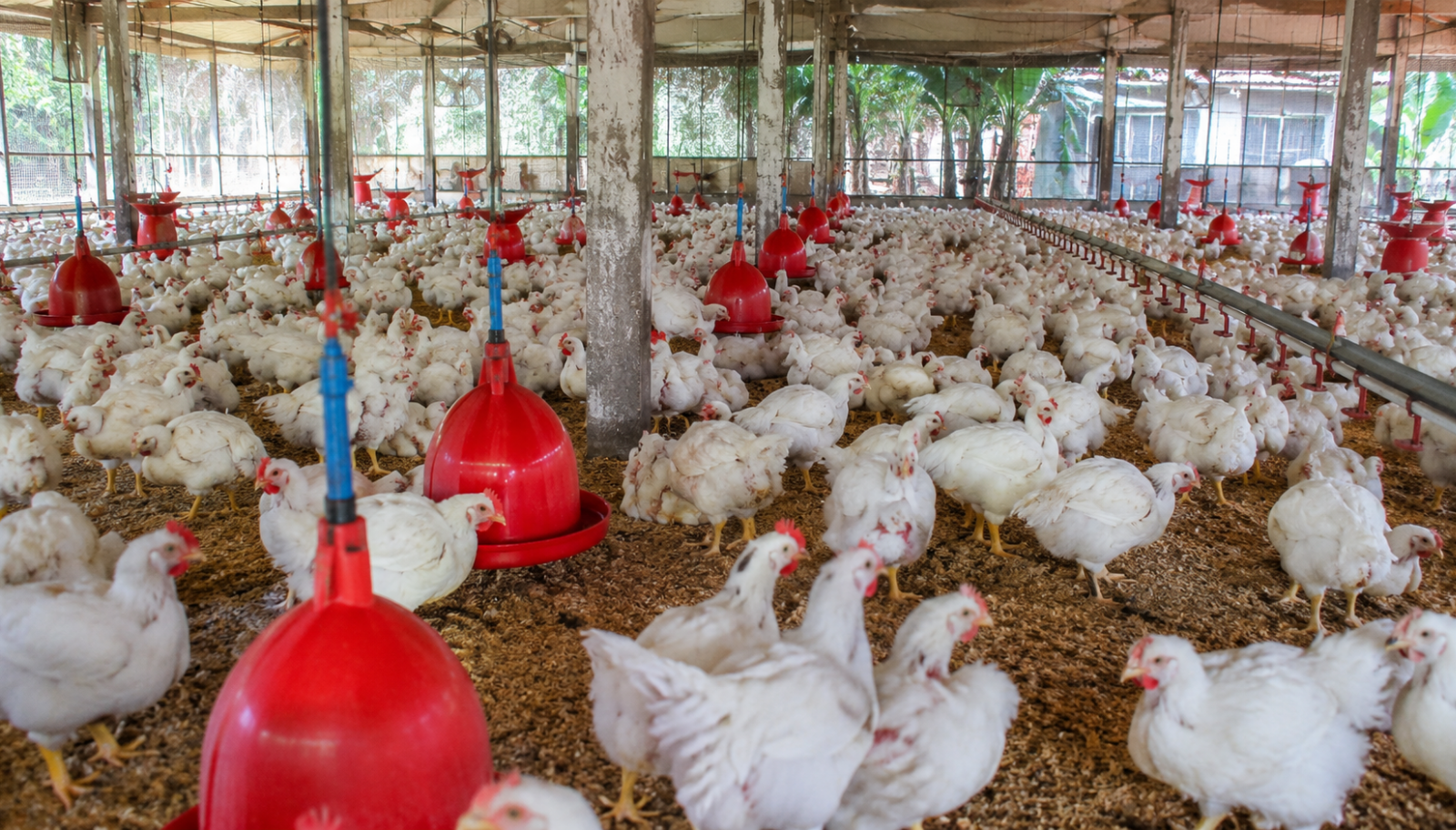
SDG 13, Climate Action, and SDG 15, Life on Land, both expect livestock systems to withstand and adapt to environmental stress while minimizing ecological harm. Bangladesh’s poultry sector is currently more exposed than resilient. Recent heatwaves pushed broiler mortality to nearly 10 percent and layer mortality to about 5 percent, with egg production falling between 15 and 30 percent during extreme heat. Losses from the April and May 2025 heatwaves alone were estimated at US$25 million.
Since about 80 percent of production comes from small-scale farmers who often lack climate-controlled housing or dependable electricity, the sector’s climate adaptation capacity sits well below what SDG aligned livestock systems would require. On the environmental side, waste management, water pollution control and greenhouse gas reduction remain areas needing investment rather than established practice, meaning the sector is not yet meeting the environmental stewardship implied by responsible production goals.
Disease control also illustrates the gap. SDG 3, Good Health and Well Being, links animal health directly to human health through concerns like antimicrobial resistance. Weak biosecurity on many small farms and largely unregulated antibiotic use in Bangladesh point to a regulatory system still catching up to the surveillance and control standards that global health linked SDG targets assume.
Agribusiness and Decent Work: An Uneven Value Chain
SDG 8, Decent Work and Economic Growth, and SDG 12, Responsible Consumption and Production, both call for fair value distribution and transparent markets. Bangladesh’s poultry supply chain still runs through multiple intermediaries, limited price transparency and thin farmer protections. Contract farming and livestock insurance exist as proposed remedies rather than functioning norms, and affordable credit access remains limited for many small producers. This is a meaningful gap from the SDG expectation that agricultural value chains distribute risk and reward equitably.
There is a genuine opportunity, however, in export-oriented value addition. Global demand for halal certified poultry products is rising, and Bangladesh could align more closely with SDG 8 and SDG 12 by building internationally recognized processing standards, traceability systems and value-added product lines such as nuggets and ready to cook items.
Closing the Distance
Bangladesh’s poultry industry has the scale and momentum to matter for national and even regional food security. What it currently lacks, measured against UN SDG standards, is the resilience, transparency and environmental discipline that turn volume into genuine sustainability. Investment in local feed production, climate adapted infrastructure, stronger biosecurity regulation, fair pricing mechanisms and digital traceability would move the sector meaningfully closer to the benchmarks the SDGs set. Until then, Bangladesh’s poultry success remains a story of impressive growth running ahead of sustainable structure.
Reference: