
Farah Zahir
Managing Editor, The Oniket Bulletin
A recent piece in The Oniket Bulletin by Rimsha Seethe, titled “Building Readers, Not Just Test Takers,” makes a case that deserves wider attention: Bangladesh has the community organizations, the political will and increasingly the digital tools needed to build a reading culture, yet lacks the deliberate policy architecture to connect them into a funded, nationwide programme. That gap is nowhere more visible than in the ambition to create accessible online libraries across all 64 districts of the country.
Infrastructure Is the Precondition, Not an Afterthought
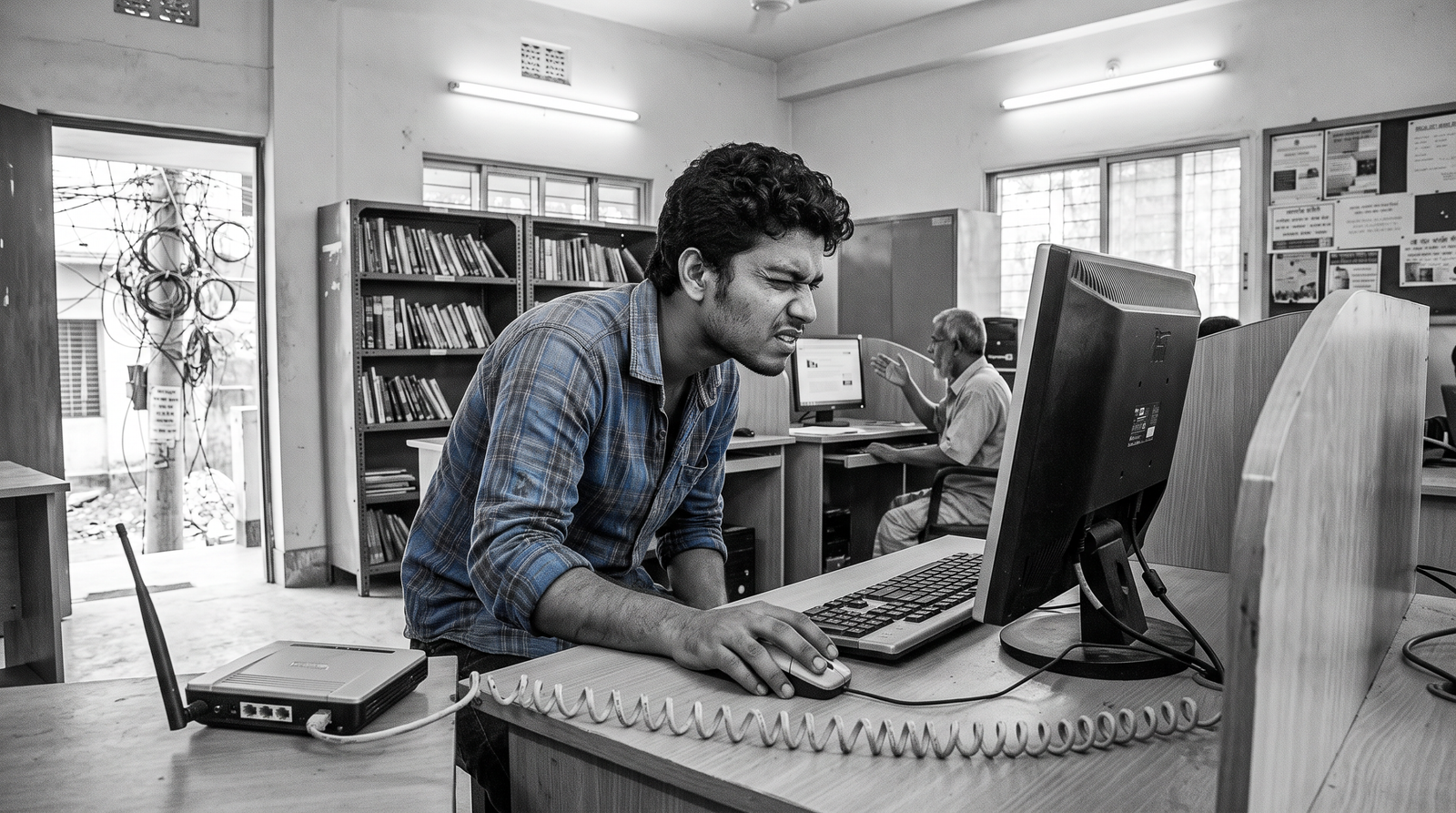
Smartphones, reliable internet, and functioning Wi-Fi aren’t secondary to digital reading, they’re what makes it possible in the first place. Seethe’s article highlights that assessments of school and college libraries across Bangladesh have repeatedly found weak physical infrastructure, insufficient reading spaces, outdated collections, and understaffed or undertrained personnel, with internet-connected computers largely missing as a standard offering. Without that basic level of connectivity, an online library amounts to little more than a website no one in the classroom can access.
Training matters just as much. The article points out that in rural Bangladesh, students mostly turn to whatever devices they have access to for entertainment and social media rather than academic reading, with very little use of structured educational apps. That finding sits at the heart of the issue: handing out tablets or expanding network coverage won’t, on its own, create readers. Teachers need clear guidance on weaving digital collections into actual lesson time, and students need to learn that a screen can function as a library, not just a feed.
Accessibility Gaps for Students with Disabilities
A further consideration in extending this equity argument is accessibility for children with disabilities. None of the recommendations mention screen readers, audio books, large print options, or sign language video content, even though visually impaired, hearing impaired, or otherwise disabled students face compounding barriers when a library moves online without inclusive design. Without deliberate attention to assistive formats, a national digital library could unintentionally exclude the very students who stand to benefit most from remote, flexible access to reading material.
This oversight connects directly to SDG 4, Quality Education, specifically Target 4.5, which calls for eliminating gender disparities and ensuring equal access to education for vulnerable groups, including people with disabilities. It also touches SDG 10, Reduced Inequalities, since infrastructure planning that ignores disability access risks reproducing exclusion under the banner of digital progress rather than resolving it.
Divisional Disparity as a Structural Constraint
Bangladesh’s eight divisions don’t stand on equal ground when it comes to either technical literacy or physical connectivity. Urban hubs like Dhaka and Chattogram benefit from relatively dense broadband coverage and greater digital fluency among teachers, while divisions with more scattered rural populations, such as Rangpur, Barishal, and parts of Sylhet, continue to struggle with spotty network access and lower baseline comfort with digital tools among staff and students alike.
This regional imbalance means a nationwide rollout of online libraries risks deepening existing inequality instead of closing it: districts that already have working libraries and trained teachers would take to the platform quickly, while the underserved districts the initiative is supposed to help fall even further behind. Seethe’s article treats this as a systemic policy problem rather than a case of isolated pilot failures, arguing that fragmented digital reading platforms have so far failed to reach the very rural and underserved schools where the need is most acute.
Private Initiative Without Public Recognition
Into this vacuum, private ventures have stepped forward. Platforms such as shobdomukur.com, which offer Bangla and English language digital reading, represent precisely the kind of grassroots innovation the article credits community organizations with supplying elsewhere in the reading ecosystem, through affordable book access and mobile outreach. Yet such platforms largely operate without meaningful state partnership, procurement support or integration into the national curriculum. The article’s broader argument, that Bangladesh already possesses much of the digital infrastructure and civic energy needed but lacks the policy scaffolding to connect it, applies directly here. A ministry willing to recognise and formally adopt proven private platforms, rather than commissioning a slower, costlier government alternative from scratch, could accelerate national coverage considerably.
Policy Steps Toward Accessible E Learning
Building on Seethe’s recommendations, three concrete steps stand out. First, a minimum digital readiness standard, one that covers device access, connectivity, and at least one trained staff member per school, should be tied directly to funding eligibility rather than left up to individual schools to pursue on their own. Second, curriculum time should formally incorporate use of a national or partnered digital library platform, available in both Bangla and English, through graded assignments rather than treating it as optional extra credit.
Third, the government should set up a transparent process to evaluate and officially endorse existing private platforms such as shobdomukur.com, directing subsidized licensing or bandwidth support specifically toward schools in lagging divisions, so that the current regional gap in infrastructure doesn’t harden into a permanent gap in access to reading.
Conclusion
The evidence assembled in Seethe’s article is clear: awareness of the reading gap exists at the highest level of government, but awareness has not yet translated into funded, systemwide action. Extending that same diagnosis to online libraries suggests the tools required, smartphones, connectivity, trained teachers and even readymade private platforms, already exist in fragments across Bangladesh. What is missing is the policy discipline to knit them into one coherent, equitably distributed national programme covering all 64 districts.
Reference
Seethe, R. (2026). Building Readers, Not Just Test Takers: The Case for Library Development in Bangladesh’s Schools. The Oniket Bulletin. https://bulletin.oniket.org/education/building-readers-not-just-test-takers-the-case-for-library-development-in-bangladeshs-schools/editor/