
Rehan Hossain
Health Economics, University of Dhaka
As Bangladesh faces the damaging effects of climate change and growing environmental risks, the government’s initiative to plant 250 million trees over five years is a timely and commendable step. However, planting a vast number of saplings alone cannot solve the country’s environmental challenges.
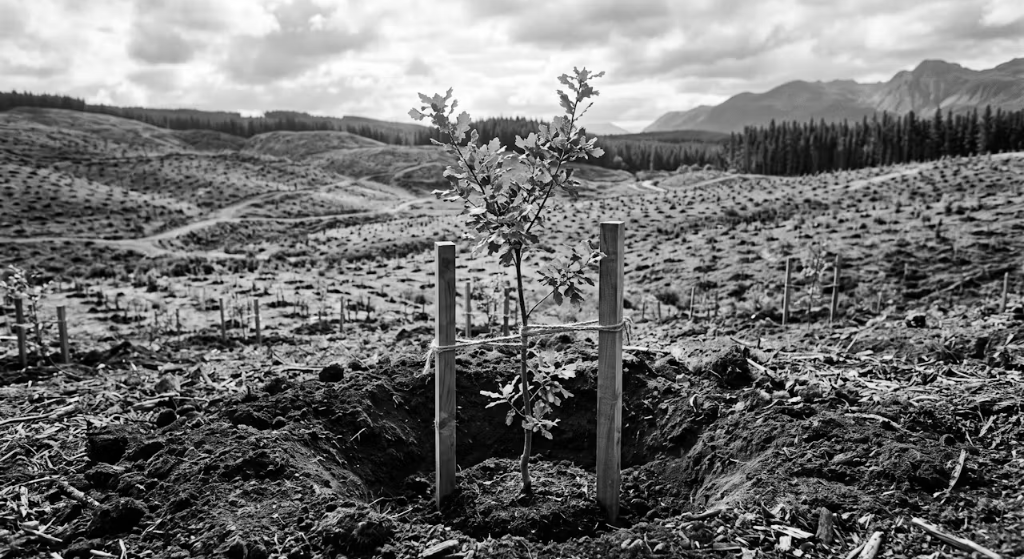
The real test lies in keeping those saplings alive long enough to grow into mature trees. Ultimately, success should not be measured by how many saplings are put into the ground, but by how many survive and help maintain ecological balance and biodiversity.
Early Progress and Structural Weaknesses
The programme has gathered momentum from the outset, with a substantial share of its initial target included in planting plans. The education sector is expected to play a major role. Under the “One Tree, One Child” concept, millions of students, teachers and parents are being brought into the initiative, with plans to plant more than half of the overall target through their participation.
This is an impressive model of public engagement, but it also carries practical risks. If inexperienced children and members of the public are expected to take primary responsibility for planting and caring for saplings without adequate guidance from forestry officials or specialists, many may die because of poor planting methods or insufficient aftercare.
Research from Asia and other parts of the world suggests that inadequate care can result in the loss of around 20 per cent of newly planted saplings in the first year, with cumulative losses exceeding 40 per cent within five years. Without proper supervision, the initial enthusiasm and impressive planting figures could amount to little more than numbers on paper.
Three Pillars of Sustainable Afforestation
A sapling’s survival and healthy growth depend largely on three factors: choosing the right species, selecting a suitable location and providing consistent care.
Choosing the right species: In the past, fast-growing non-native species such as eucalyptus and acacia were widely planted. Their use has raised concerns about soil nutrients, groundwater consumption and damage to native biodiversity. Since 2025, the government has moved to prohibit these species and prioritise native fruit-bearing, timber and medicinal trees. This policy must go beyond formal declarations and be backed by effective enforcement.
Selecting the right location: Poor site selection can waste substantial public funds. Trees suited to moist conditions will struggle in drought-prone or hilly areas. Coastal regions need salt-tolerant mangrove species, urban areas need shade-giving roadside trees, and rural homesteads can benefit from fruit-bearing varieties. When trees provide food or support local livelihoods, residents have a stronger incentive to protect them.
Providing continuous care: Saplings need protection from grazing animals, regular watering, appropriate fertilisation and weed control. Some losses are inevitable, so project budgets should include funding to replace at least 20 per cent of planted saplings. Without a clear plan for maintenance and replacement, the survival rate will remain uncertain.
Transparent Monitoring and Sustainable Funding
The programme needs a modern, transparent monitoring system. Tree-monitoring applications and satellite technology could help establish a reliable, publicly accessible database showing how many saplings survive in nurseries and after one, two and three years. The same tree must not be counted repeatedly by different agencies. environmental organisations, researchers and universities could serve as independent monitors to improve the accuracy and credibility of the data.
Funding arrangements also need to change. Budgets should cover not only the purchase and planting of saplings but also their monitoring and care for at least three years. Every planting project should identify the person responsible for maintenance and set aside a specific budget for that work.
Community Forestry and Local Solutions
Nepal and other countries offer useful lessons through their community forestry models. Local people are given a role in managing forests and a defined share of the benefits derived from forest resources. This gives communities a direct interest in protecting the trees. Bangladesh could adopt a similar approach by involving mosques, schools, clubs and local community organisations as partners and beneficiaries. With a clear stake in the outcome, residents may be better placed to monitor saplings regularly than officials working across large areas.
Practical guidance should also be made widely available. Short booklets written in clear, accessible Bangla could be distributed through union parishads and educational institutions, explaining which species suit different soils and how to care for them.
Integrating Environmental Policy with Public Responsibility
The 250 million tree initiative must form part of a broader environmental strategy. Cutting down centuries-old trees while planting a few small saplings in their place is no substitute for conservation. Protecting mature trees, preserving the ecosystems of rivers and haors, and accurately measuring carbon absorption would strengthen the initiative and could help connect it with international climate finance.
Citizens and businesses also have a responsibility to contribute. Individuals can plant native species on their own premises and commit to caring for them for at least three years. Companies should use their corporate social responsibility (CSR) budgets to support long-term maintenance rather than treating tree planting as a publicity exercise. Schools could appoint each student as the caretaker of a designated tree, helping build a lasting sense of environmental responsibility.
Conclusion
The true value of the 250 million tree initiative cannot be judged by the ceremonies held today. Its real results will become clear in 2031, when the central question will be how many of those trees are thriving and how much they contribute to the environment and people’s livelihoods.
Transparent monitoring, appropriate species selection, local participation and long-term funding for maintenance are essential if the programme is to become a landmark in Bangladesh’s climate response. Without these measures, the initiative risks remain a large figure in government reports, with little lasting benefit visible on the ground.


