
Farah Zahir
Oniket Research Group
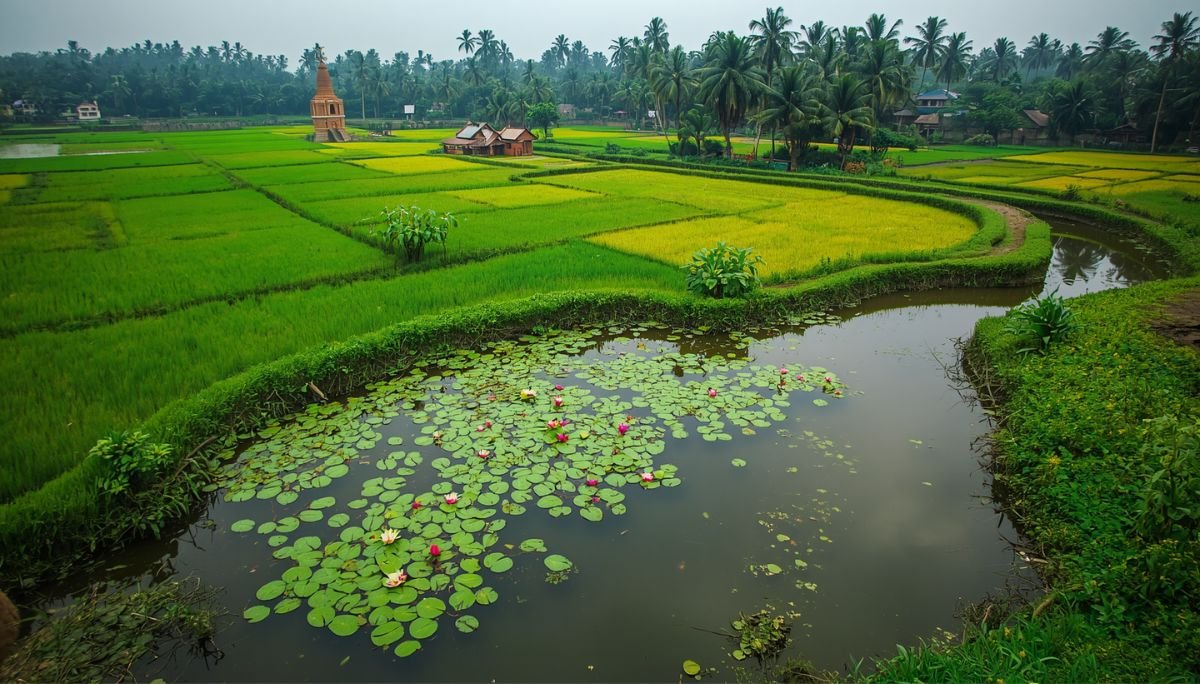
Bangladeshi heritage, the argument is put forward that the nation’s identity cannot be viewed as a static collection of ruins or seasonal festivities; rather, it is a dynamic, evolutionary force rooted in the unique geography of the Bengal delta. A historical analysis reveals that archaeological landmarks such as Mahasthangarh and Paharpur offer evidence of a sophisticated, urbanised civilisation that predates modern conceptions of the nation-state by a considerable margin. A significant finding of this research is the considerable impact of the delta’s ‘river-line soil’ on artistic temperament. In contrast to civilisations characterised by rigid stone, our heritage was literally shaped by the malleable clay of the rivers, giving rise to an intuitive, communal art form that prioritises collective spiritual expression over individual ego.
The concept of pride is deeply intertwined with a centuries-long tradition of syncretism, which can be defined as the peaceful blending of Buddhist, Hindu, and Islamic influences. This fusion is most evident in the evolution of architecture, where the ancient Vihara aesthetic seamlessly merged with Mughal geometric precision. Beyond physical structures, it is the intangible assets of a culture which truly represent its heartbeat. It is evident that a plethora of traditions have served as the moral and intellectual foundation of the region, from the ancient literary roots of the Charyapada to the philosophical humanism of Baul music and the unrivaled technical mastery of Jamdani weaving. The aforementioned group is indicative of a culture that places equal value on two key aspects: internal liberation and technical perfection.
However, as the current path is evaluated, a critical question arises: is this monumental legacy being honoured in the way it should be? In the context of globalisation, national identities frequently undergo a process of ‘problematic resolution’ in which heritage becomes a performance rather than a lived reality. The issue of institutional gaps remains a matter of serious concern. For instance, the severe underrepresentation of ethnic and indigenous artefacts in national collections indicates a failure to provide a comprehensive representation of the history and cultural heritage of the land. There is a risk of the dilution of the nation’s unique spirit into a transnational aesthetic devoid of the foundation provided by traditional folk roots.
In order to ensure the continued existence of this heritage, it is proposed that the conventional, city-centric conservation models be transcended. The integration of local history and archaeological engineering into the primary school curriculum in regions where these sites are located is imperative to facilitate ‘Heritage-Based Education(HBE)’. The establishment of ‘Living Heritage Zones’ is imperative, wherein traditional artisans are economically incentivised to reside and operate within their ancestral villages. This paradigm shift entails a transition from the conventional ‘glass case’ museum model to a sustainable, living ecosystem, wherein the process of creation is accorded equal value to the final product.
Moreover, it is imperative to leverage contemporary technological advancements, such as high-fidelity ‘digital twins’ and virtual reality (VR) restorations, to ensure the preservation and enhancement of cultural heritage. This enables younger generations to traverse historically restored sites as they were in their prime, thereby establishing a connection between ancient wisdom and the digital native era. Finally, the government should consider the provision of economic incentives for the incorporation of traditional delta-specific techniques, such as terracotta cooling, into functional architecture. The integration of contemporary innovation with the nation’s deltaic heritage can ensure that Bangladeshi heritage is not merely a remnant of the past, but rather the foundation for future national progress.