
Desk Report
Oniket Desk
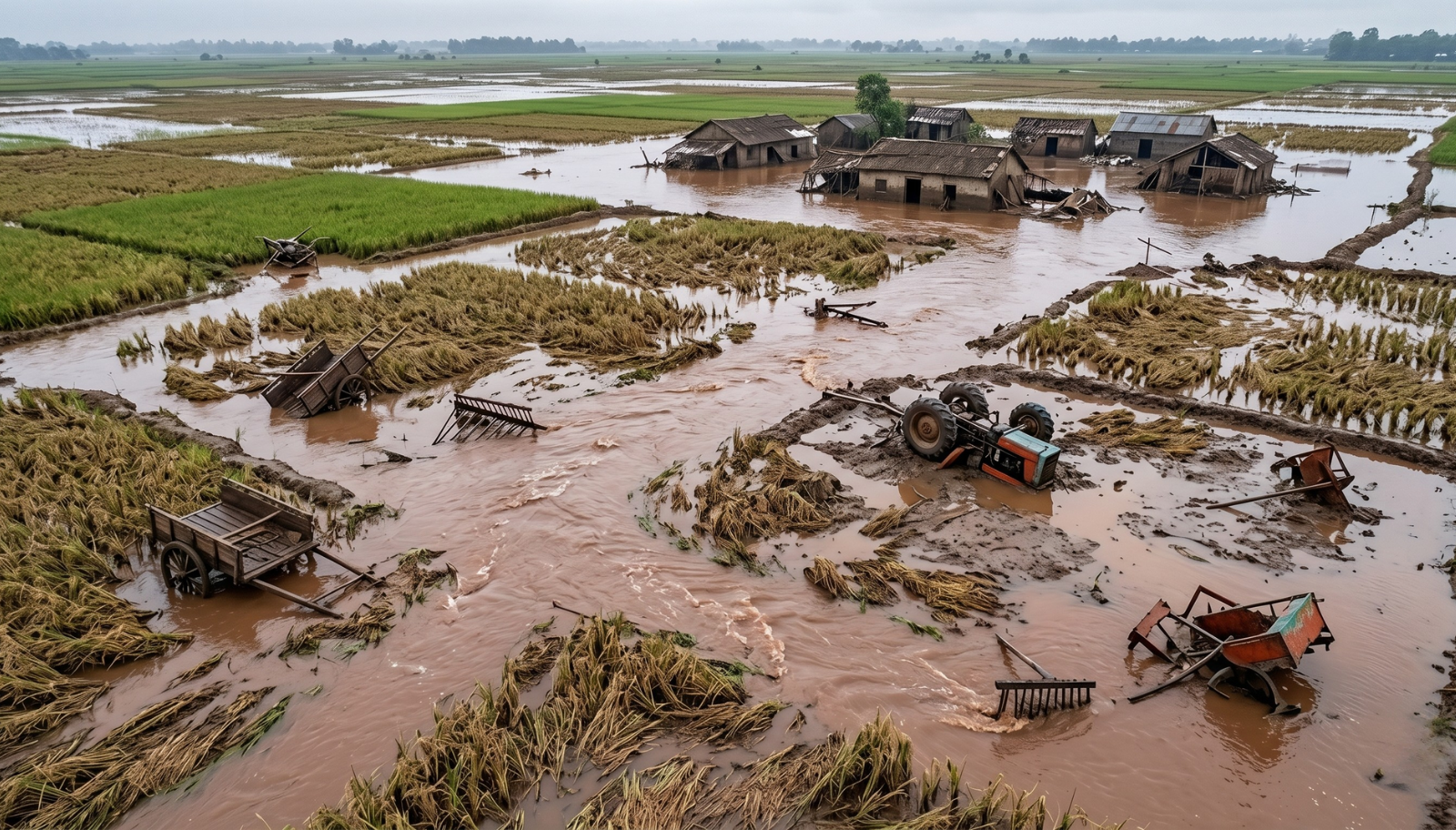
A combination of intense rainfall, embankment failures, and upstream water inflows between 26 April and 4 May 2025 has caused catastrophic agricultural losses across the haor wetland districts of Bangladesh, with the Ministry of Agriculture estimating total crop damage at approximately Tk 1,047 crore (the Daily Star). The disaster has exposed the persistent vulnerability of one of Bangladesh’s most productive and most precarious agricultural zones.
Scale and Scope of Crop Damage
According to data compiled by the Ministry of Agriculture and the Department of Agricultural Extension (DAE), a total of 49,073 hectares of cropland across seven haor districts has been destroyed, representing 10.78 percent of total haor agricultural land. The primary crop affected is Boro rice, the irrigated dry season paddy planted between December and early February and harvested from April to June. This crop alone accounts for nearly 55 percent of Bangladesh’s annual rice output. Losses of Boro rice have been estimated at 2.13 lakh tonnes, and approximately 2.36 lakh farmers have been directly affected.
The damage is particularly significant given the timing. Harvesting across the haor Boro area was already 80 percent complete at the point of inundation, meaning a substantial portion of the standing crop was lost within days of what would otherwise have been a successful harvest season. Ministry officials noted that embankment failures and abnormally heavy rainfall in April accelerated the flooding beyond seasonal norms.
Human Cost and Farmer Vulnerability
Behind the aggregate figures lies a deep personal crisis for individual farming households. Faizul Islam, a farmer from Bojorpur haor in Mithamain(reported in the Daily Star), cultivated paddy across five acres two of which were fully submerged. The paddy harvested from his remaining three acres subsequently sprouted and was ruined while awaiting threshing, bringing his total loss to approximately 300 maunds of paddy. Having financed his cultivation through high-interest loans from informal lenders, Islam now faces the prospect of selling his land to meet his debt obligations, a fate shared by many smallholder farmers in flood-affected haor communities.
Government Response and the Road Ahead
The Ministry of Agriculture has confirmed that lists of affected farmers are being compiled and that a support programme is expected to be activated within two to three days of the assessment, with assistance continuing for three months. While this immediate response is a necessary first step, the haor flood crisis underscores the need for a more durable policy architecture, one that combines early warning systems, flood-resilient embankment infrastructure, crop insurance mechanisms, and accessible low-interest agricultural credit to shield farming households from losses of this magnitude in future seasons. The haor wetlands are not only a food production zone; they are a livelihood system. Protecting them demands proportionate, sustained, and structurally informed investment.