
Sheikh Selim
Oniket Research Group
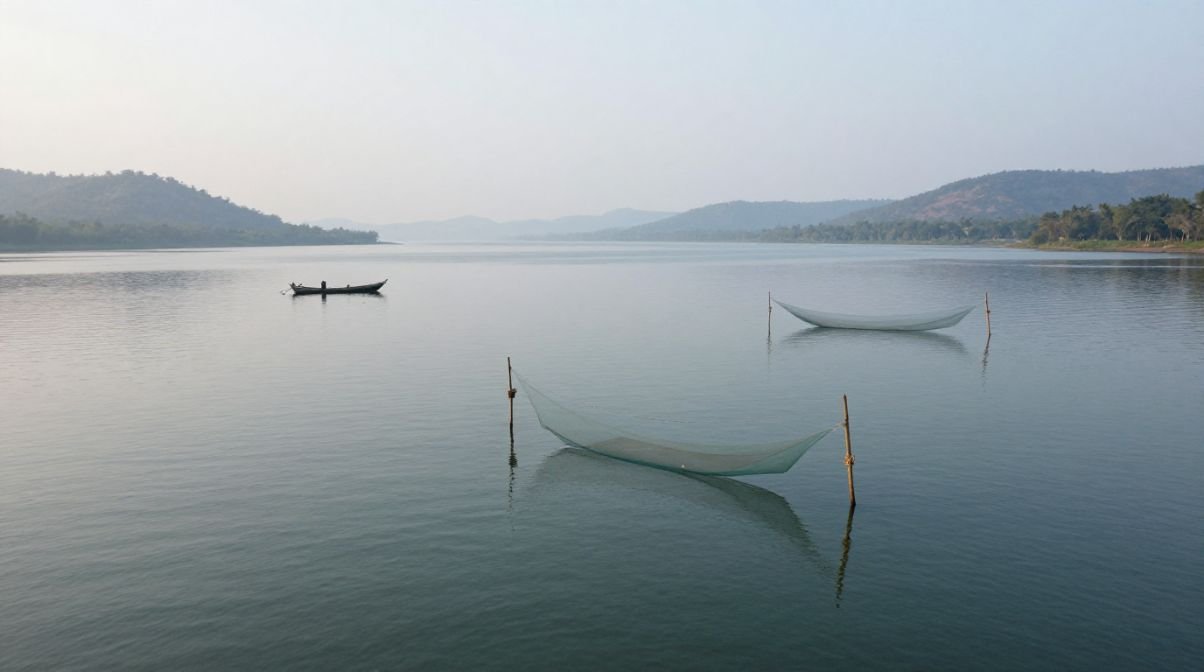
A few significant discussions have appeared in the most prominent daily newspapers in Bangladesh concerning the practice of seasonal fishing. The imposition of a seasonal fishing ban on Kaptai Lake, Bangladesh’s largest artificial freshwater reservoir, signifies a substantial advancement in the institutionalisation of fisheries conservation within a regulatory framework. However, the measure also exposes underlying structural tensions between ecological sustainability and the welfare of fishing-dependent communities, tensions that short-term policy must navigate with greater precision than the current directive suggests.
The rationale for the suspension of fishing activities from late April through July is firmly rooted in ecological principles. This period corresponds with the peak breeding season for indigenous freshwater species in Kaptai Lake, and the disruption of reproductive cycles through continued harvesting would accelerate stock depletion, a risk that is already materialising in many of Bangladesh’s inland water bodies. The concomitant plan to release fish fry into the lake from early May serves to reinforce the conservation intent, thereby signifying that the ban is not merely punitive in nature, but rather is accompanied by active restocking initiatives. The deployment of naval police, BFDC patrol units and mobile courts indicates a relatively serious enforcement posture, addressing a longstanding weakness in seasonal ban regimes across Bangladesh, where regulatory announcements have often lacked credible follow-through.
Nevertheless, the directive as reported lacks any reference to stock assessment data, baseline catch statistics, or measurable conservation targets. In the absence of these elements, the ban functions merely as an administrative routine rather than a scientifically driven intervention. The implementation of sustainable fisheries management necessitates the calibration of seasonal closures to species-specific breeding dynamics and long-term population trends, rather than their uniform application across all species within a lake, irrespective of their ecological status.
An examination of the humanitarian component can be undertaken by means of a review of salient statistics(collected from the United Nations database). The humanitarian component, which provided 26,845 fishing families with 40 kilograms of rice over a period of two months, acknowledges a social obligation that is frequently absent in the design of conservation policy. However, the adequacy of this provision warrants critical scrutiny. The assistance provided, amounting to 20 kilograms of rice per month per family, falls significantly short of the level required to substitute for foregone fishing income. The fishing households inhabiting Kaptai Lake are, as a rule, dependent on the lake as their primary, and frequently their sole, source of livelihood. A two-month rice allocation addresses nutritional subsistence in part, but it does not compensate for lost income, boat maintenance costs that continue during the ban, or the economic needs of households with dependents. In addition, the provision extends exclusively to the Rangamati and Khagrachhari districts, thereby giving rise to questions surrounding the extent to which it encompasses all affected fishing communities, including those situated in peripheral or less administratively visible areas.
To ensure the ongoing sustainability of fisheries, it is essential that the relevant authorities prioritise the immediate commissioning of a rapid stock assessment for Kaptai Lake, to be conducted prior to the next annual ban cycle. This approach would facilitate the establishment of a foundation for the future implementation of bans, ensuring their duration and scope are anchored in empirical evidence. This, in turn, would serve to enhance the credibility of the directive within fishing communities, thereby mitigating the appeal of non-compliance. The species composition of the fry release programme should be aligned with data on population deficits, rather than determined solely by hatchery availability.
Regarding the protection of livelihoods, the cash-transfer modality should be evaluated as a parallel or alternative instrument to in-kind rice distribution. It is evident that cash transfers have been demonstrated to be effective in a variety of contexts across South and Southeast Asia. They have been shown to preserve household agencies and allow families to meet a range of expenditure needs, including debt servicing. It is evident that a targeted cash support programme, even at a modest scale, would serve to more accurately offset the income loss sustained during the ban period.
It is imperative that broader agricultural policy also takes note. It is evident that fishing families residing in hill-district communities frequently have access to diminutive land plots that are conducive to seasonal cultivation. The integration of the fishing ban period with short-cycle vegetable cultivation support, facilitated by the distribution of seeds and agricultural extension services, would offer a productive alternative during the closed season, thereby reducing economic hardship while simultaneously diversifying rural income sources. The current framework is characterised by an absence of cross-sectoral coordination between fisheries and agriculture authorities, representing the most significant policy gap in an otherwise operationally credible directive.