
Desk Report
Oniket Desk
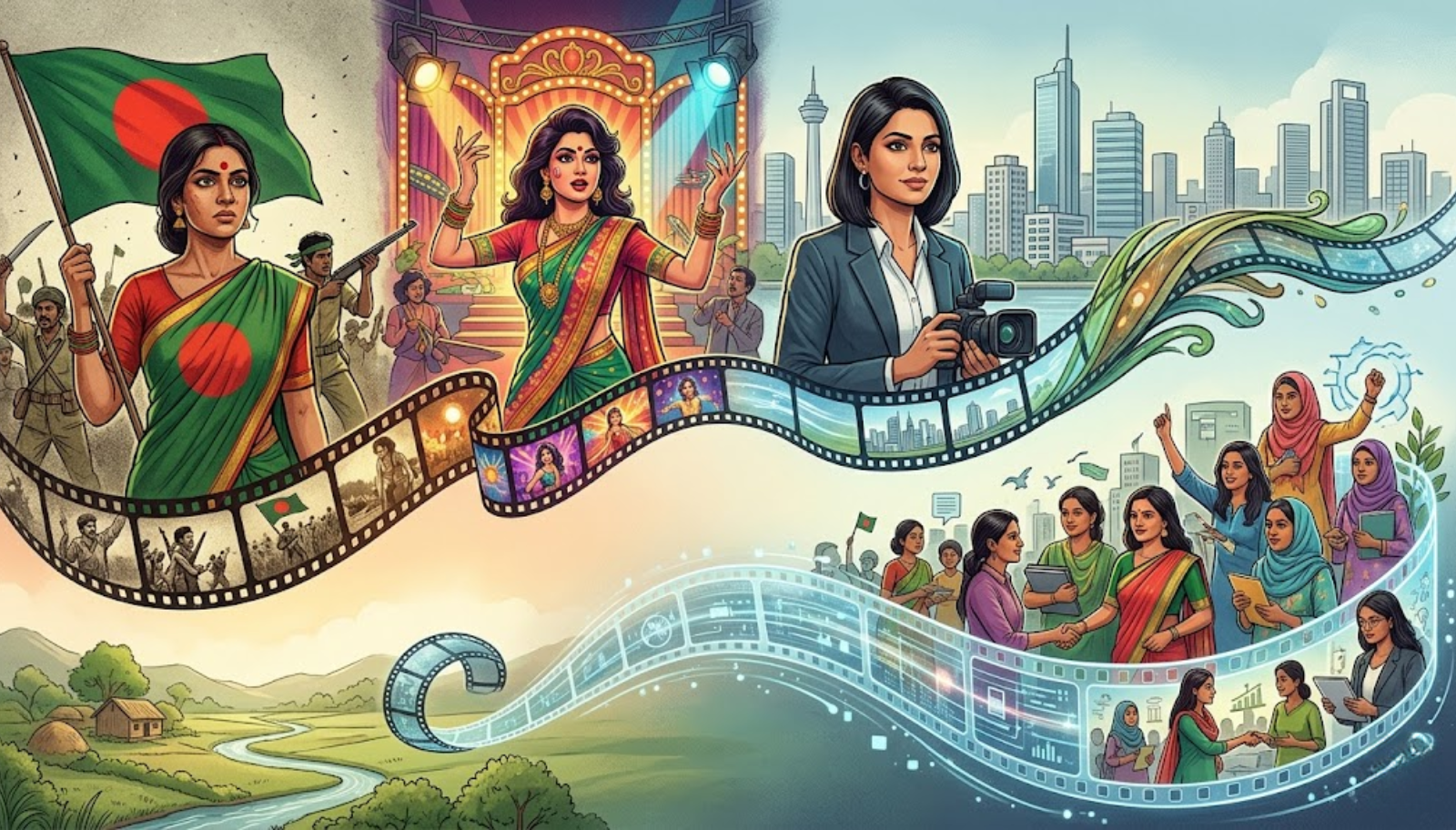
Since Bangladesh’s independence in 1971, its cinema has served as far more than entertainment. For five decades, the silver screen has been a mirror, and a torch, reflecting and reshaping the identity, beauty, and independence of Bangladeshi women. From the soft-lit close-ups of the 1970s to the bold, self-authored narratives of contemporary filmmakers, Bangladeshi cinema has quietly staged one of the nation’s most profound social revolutions.
The Early Decades: Grace Behind the Veil of Tradition
In the formative years of Bangladeshi cinema during the 1970s and early 1980s, women on screen largely inhabited roles shaped by conservative social expectations devoted wives, grieving mothers, and virtuous lovers. Yet even within these constraints, actresses like Kabori Sarwar and Bobita radiated a luminous screen presence that transcended their scripted boundaries. Their beauty was not merely ornamental; it carried emotional weight and quiet agency. Audiences particularly rural women who rarely saw their own faces reflected in public life found in these women a dignified visibility. Cinema, for the first time, told ordinary Bangladeshi women that they were worth watching.
The 1990s Shift: Glamour as Liberation
The 1990s marked a turning point. As Bangladesh’s garment industry transformed urban demographics and more women entered the workforce, cinema began to mirror this economic and social shift. Actresses such as Shabnur and Moushumi embraced a bolder aesthetic vibrant costume, confident choreography, and storylines in which women pursued love, justice, and ambition on their own terms. Glamour, once considered frivolous or scandalous, became a vocabulary of liberation. Song sequences featuring women dancing freely in open landscapes were not merely commercial spectacle; they were quiet declarations of physical freedom in a society where women’s bodies were routinely policed. The fashions popularized by these actresses influenced clothing choices in cities and villages alike, gently widening the definition of what a respectable Bangladeshi woman could look like.
The 2000s and Beyond: Complex Female actors and Feminist Narratives
By the 2000s and into the streaming era, Bangladeshi cinema, and its thriving television drama industry began producing women characters of remarkable complexity. Stories explored female entrepreneurs, lawyers, freedom fighters, and survivors of domestic abuse who fought back with intelligence and courage rather than passive endurance. Filmmakers like Mostofa Sarwar Farooki introduced internationally recognized narratives in which women drove the emotional and moral architecture of the story. Simultaneously, a new generation of actresses brought a self-possessed elegance to the screen, one informed by global influences yet unmistakably rooted in Bangla identity. The hijab, the saree, the western outfit, and the fusion ensemble all coexisted on screen, normalizing a pluralistic idea of Bangladeshi womanhood.
Beauty Redefined, Society Reimagined
Perhaps cinema’s greatest contribution to Bangladeshi women has been its gradual redefinition of beauty itself. Early cinema celebrated fair skin and demure silence. Contemporary Bangladeshi film and drama celebrate dark-skinned Female actors, outspoken protagonists, and women whose attractiveness is inseparable from their intellect and willpower. This cinematic evolution has seeped into advertising, fashion, and everyday social attitudes, making the screen a genuine agent of cultural change. Young women today see in Bangladeshi cinema a canvas that validates their ambition, honours their appearance, and dares them to occupy space without apology.
Conclusion
Fifty years of Bangladeshi cinema is fifty years of women quietly rewriting their own story, one film at a time. What began as cautious representation has grown into confident authorship. The Female actors of Bangladeshi cinema did not merely entertain; they educated, inspired, and transformed. In a nation still navigating complex questions of gender, identity, and modernity, the screen remains one of the most powerful stages on which the Bangladeshi woman continues to claim her rightful place, glamorous, independent, and utterly unstoppable.