
Sumaiya Hasi
Oniket Research Group
The recruitment of one-lakh health workers is set to be a monumental milestone in the history of the country’s healthcare sector. There is no alternative to a skilled and adequate workforce to strengthen the backbone of any nation’s medical service. However, considering past experiences, the call has grown louder today: “No more mistakes.”
The Administrative and Ethical Challenge
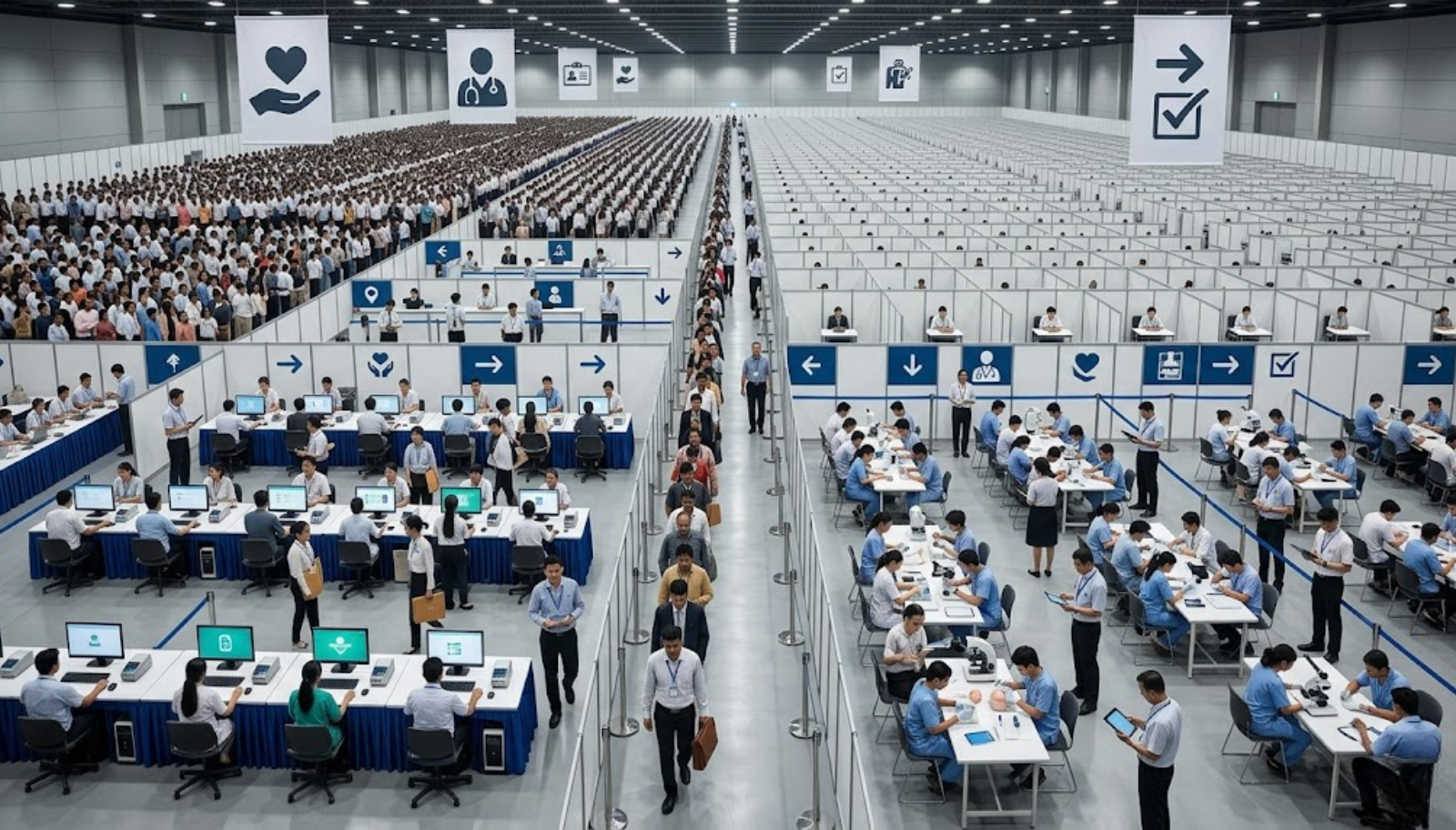
Given the bitter precedents we have witnessed in the past of mismanagement, question leaks, nepotism, or bureaucratic slowness in large scale government recruitments, it is now the most pressing demand of the hour to keep this mega recruitment completely free from such pitfalls. While the process of adding such a vast number of personnel to a sensitive sector is promising, it is also a colossal administrative and ethical challenge.
Ensuring Merit and Transparency
The primary objective of this recruitment process must be to establish a framework that is entirely merit-based and transparent. When the fate of hundreds of thousands of candidates and the healthcare of millions of people is at stake, even the slightest deviation could shatter the public’s trust in the entire sector.
We must learn from past mistakes and adopt a flawless, modern action plan from the outset. From the written examination to the oral test and final selection, the utmost use of technology must be ensured at every stage, so that there is no scope for human intervention or fraud. It is essential that the entire process is kept under constant scrutiny by an independent, impartial, and high-powered oversight committee.
Strategic Deployment and Quality Training
The responsibility does not end with recruitment; it is also crucial to consider where and how this vast workforce is deployed. A major crisis in our health sector is the severe shortage of medical services in rural and marginalised areas.
We need to move away from a city centric mindset and deploy a significant portion of these new health workers to remote areas. If the same urban bias recruitment is repeated without proper distribution, the very purpose of this mega recruitment will be defeated. At the same time, appropriate quality training must be arranged for them immediately after their appointment, so that they can perform their duties competently upon reaching the field.
A Long-Term Investment in National Security
In conclusion, this grand plan to recruit one hundred thousand healthcare workers is a unique opportunity to transform the face of Bangladesh’s healthcare system. It should not be viewed merely as a routine job advertisement, but rather as a long-term investment in national health security.
If these appointments can be conducted with integrity and merit, closing the loopholes of the past, it will stand as a landmark precedent in the nation’s history. Let this recruitment be the sole commitment to ensuring there is no gap between the rights of the common people and the goodwill of the state.