
Siddique Bappee
Oniket Research Group
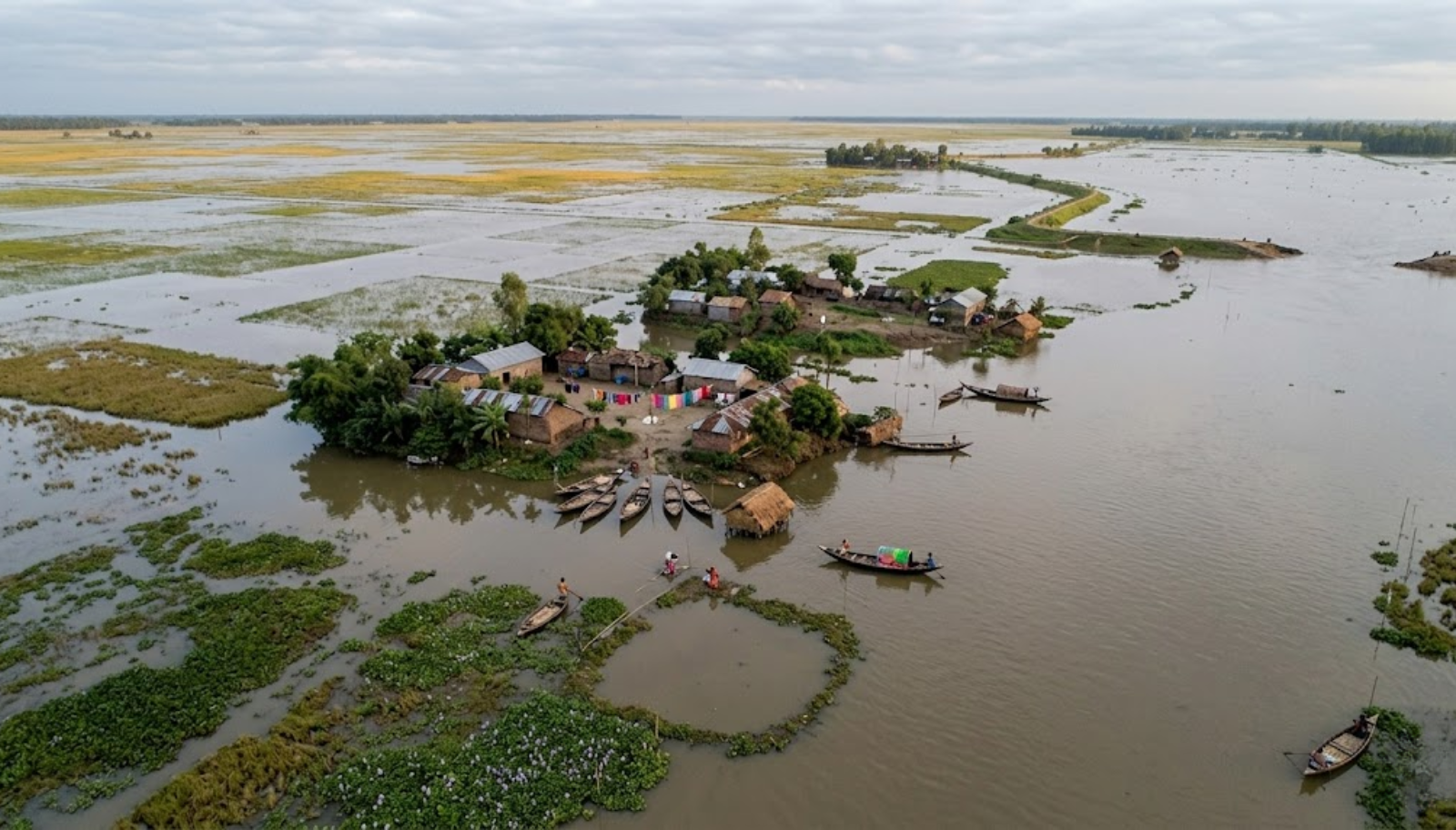
Bangladesh’s haor region is one of the country’s main centres for Boro rice production. Every year, this region makes a significant contribution to national food security. But recently, a report in the Prothom Alo newspaper, titled ‘200,000 tonnes of rice lost in the haor, prices are rising’ The headline is not merely an indicator of an agricultural crisis; it also highlights weaknesses in the country’s food policy, agricultural management, climate risks, and market regulation.
While the loss of 200,000 tonnes of rice is significant in numerical terms, its real-world impact is even more far-reaching. This is because when production in the haor region decreases, it puts not only local farmers but also the national market under pressure. As rice is the staple food of the Bangladeshi people, even a slight shortage quickly leads to price increases in the market. Traders and middlemen often exploit fears of future shortages to hoard supplies and create artificial scarcity, which drives prices even higher.
Unaddressed Issues Behind the Crisis
Several important issues behind this news often go unaddressed.
Firstly, agriculture in the haor region remains highly dependent on the climate. Pre-mature floods, irregular rainfall, reduced river depth and unplanned dam management create the same risks every year. Many dams are not repaired in time or collapsed due to substandard construction. As a result, farmers’ crops are submerged, yet accountability is rarely established.
Secondly, the true extent of farmers’ losses is often not fully revealed. While the news may report a ‘loss of 200,000 tonnes, it rarely discusses how many families will fall into debt, how many farmers will face uncertainty about the next season’s crops, or what impact this will have on labourers’ employment. Yet the agricultural crisis is not just a food crisis; it is also a social and economic one.
Thirdly, the weakness of market management is also a major factor. The question of why prices rise so quickly at the slightest drop in production is an important one. Information on how much food the government has in reserve, what the import plans are, and how effective market monitoring is, is not made clear to the public. As a result, rumours and panic make the market even more unstable.
Fourthly, the long-term effects of climate change are intensifying this crisis. Early floods in the Haor region are no longer the exception; they are becoming an almost regular risk. Yet, in comparison, investment in agricultural adaptation technologies, early warning systems or alternative crop planning remains limited.
The Market Paradox and the Path Forward
Another crucial issue is the fair price for farmers. At the time of production, farmers receive a low price, but when a crisis arises, the price of rice on the market increases, the bulk of the profit goes to middlemen and market controllers. In other words, the farmers are harmed when they suffer losses, and they are also the most affected when prices rise!
To tackle this situation, immediate imports or market interventions alone are not enough. What is needed is a long-term food policy, transparency in haor management, sustainable dam construction, agricultural insurance, modern forecasting technology and an effective market regulation system. At the same time, farmers must be regarded not merely as producers but as key partners in food security.
The news of 200,000 tonnes of rice lost in the haor is therefore not just a story of a seasonal disaster; it reflects the limitations of our agricultural and policy preparedness. The question now is: will we simply read about the same crisis every year and standstill, or will we use this crisis as an opportunity to rethink future food security and act based on implementing the necessary policies, which will be the genuine solution to the real problem?

