
Farah Zahir
Oniket Research Group
There are magazines that publish literature, and then there are magazines that believe in it deeply enough to reimagine who literature is truly for. Kothar Kagoj, the Dhaka-based quarterly journal of art and literature, belongs firmly to the second kind. Since its founding and first steps into the literary landscape of Bangladesh, it has carried a guiding philosophy that sets it apart not merely as a publication but as a quiet, determined movement. That philosophy is expressed in three luminous words: sensitive, inclusive, and accessible art and literature.
A Philosophy Born of Purpose
Kothar Kagoj, whose name translates gently as the Paper of Words, was conceived with a vision that is both tender and bold. Its foundational belief is that art and literature are not the inheritance of the privileged few, nor should they be sealed behind the glass of elitism, complexity, or exclusion. The magazine’s editorial identity is anchored in the conviction that every reader deserves to find themselves within a poem, a story, or an essay, and that every thoughtful writer deserves a platform that honours the full range of human experience.
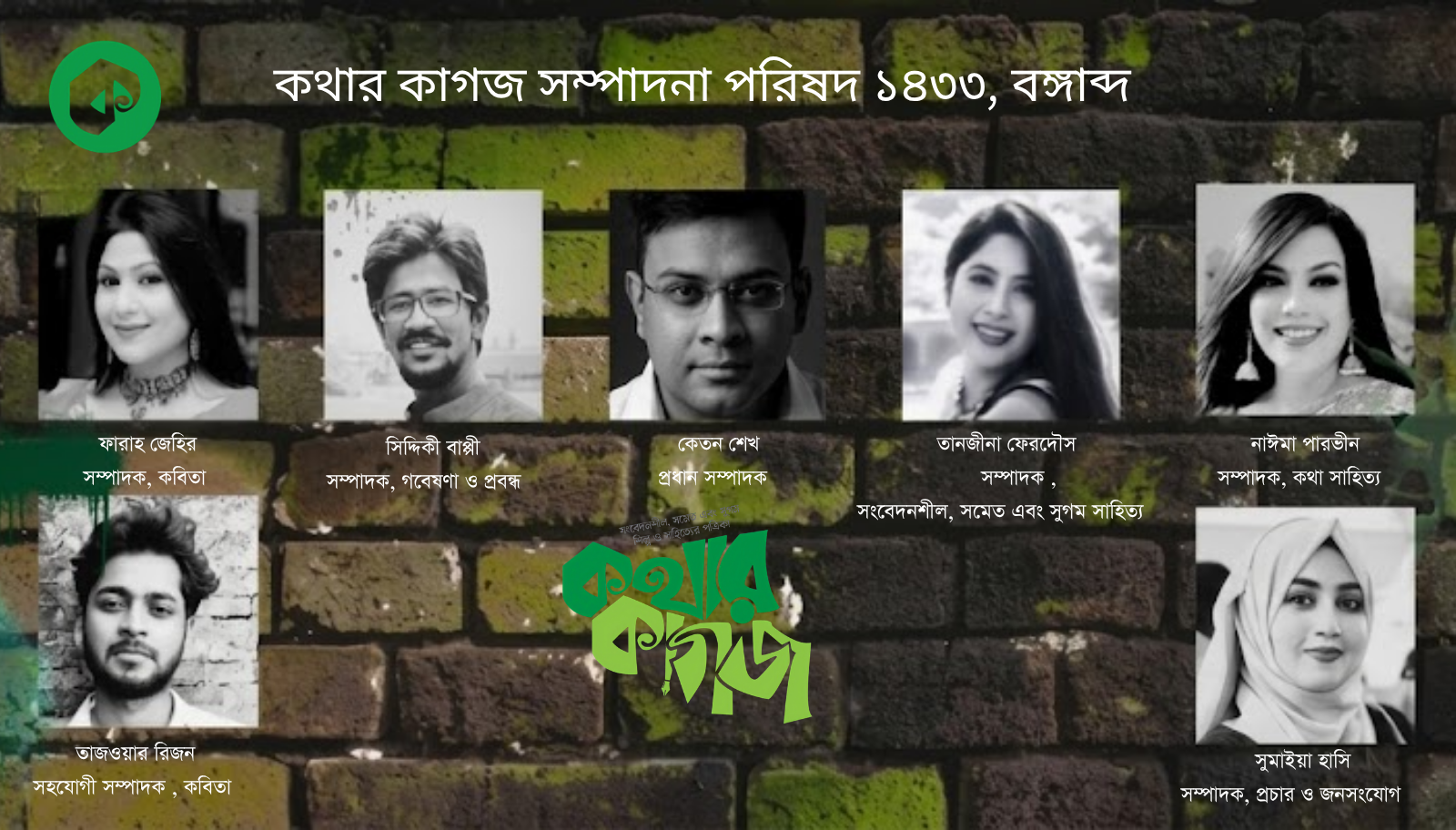
The chief editor, poet and fiction writer Ketan Sheikh, has guided this vision with quiet resolve. His editorial board, comprising poets Siddique Bappee, Farah Zahir, Naima Parvin, and Tanzina Fardoush, brings to each issue a collective spirit that values depth without distance, beauty without barrier, and meaning without condescension. Together, they have built a publication whose atmosphere feels less like a gatekeeping institution and more like an open gathering where language itself is the host.
What Sensitivity Truly Means
In a literary culture that can sometimes prize detachment as sophistication, Kothar Kagoj has pioneered something rarer: the art of being genuinely sensitive. Sensitivity here is not fragility. It is attentiveness. It is the willingness of a publication to listen before it speaks, to feel the texture of lived experience before shaping it into language. The poems, stories, and essays that fill their pages are chosen not merely for technical brilliance but for their capacity to touch the reader in that quiet, interior place where recognition lives.
This sensitivity extends to the magazine’s relationship with its contributors and readers alike. Kothar Kagoj treats language as a living thing, something that can comfort or unsettle, illuminate or wound, and it handles that power with care. In doing so, it has created a literary space where emotional honesty is not a weakness but a very measure of quality.
What makes this approach particularly significant is that Kothar Kagoj has been among the first literary initiatives in Bangladesh to consciously articulate and practice the idea of sensitive literature as an editorial philosophy rather than simply an individual literary preference. At a time when public discourse often becomes polarised and reactive, the magazine has sought to create a culture of thoughtful engagement, where differences can be explored with respect and complexity. Sensitivity, in this sense, is not about avoiding difficult subjects; it is about approaching them with intellectual honesty, empathy, and a deep awareness of the human consequences of language. By placing sensitivity at the centre of literary practice, Kothar Kagoj has helped open new conversations about the ethical responsibilities of writers, editors, and readers in contemporary society.
The Quiet Revolution of Inclusion
To be inclusive is to believe that every voice contains something worth hearing. Kothar Kagoj has made this belief structural, not decorative. Each issue brings together a deliberate range of contributors, celebrating writers who might otherwise remain at the margins of a literary establishment that too often rewards the already established. The Eid 2026 issue, the magazine’s sixth, featured the work of ten poets, ten fiction writers, and six essayists, demonstrating a commitment to breadth and variety that honours the true diversity of Bangladeshi literary talent.
This inclusive spirit has been pioneering in a landscape where literary prestige has historically concentrated around a narrow circle. By making space for voices that might be younger, quieter, or less conventionally prominent, Kothar Kagoj has helped expand what Bangladeshi literature can look and sound like. It has shown that a magazine does not diminish itself by widening its embrace. It grows.
Kothar Kagoj’s commitment to inclusion extends beyond representation on the printed page. It reflects a broader vision of literary citizenship in which participation itself becomes a shared cultural right. As one of the first literary platforms in Bangladesh to explicitly champion the concept of inclusive literature, the magazine has encouraged dialogue across generations, regions, professions, and creative traditions. Emerging writers are given opportunities to stand alongside established voices, not as exceptions but as valued contributors to an evolving literary community. In doing so, Kothar Kagoj challenges the notion that literary excellence belongs only to a select few and instead promotes a richer, more democratic understanding of literary culture.
Accessibility as an Act of Love
Perhaps the most quietly revolutionary dimension of Kothar Kagoj’s philosophy is its commitment to accessibility. Art and literature that no one can reach are like candles burning in sealed rooms. Beautiful, perhaps, but unable to warm anyone. Kothar Kagoj has worked thoughtfully against this tendency, making its content available both in print and through the digital platform Shobdomukur, Bangladesh’s first bilingual online literary library, so that geography, distance, and circumstance become smaller obstacles between the reader and the word.
Accessibility also lives in the magazine’s tone and in the quality of its writing selections. The prose and poetry it publishes speak to the reader rather than past them. This is its own form of generosity, a gift that says: you are welcome here, you do not need special credentials to understand or to feel.
The commitment to accessibility is also rooted in a belief that literature should never be limited by geography, economic circumstance, educational background, or social status. Kothar Kagoj has been a pioneer in Bangladesh in advocating for the idea that literature must be both accessible and inclusive if it is to remain socially relevant. Through print publications, digital initiatives, and the promotion of reader-friendly literary content, the magazine has worked to bring literature closer to people who might otherwise feel excluded from literary spaces. This approach recognises that every new reader strengthens the literary ecosystem and that the future of literature depends not only on producing exceptional works but also on ensuring that those works can be discovered, understood, and appreciated by the widest possible audience.
The Promise of What Is Coming
The truly exciting dimension of Kothar Kagoj’s philosophy is what it makes possible for the future of literature in Bangladesh. When sensitivity, inclusion, and accessibility become the organizing principles of a literary publication, something remarkable begins to happen. Readers who never saw themselves reflected in literary culture begin to read. Writers who had no natural home begin to write more freely. A community forms around shared humanity rather than shared privilege.
As the magazine continues to grow in readership across Bangladesh and internationally, as its vision earns recognition, and as its model inspires others, it points toward a literary ecosystem that is richer, broader, and more alive. Kothar Kagoj reminds us that the most enduring literature has always been the kind that says to its reader, simply and sincerely: this was written for you. In holding to that belief with such warmth and steadiness, the magazine has already changed the conversation. And the best pages, one feels certain, are still being written.