Naima Onamika
Commissioning Editor, The Oniket Bulletin
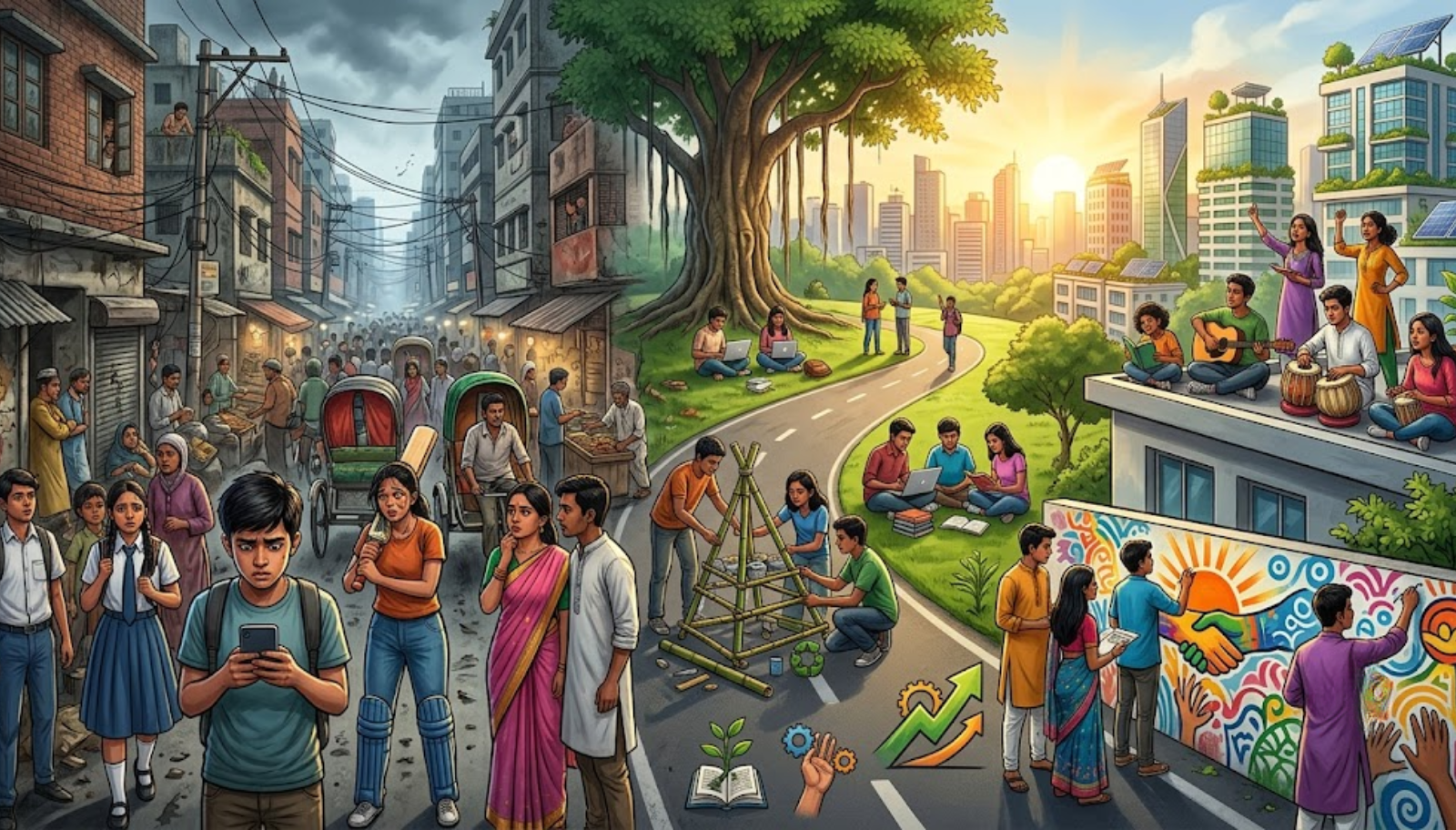
Bangladesh’s rapid urbanisation has profoundly transformed the country’s social structure, family dynamics, and the lifestyles of its younger generation. Adolescents growing up in major cities such as Dhaka, Chattogram, Sylhet, and Rajshahi are navigating an increasingly complex reality. On one hand, globalisation and digital technology have created unprecedented opportunities. On the other, rising academic expectations, family pressures, social isolation, and growing mental health concerns have made adolescence considerably more challenging. Building a healthy, responsible, and compassionate adolescent culture has therefore become one of the most pressing priorities for urban Bangladesh.
As the nation’s future generation, the well-being and overall development of adolescents are inseparable from Bangladesh’s long-term progress. Against this backdrop, this article presents an analytical examination of the challenges shaping adolescent culture in the country’s major cities, along with possible pathways towards meaningful change.
Opportunities and Risks in the Digital Age
Today’s adolescents are more connected to technology than any previous generation. Smartphones and affordable internet access have opened a gateway to unlimited information, global communication, and educational opportunities. Alongside these advantages, however, digital technology has also introduced a range of significant challenges.
Through social media, many young people are constantly exposed to carefully curated images of success, luxury, and seemingly perfect lifestyles. Continuous comparison with others often leads them to view their own lives as inadequate or unsuccessful. This contributes to declining self-confidence, anxiety, and emotional distress. Mental health professionals frequently describe these patterns as comparison syndrome and impostor syndrome.
Extended screen time has also reduced opportunities for physical activity, face-to-face social interaction, and real-life experiences. In cities like Dhaka, chronic traffic congestion, safety concerns, and the shortage of open recreational spaces have further limited adolescents’ opportunities to engage in outdoor activities. As a result, smartphones have become both a gateway to knowledge and, in many cases, a source of emotional isolation.
Academic Pressure and the Loss of Childhood
Bangladesh’s urban education system remains largely examination driven. In many families, academic achievement and future career success are treated as the primary measures of accomplishment. Within this culture, adolescents’ emotional development, creativity, and personal interests are often overshadowed by the pursuit of high grades.
High parental expectations, dependence on private coaching, and intense academic competition place considerable psychological pressure on students. Those who fail to achieve their desired results frequently begin to question their own abilities and self-worth. Over time, these feelings can damage self-esteem and contribute to anxiety and depression. An education system centred primarily on examination results risks producing a generation that performs well academically but struggles to understand its emotions, aspirations, and genuine sources of happiness.
Limited Awareness of Mental Health
Mental health continues to receive insufficient attention in Bangladesh. When adolescents experience anxiety, depression, or suicidal thoughts, these struggles are often overlooked or misunderstood. In many cases, emotional distress is dismissed as weakness, disobedience, or a lack of religious commitment rather than recognised as a legitimate health concern.
The situation can be particularly difficult for adolescent girls, whose emotional challenges are often given limited attention within families and communities. Without timely counselling or professional support, manageable conditions can develop into far more serious psychological disorders.
At the same time, Bangladesh faces a significant shortage of child and adolescent psychiatrists, psychologists, and trained counsellors. This growing gap between demand and available services has become an important public health concern.
Urban Isolation and the Erosion of Social Bonds
For generations, Bangladesh’s extended family structure and close-knit neighbourhood communities played a vital role in adolescents’ emotional and social development. Rapid urbanisation and the rise of nuclear families have gradually weakened these traditional support systems.
Many adolescents in large cities now grow up with limited interaction with neighbours and infrequent contact with extended family members. The shortage of parks, playgrounds, community centres, and safe public spaces further restricts opportunities for healthy social engagement. As social connections weaken, many young people become increasingly dependent on virtual relationships, leaving some vulnerable to risky behaviours and emotional isolation.
The Way Forward
Creating a healthy and responsible adolescent culture in Bangladesh’s cities requires far more than moral advice. It demands sustained structural reform and long-term investment.
Schools should integrate Social and Emotional Learning (SEL) into the curriculum so that students develop emotional intelligence, resilience, and healthy coping skills alongside academic knowledge. Urban planning should place greater emphasis on adolescent-friendly parks, sports facilities, cultural centres, libraries, and youth development spaces that encourage meaningful social interaction.
Families also have an essential role to play by creating an environment where children feel safe discussing emotional difficulties without fear of criticism or judgement. In addition, expanding access to mental healthcare through trained counsellors in secondary schools and community health centres would provide adolescents with much-needed professional support before problems become more severe.
Conclusion
The adolescents growing up in Bangladesh’s major cities will become the country’s future leaders, workforce, innovators, and agents of social change. Building a prosperous urban society will not be possible without safeguarding their mental well-being, social development, and moral values.
By encouraging responsible use of technology, promoting a more humane education system, strengthening family relationships, and ensuring accessible mental healthcare, Bangladesh can foster an adolescent culture that is more resilient, creative, compassionate, and socially responsible. Such an approach will lay the foundation for a healthier, more inclusive, and more progressive nation.