
Sanzida Islam Shuchi
Teacher
In today’s world, the term “Work from Home” has become familiar to almost everyone. The purpose of this article is to examine how the growing trend of remote work and the rise of technology-driven healthcare services such as telemedicine have transformed the experience of working parents during periods of illness. It explores the social, familial, and workplace implications of these changes, while also analysing how technology-based work arrangements are reshaping the balance between professional responsibilities and family duties, mental well-being, and long-established patterns of family bonding and care.
Technological advancement has made professional life more flexible and connected, but it has also created new responsibilities and expectations. Remote work and telemedicine have undoubtedly brought significant benefits to working families. However, behind these conveniences lies a growing challenge: the traditional boundaries between personal life, family responsibilities, and professional commitments are becoming increasingly unclear.
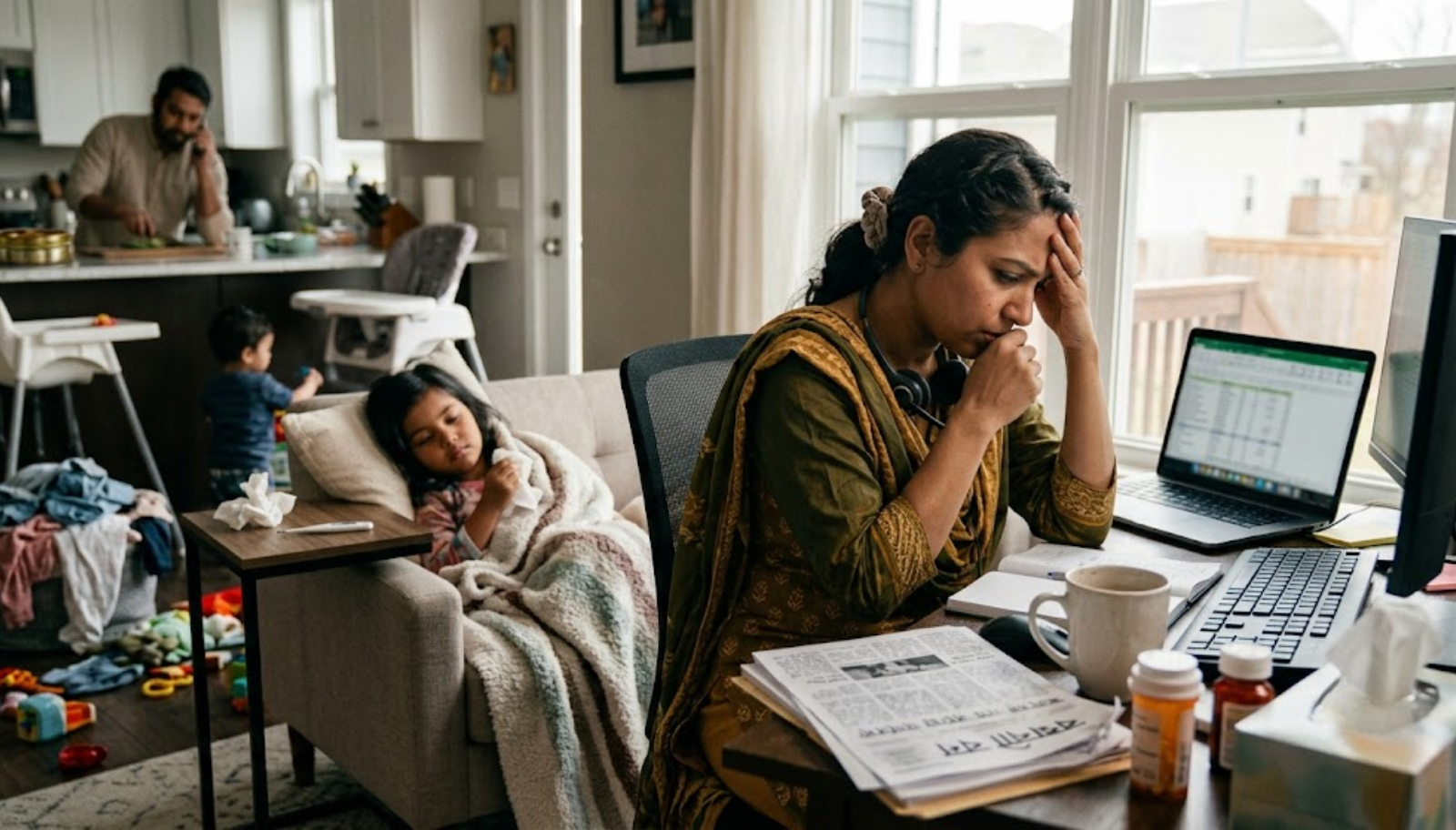
Previously, taking time away from work to care for a sick child was widely accepted as a valid reason for temporary leave. Today, many working parents are expected to manage childcare responsibilities while continuing to attend meetings, respond to emails, and complete professional tasks from home.
As a result, a sick day is no longer always a period dedicated to rest and caregiving. Instead, it often becomes a continuous cycle of managing multiple responsibilities at the same time. In the long run, this trend can negatively affect productivity, mental health, family relationships, and overall work-life balance.
To ensure that the benefits of technology remain sustainable and humane, it is essential to introduce family-friendly workplace policies, develop supportive work cultures, and prioritise employees’ mental well-being. These measures are no longer optional; they have become necessary for the future of modern employment.
Let us explore how the growing practice of working from home is shaping the realities of contemporary family life.
When Home Becomes the Workplace
Following the COVID-19 pandemic, remote work became increasingly common in Bangladesh as well as across the world. It enabled employees to perform professional responsibilities without being physically present at the workplace. For families with young children, this shift created a valuable opportunity to manage professional and personal responsibilities more effectively.
However, this transformation also has an unseen side. In the past, staying away from the office because of a sick child meant taking a temporary break from professional duties. Today, that possibility has significantly reduced because digital connectivity allows employees to remain constantly available.
Many parents now find themselves caring for an ill child while simultaneously attending online meetings, answering emails, and completing workplace assignments. Instead of reducing pressure, remote work can sometimes increase the burden by creating an expectation of continuous availability.
Telemedicine and the Changing Reality of Healthcare
Digital healthcare services and telemedicine have made medical support more accessible than ever before. Online consultations allow patients to seek advice from doctors, receive prescriptions, and access primary healthcare services quickly and conveniently.
However, this convenience has also introduced a new workplace reality. Previously, travelling to a hospital or clinic naturally created time away from work. Now, when a medical consultation can be completed within minutes, some organisations assume that employees can immediately return to their professional responsibilities.
In many cases, technological efficiency is overshadowing the human need for rest and recovery. Access to quick healthcare should not mean that employees lose the opportunity to take necessary time for themselves or their families.
Changing Parenting Practices and Social Realities
Modern parents are increasingly prioritising children’s physical and emotional well-being. Even a minor fever or infection often leads parents to keep children at home rather than sending them to school. Greater awareness of infectious diseases after the pandemic has contributed significantly to this change.
However, a clear contradiction exists. While children receive the opportunity to rest and recover, the parents caring for them often do not receive the same privilege. They continue to perform multiple roles simultaneously: an employee, a parent, and a caregiver.
Managing these overlapping responsibilities for an extended period can lead to emotional exhaustion, anxiety, and reduced professional effectiveness. The challenges of modern parenting are therefore closely connected with workplace expectations and social support systems.
Technology Has Increased Workplace Expectations
Although technology was developed to make life easier, in many situations it has unintentionally increased expectations placed on employees. The assumption that “working from home is possible” has often evolved into an unwritten expectation that “work must continue under all circumstances.”
As a result, many employees struggle to completely disconnect from work during sick days, family emergencies, or caregiving responsibilities. This has become a significant challenge, especially for families with young children.
The ability to work remotely should not be interpreted as unlimited availability. Flexibility must work both ways, supporting employees when they need it most.
Conclusion
Remote work and telemedicine are among the most important achievements of modern technology. However, technological convenience should not replace the need for a humane workplace culture. Organisations must develop family-friendly policies, establish realistic caregiving leave arrangements, and give greater importance to employees’ mental health. Being physically present at home does not necessarily mean an employee is able to perform at full capacity.
Technology can truly improve lives only when it reduces people’s burdens rather than creating new pressures. To ensure the well-being of modern working families, workplaces must value not only productivity and efficiency but also empathy, understanding, and compassion.