
Hasan Hamid
CUET
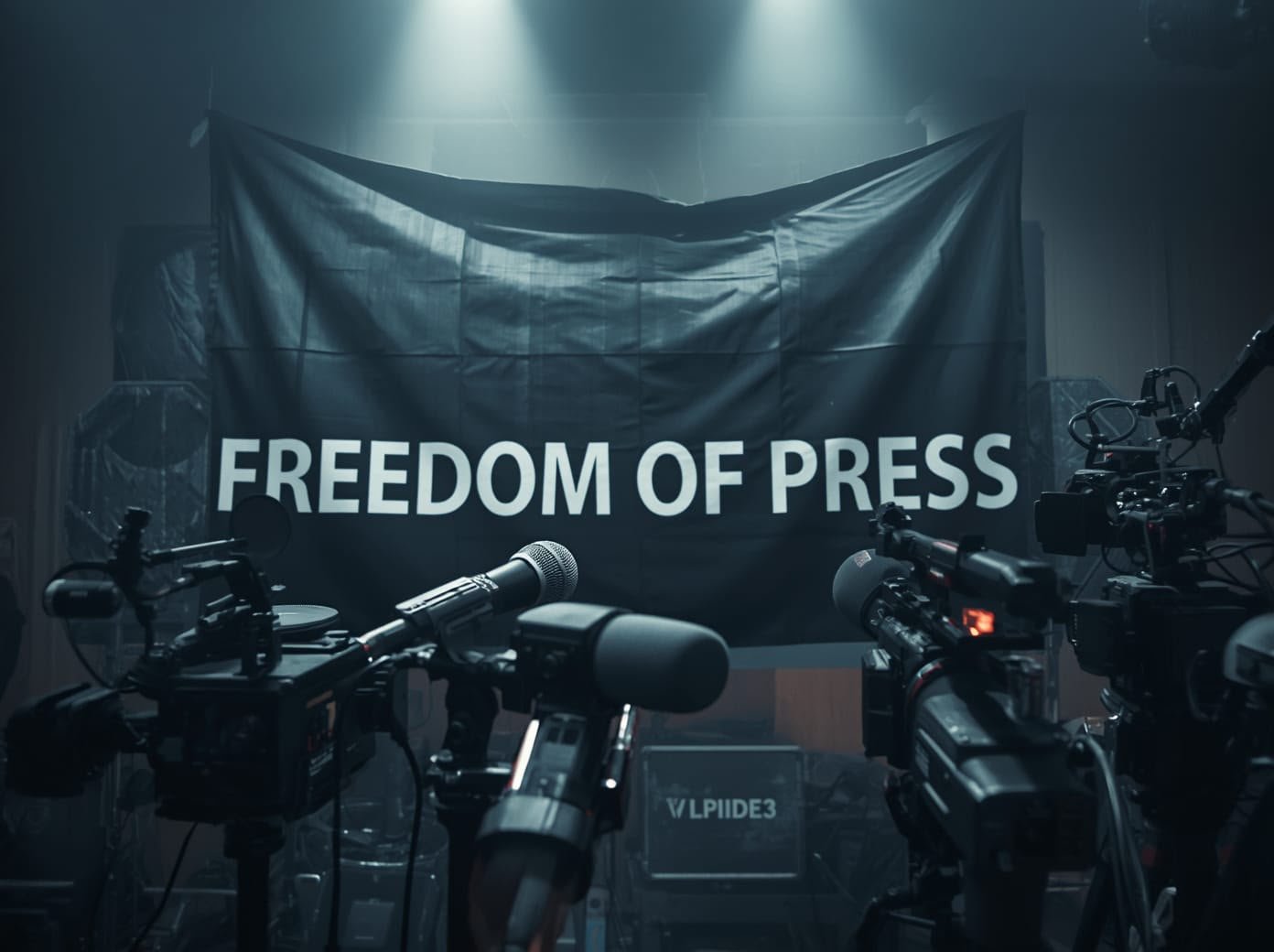
LGRD Minister Mirza Fakhrul Islam Alamgir’s remark that “the stronger the media, the stronger the democracy” delivered at a reception for the newly elected executive committee of the Thakurgaon Press Club crystallizes a principle that Bangladesh has long acknowledged in rhetoric but struggled to uphold in practice. His call for journalists to “call things as they are, i.e. black as black and white as white” and his acknowledgment that politicians are not above criticism are welcome assertions of democratic norm. Yet they also invite a harder examination of the conditions under which Bangladeshi journalists actually work, and the structural barriers that prevent the free media he describes from fully functioning. In this article, we review the minister’s philosophy behind the statement, and we aim to add more critical insights into that.
Challenges of Free Media in Bangladesh
The most immediate and visceral challenge is physical insecurity. Fakhrul himself expressed concern over attacks and harassment faced by journalists for publishing factual reports. This is not an abstract worry. Journalists in Bangladesh, particularly those working outside the capital in district and upazila-level outlets, routinely face intimidation, assault, and legal harassment when their reporting touches powerful local interests. The prevalence of cybercrime litigation under broadly worded provisions has added a legal dimension to this intimidation, allowing those exposed by investigative work to retaliate through the courts rather than through rebuttal.
A second challenge is the constriction of editorial independence through ownership structures and commercial pressure. Much of Bangladesh’s mainstream media is owned by business conglomerates with cross-sectoral interests in banking, real estate, and telecommunications. This entanglement creates implicit, and sometimes explicit, constraints on reporting that might displease advertisers, regulatory bodies, or politically connected business figures. The result is a degree of self-censorship that is difficult to quantify but widely acknowledged within the profession.
Regulatory uncertainty compounds the problem. Laws governing media operate in Bangladesh, including provisions on defamation, national security, and online content, are often framed in broad language that leaves significant discretion to enforcement authorities. The chilling effect of such provisions is well documented: journalists and editors uncertain about where the legal line falls tend to retreat from contentious reporting rather than risk prosecution. The recent debates around Bangladesh’s data protection legislation have further highlighted how regulatory frameworks intended for one purpose can inadvertently restrict journalistic inquiry.
The economic precariousness of journalism itself represents an underappreciated structural challenge. Low pay, contract-based employment, and the absence of professional protections leave many journalists vulnerable to both political co-optation and editorial pressure. When livelihoods depend on maintaining favorable relationships with powerholders, independence becomes a luxury that few can afford.
Fakhrul’s exhortation that the media should “judge people by their work rather than their identity” also points to the challenge of polarized partisanship in Bangladeshi media. Sections of the press have historically aligned themselves along partisan lines, eroding public trust in the profession as a whole and making it easier for those in power to dismiss critical reporting as politically motivated rather than factually grounded.
Policy Imperatives
Addressing these challenges requires a coordinated policy agenda anchored in legal reform, institutional protection, and professional development. First, the legal framework governing media must be reviewed to narrow overly broad provisions that enable harassment through litigation. Specific statutory protections for journalistic source protection and a raised threshold for defamation and cybercrime claims against media workers would reduce the legal weaponization that currently silences adversarial reporting.
Second, an independent mechanism for investigating and prosecuting attacks on journalists is essential. The absence of consistent accountability for those who threaten or assault reporters creates a culture of impunity that emboldens perpetrators. A dedicated, resourced, and operationally independent body (not nested within existing enforcement structures that may themselves be subject to political pressure) would signal that attacks on the press are treated as attacks on the democratic order rather than occupational hazards.
Third, media ownership transparency regulations should be strengthened to disclose and limit the degree to which commercial conglomerates with non-media interests can influence editorial decisions. International models of ownership transparency and cross-ownership restrictions offer relevant precedents that Bangladesh could adapt to its context.
Fourth, investment in the professional infrastructure of journalism (including sustainable employment models, training, and ethical standards enforcement through self-regulatory bodies) would address the economic vulnerability that undermines editorial independence from the ground up.
Fakhrul’s statement is right: the success of democracy depends on the success of the media. But that success will not arrive through exhortation alone. It requires a deliberate, institutional commitment to the legal, physical, and economic conditions that make fearless journalism possible. The minister’s words deserve not just applause but follow-through.