
Advocate Reazul Alam
Hussain Chambers, Dhaka
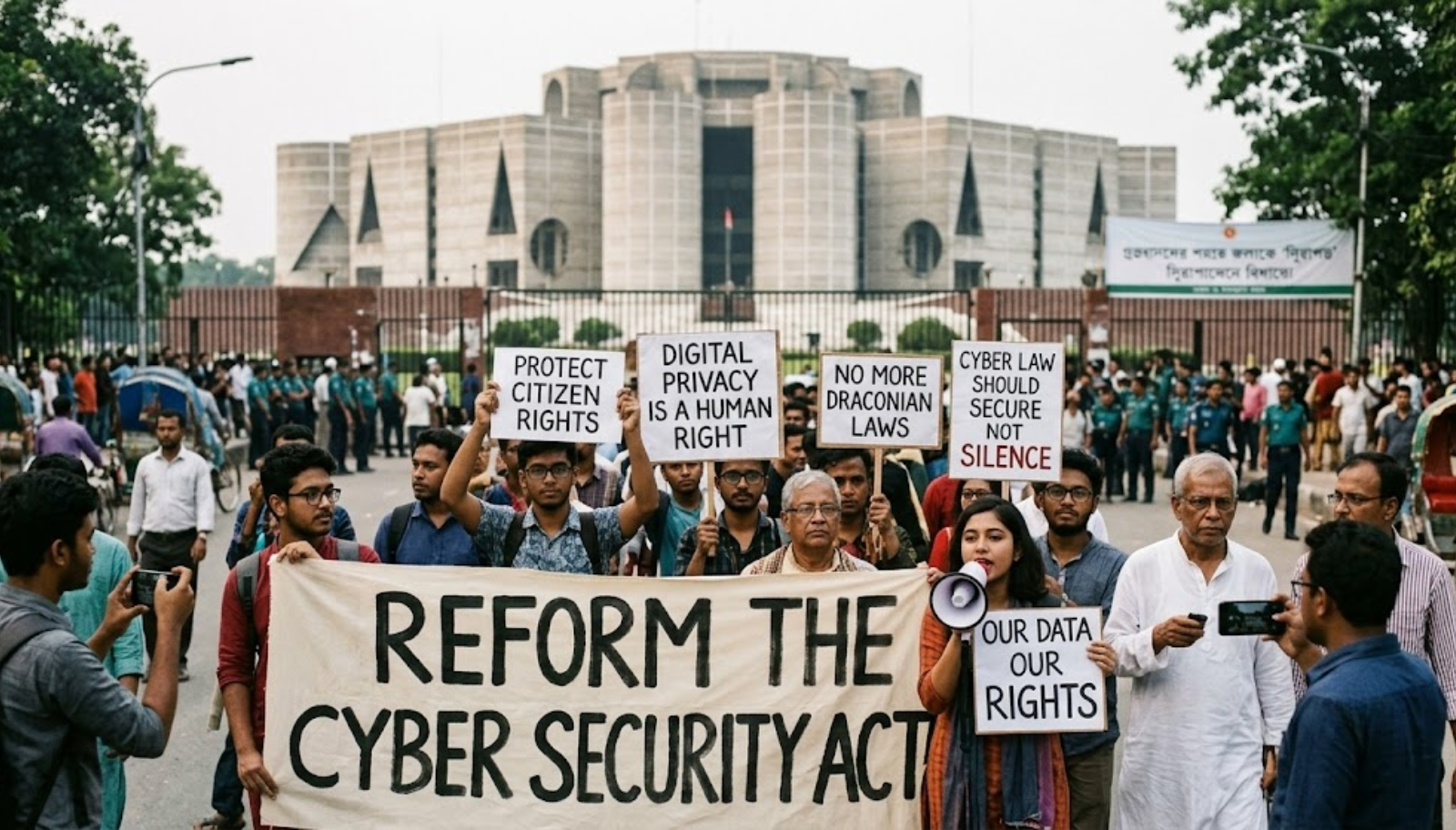
Bangladesh’s digital rights landscape is once again in flux. On 13 July 2026, the Posts, Telecommunications and Information Technology Minister announced that the government has initiated amendments to the Cyber Security Act to compel international platforms to remove defamatory content within defined timeframes. A five-member cabinet committee has been formed to review the proposed changes. The stated objective is protection of individuals from reputational harm. The deeper question is whether the amendments safeguard citizens or construct a more efficient mechanism for silencing them. This article investigates that question.
What the Proposed Reform Entails
The amendments aim to establish time-bound content takedown agreements with international technology companies, including YouTube and TikTok. According to the minister, these platforms already cooperate in removing content flagged as harmful to national security, public order, or religious sentiment; but they have shown far less willingness to act on content that defames individuals.
To close this gap, the proposed law will explicitly criminalize the dissemination of AI-generated or AI-edited defamatory content, with tougher penalties attached to such offences. It will also introduce a clear legal definition of defamation for the first time and extend coverage to the deliberate spread of false, distorted, or misleading information intended to deceive or harm individuals, institutions, or the state. To enforce these provisions, the Bangladesh Telecommunication Regulatory Commission and other authorized agencies will gain the power to block content and request user data directly from platforms.
The Weight of History
Bangladesh’s experience with digital legislation demands skepticisms. The Digital Security Act of 2018 was used to prosecute over 4,500 people between 2018 and 2024, including at least 396 journalists across 222 documented cases. Politicians, activists, and ordinary citizens were charged for online speech that should have been protected under international human rights standards.
The Cyber Security Act that replaced it in 2023 was itself described as draconian by domestic and international observers. In May 2025, the interim government repealed the CSA and issued the Cyber Security Ordinance, which included some positive safeguards against online harassment but retained concerning provisions on content removal, criminal penalties for online speech, and surveillance. Each legislative iteration has been presented as reform, yet each has preserved the state’s capacity to control digital expression.
Citizen Rights at Stake
The most immediate right under threat is freedom of expression. The home minister characterized defamatory content targeting the prime minister and her family as spreading under the guise of freedom of expression. This framing suggests that scrutiny of public officials could be conflated with defamation, a conflation that international human rights law explicitly rejects. Public figures must tolerate a higher degree of criticism than private individuals, and the state’s obligation to protect reputation cannot override the citizen’s right to hold power to account.
The proposed legal definition of defamation and the criminalization of AI generated content lack the precision that criminal law demands. Vague terms such as misleading information and false content create discretion for selective enforcement. When the state alone determines what constitutes misleading speech, and when criminal penalties attach to that determination, the result is not protection but a chilling effect on legitimate discourse, particularly investigative journalism and political commentary.
The empowerment of regulatory agencies to request user data and block content without judicial oversight raises parallel concerns around the right to privacy. Bangladesh’s constitution guarantees privacy of correspondence and communication, and any surveillance or data collection must meet the tests of legality, necessity, and proportionality established under international law. Granting executive agencies unilateral authority to compel data and block access to sidesteps of these safeguards.
The absence of robust independent appeals mechanisms compounds these risks. If content can be removed within a 24-hour window and users bear the burden of proving their speech was lawful, the procedural architecture favors takedown over protection. The principle of presumption of innocence is inverted when citizens must justify expression rather than the state justifying its suppression.
What Must Change
For these amendments to genuinely serve citizens, several safeguards are non-negotiable. Defamation must clearly distinguish private harm from criticism of public officials, with the latter given heightened protection. Criminal penalties for online speech should give way to civil remedies, as international bodies have long recommended. Content removal must require judicial authorization, not executive discretion alone, alongside an independent, transparent appeals’ process open to any affected user. AI-content provisions must target only deliberately deceptive material … not satire, parody, or artistic expression … while state data requests should require judicial warrants and apply only to serious offences. Above all, the amendments must undergo genuine parliamentary debate and public consultation, not urgency procedures that bypass scrutiny.
Bangladesh has seen too many digital laws promise protection and deliver suppression. The right to speak, question, and dissent online is not a state concession; it is a constitutional entitlement. Reform that ignores this will repeat the very pattern it claims to end.