
Naima Onamika
Commissioning Editor
This report examines the current realities, institutional limitations, and policy challenges surrounding the education, social inclusion, and human development of children with special needs in Bangladesh. The primary objective is to highlight the importance of ensuring “Reasonable Adjustment” and assess how families, educational institutions, communities, and the state can work together to provide these children with equal opportunities to develop their abilities. The report also identifies gaps in the implementation of existing laws, inclusive education policies, and international standards and commitments, while presenting practical policy recommendations.
Although approximately 3.4 million children with special needs are estimated to live in Bangladesh, a significant number of them remain excluded from education, social participation, and essential services. Despite the existence of national laws and international commitments supporting their rights, serious gaps remain in implementation. Shortages of trained teachers, inadequate infrastructure, rigid curricula, limited access to assistive learning materials, and social stigma continue to be major barriers to the education of children with special needs. In such circumstances, families often have to take on multiple roles as caregivers, educators, and advocates for their children’s rights.
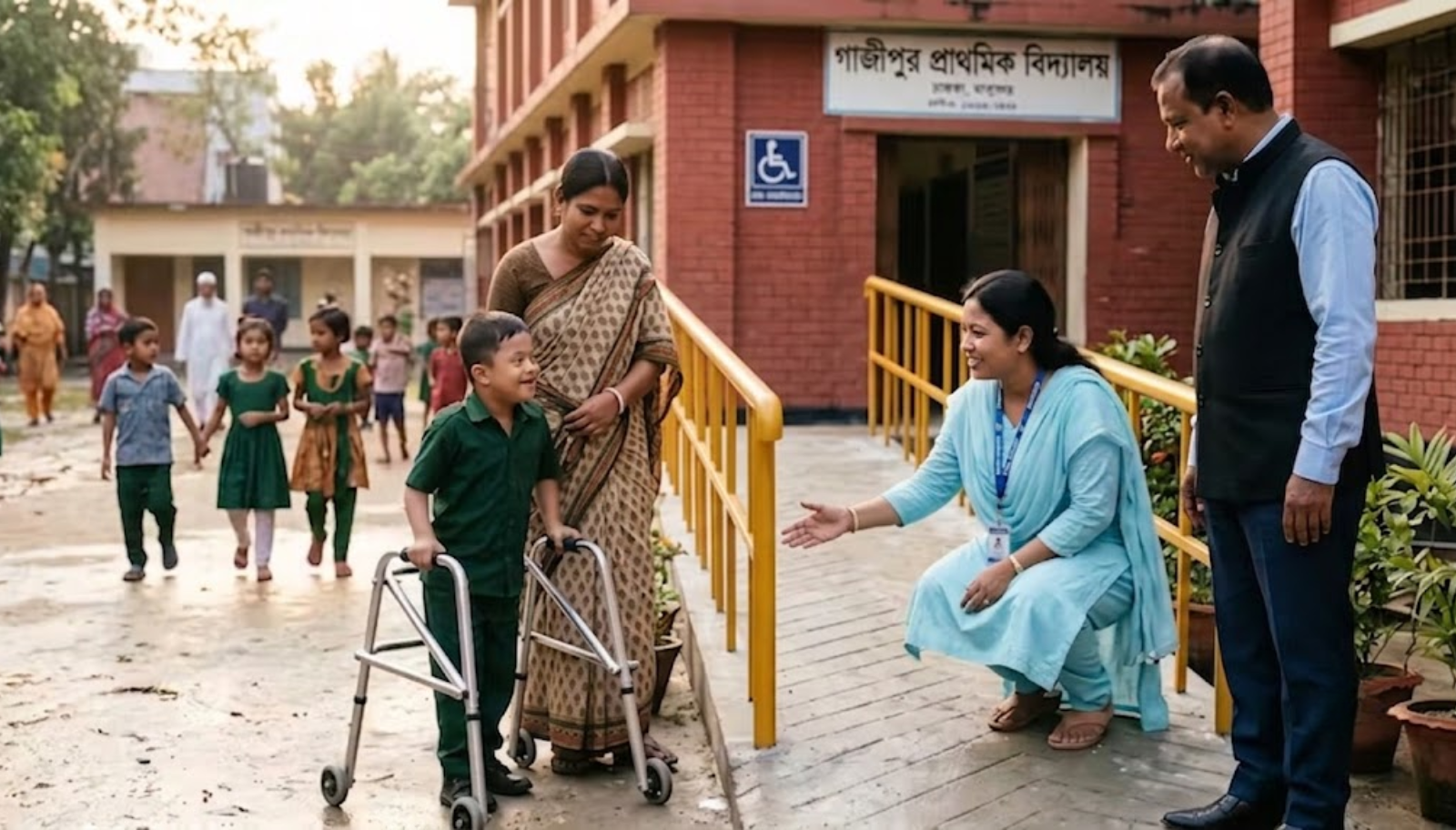
This report highlights that the development of children with special needs cannot be considered the sole responsibility of the government. Building a truly inclusive education system requires coordinated efforts from families, educational institutions, local governments, civil society, media, and society as a whole. Ensuring reasonable accommodation in schools, expanding teacher training, increasing social awareness, and establishing effective accountability mechanisms can create an equitable and dignified education system for these children.
The Current Reality of Children with Special Needs in Bangladesh
According to various studies and information from international organisations, approximately 3.4 million children in Bangladesh live with different forms of physical, mental, intellectual, or developmental disabilities. However, a large proportion of these children do not have access to regular schooling, and many never receive the opportunity to enrol in educational institutions. The situation is particularly challenging in rural, coastal, and marginalised areas, where shortages of educational facilities, trained teachers, and support services are more severe.
The Government of Bangladesh has committed to ensuring equal educational opportunities for children with special needs through the Rights and Protection of Persons with Disabilities Act, the National Education Policy, and inclusive education initiatives. Bangladesh is also committed to international frameworks, including the United Nations Convention on the Rights of Persons with Disabilities (UNCRPD) and Sustainable Development Goal 4 (SDG 4), which call for inclusive and equitable quality education for all. However, the full implementation of these commitments remains incomplete.
Social stigma, negative perceptions, and a lack of awareness continue to complicate the situation. In many cases, schools are also reluctant to accept students with special needs due to limited capacity and inadequate support systems. As a result, children are deprived not only of their right to education but also of opportunities to build confidence, develop social skills, and prepare for future employment.
Institutional Limitations and Policy Challenges
Although Bangladesh has laws and policies supporting inclusive education, significant challenges remain in implementation. Most mainstream schools lack clear frameworks and practical mechanisms to support children with special needs. Many teachers do not receive adequate training in inclusive education or in teaching students with different learning requirements. As a result, they often lack sufficient understanding of diverse learning patterns, behavioural needs, and appropriate support strategies.
School infrastructure also remains a major challenge. Many educational institutions are not disability-friendly, lacking facilities such as ramps, wheelchair accessibility, Braille materials, sign language support, assistive technologies, and suitable learning resources. These limitations make it difficult for children with special needs to participate fully in school life.
In addition, the absence of coordinated action among the education, social welfare, and health sectors, along with weak monitoring mechanisms, has prevented government policies from achieving their intended impact.
The Role of Family and Society
Families remain the strongest foundation for the development of children with special needs. However, due to limited awareness, financial challenges, and social stigma, many families still hesitate to send their children to school. This often increases social isolation and reduces opportunities for personal development.
Society also has a crucial role to play. Media organisations, local governments, civil society groups, religious leaders, and community organisations can contribute significantly by promoting positive attitudes towards disability and inclusion. Greater awareness and acceptance can help reduce discrimination and challenge long-standing misconceptions.
Policy Recommendations
To ensure effective inclusive education for children with special needs, the government must establish clear national guidelines for implementing “Reasonable Adjustment” and ensure their mandatory application across educational institutions.
Every school should have disability-friendly infrastructure, access to assistive technologies, and appropriate learning materials. Inclusive education should become a compulsory component of teacher training programmes so that educators are better prepared to support diverse learning needs.
A coordinated action plan among the Ministries of Education, Social Welfare, and Health is also necessary. Schools should introduce support services, flexible assessment methods, and adapted examination systems for students with special needs. Regular awareness programmes should be organised for parents to strengthen their understanding of children’s rights and educational needs.
Local governments, non-governmental organisations, and media institutions should be actively involved in promoting national awareness campaigns. At the same time, a system for regularly monitoring the progress of existing laws and policies must be established to ensure effective implementation.
Conclusion
Ensuring education and social inclusion for children with special needs is not only a humanitarian responsibility but also a fundamental requirement for achieving sustainable development and social justice. Responsibility does not end with the introduction of laws or policies; meaningful change requires effective implementation, institutional accountability, active participation from families and communities, and guaranteed reasonable accommodation within schools.
When the state, society, and families work together, every child with special needs in Bangladesh can receive equal opportunities to develop their abilities and potential. Such collective efforts can help build a more inclusive, compassionate, and discrimination-free society where every child can contribute with dignity.