
Dr. Naima Parvin
Coventry University, UK
Beyond Participation: The Challenge of Productive Inclusion
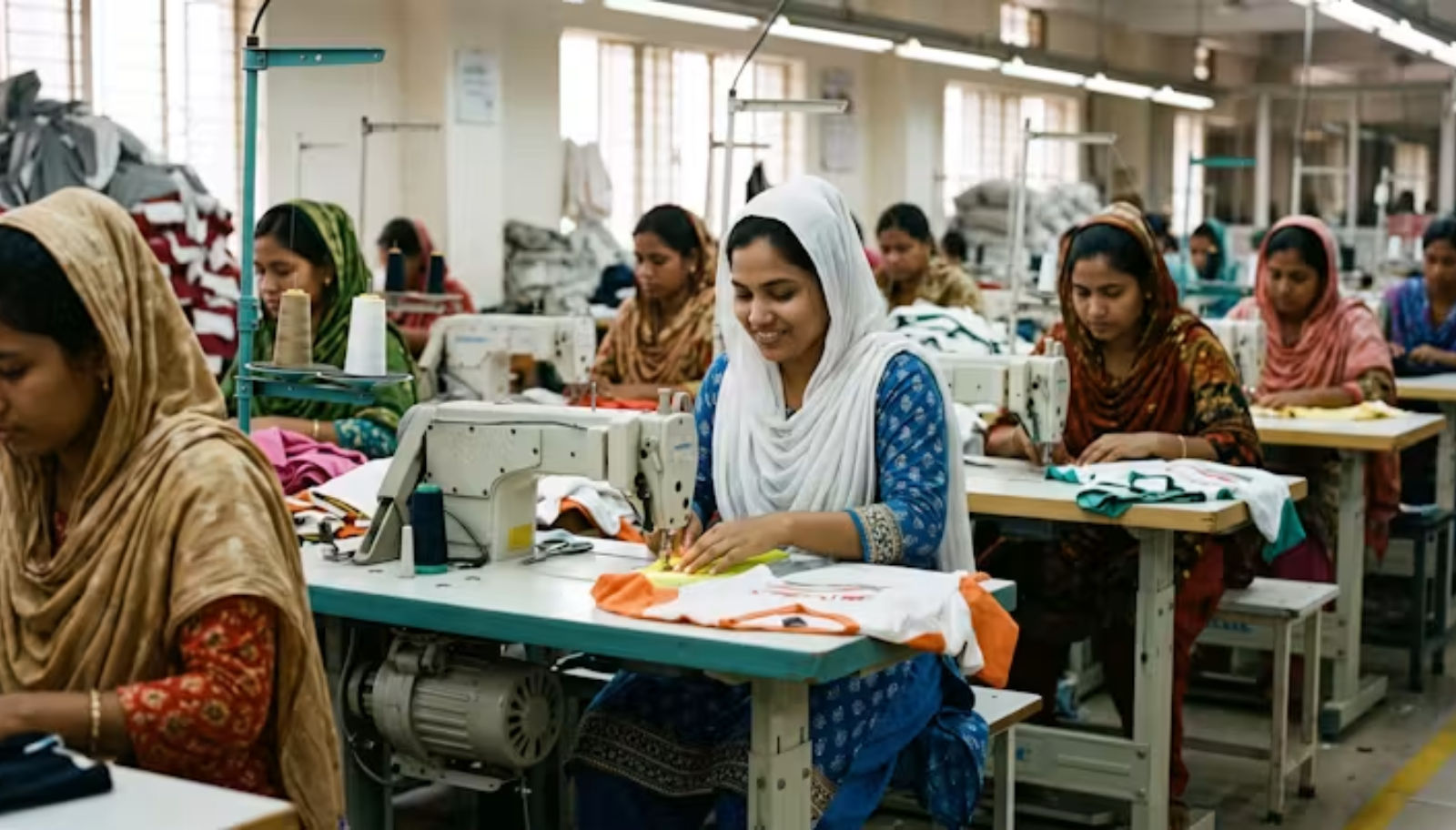
Bangladesh’s economic transformation over the last three decades is one of the most remarkable development stories in South Asia. While discussions often focus on export growth, poverty reduction, and industrial expansion, a crucial component of this success has been the growing participation of women in the labour market. Female labour force participation reached 42.68 percent in 2022, representing a significant increase from previous decades and reflecting profound social and economic changes. The expansion of the ready-made garment (RMG) industry, rural microfinance initiatives, and increased access to education have enabled millions of Bangladeshi women to enter paid employment and contribute directly to national output.
Yet the central policy question facing Bangladesh today is no longer whether women can participate in the labour force. Rather, it is whether their participation is translating into sustained productivity growth, economic diversification, and long-term national competitiveness. As Bangladesh seeks to achieve upper-middle-income status and navigate the challenges of the Fourth Industrial Revolution, the productive inclusion of women has become an economic imperative rather than simply a matter of social justice.
The Women’s Employment Revolution
Since the 1990s, female employment has played a critical role in Bangladesh’s economic growth. The rise of the garment sector created unprecedented employment opportunities for women, especially those from rural and lower-income households. For many families, women’s earnings became a source of financial security, improved nutrition, educational opportunities for children, and greater social mobility.
The economic benefits extended beyond households. Women’s labour contributed to the expansion of exports, strengthened foreign exchange earnings, and increased domestic consumption. In addition, microfinance programs empowered rural women to engage in poultry farming, livestock rearing, small-scale enterprises, and self-employment activities, thereby supporting local economic development.
These developments illustrate a fundamental economic principle: when more people enter productive employment, a country expands its productive capacity and increases its potential output. The growing integration of women into economic life therefore became one of the hidden engines behind Bangladesh’s impressive GDP growth.
The Productivity Puzzle
Despite these achievements, Bangladesh now faces a productivity challenge. Increased labour force participation has generated significant economic gains, but participation alone cannot sustain growth indefinitely. Productivity, the amount of output produced per worker, ultimately determines long-term economic prosperity.
A major concern is the concentration of female employment in a limited number of labour-intensive sectors, particularly garments. While the RMG sector has been enormously successful, overreliance on a single industry creates vulnerabilities. Productivity growth becomes dependent on global demand conditions, international market fluctuations, wage competitiveness, and technological trends within that specific sector.
Moreover, many women continue to work in low-value-added occupations with limited opportunities for advancement. Informal employment remains widespread, and a substantial portion of women’s economic contribution is either unpaid or undercounted. Women engaged in household-based agricultural production, caregiving, family businesses, and subsistence activities frequently contribute significantly to economic output without receiving formal recognition, income security, or access to productive assets.
The result is a paradox: women are participating more than ever before, but the full productivity potential of their participation remains unrealized.
Structural Barriers to Women’s Productivity
Several interrelated barriers continue to restrict women’s economic advancement.
Unpaid Care Burden
Women perform a disproportionate share of domestic work, childcare, and eldercare responsibilities. These unpaid tasks reduce the amount of time available for paid employment, skill development, entrepreneurial activities, and career progression. Economists increasingly recognize unpaid care work as a significant constraint on labour productivity and economic growth.
Informality and Limited Social Protection
Many female workers operate in informal sectors characterized by low wages, limited legal protection, minimal access to finance, and restricted opportunities for skills upgrading. Informality reduces incentives for investment in worker development and limits productivity improvements.
Skills Mismatch
Bangladesh’s emerging economy increasingly requires digital competencies, technical expertise, and knowledge-intensive skills. However, women remain underrepresented in science, technology, engineering, and mathematics (STEM) fields, reducing their participation in some of the fastest-growing and highest-productivity sectors
Mobility and Safety Concerns
Access to safe and affordable transportation remains a major challenge, particularly in urban areas. Concerns regarding workplace harassment, violence, and social stigma continue to discourage many women from pursuing employment opportunities outside their immediate communities.
Asset and Credit Constraints
Women’s limited access to land ownership, property rights, and formal credit can restrict entrepreneurship and business expansion. Without productive assets, women often remain concentrated in low-investment, low-productivity activities.
Policy Implications: A New Growth Strategy
The evidence suggests that Bangladesh must move beyond policies that merely increase female labour force participation and instead focus on enhancing the productivity of female employment. Several policy implications emerge from this challenge.
1. Invest in Care Infrastructure
Public investment in affordable childcare centres, community care facilities, and eldercare services should be viewed as economic infrastructure rather than social welfare expenditure. Such investments free women to participate more fully in the labour market and enable households to allocate labour more efficiently.
2. Diversify Employment Opportunities
Bangladesh must reduce its dependence on garments as the primary source of female employment. Strategic investments should encourage women’s participation in information technology, healthcare, education, renewable energy, financial services, and advanced manufacturing sectors. Economic diversification will create more resilient sources of productivity growth.
3. Strengthen Technical and Digital Skills
Expanding vocational education, digital literacy programs, coding training, and STEM initiatives targeting women can improve access to high-productivity occupations. Partnerships between government, educational institutions, and industry will be essential to ensure that training aligns with labour market demands.
4. Improve Workplace Standards
Stronger enforcement of maternity protections, workplace safety regulations, equal pay provisions, and anti-harassment measures can increase retention rates and support career progression. Productive labour markets require environments where workers can perform effectively and safely.
5. Expand Financial Inclusion
Reforming property rights, improving access to credit, and supporting women-owned enterprises can unlock entrepreneurship and innovation. Women’s businesses often face greater barriers to scaling operations despite demonstrating strong economic potential.
6. Address Social Norms
Economic reforms alone are insufficient if social attitudes continue to constrain women’s opportunities. Public awareness campaigns, community engagement initiatives, and educational programs can support cultural shifts that normalize women’s participation in leadership, entrepreneurship, and professional careers.
Conclusion
Bangladesh’s experience demonstrates that increasing women’s labour force participation can be a powerful driver of economic growth. However, the next stage of development requires a transition from participation-based growth to productivity-based growth. The challenge is no longer simply bringing women into the labour market but ensuring that their talents, skills, and ambitions are fully utilized.
If policymakers successfully address barriers related to care responsibilities, skills development, workplace safety, economic diversification, and financial inclusion, women can become an even more powerful engine of innovation, competitiveness, and national prosperity. The future trajectory of Bangladesh’s economy may therefore depend less on how many women work and more on how productively, securely, and equitably they are able to contribute.
References
Bangladesh Bureau of Statistics (BBS). (2023). Labour Force Survey 2022. Dhaka: Government of Bangladesh.
International Labour Organization (ILO). (2024). Women in the Labour Market and Economic Development in Bangladesh. Geneva: International Labour Organization.
Kabeer, N. (2012). Women’s Economic Empowerment and Inclusive Growth: Labour Markets and Enterprise Development. International Development Research Centre.
Mahmud, S., Shah, N. M., & Becker, S. (2012). Measurement of women’s empowerment in rural Bangladesh. World Development, 40(3), 610–619.
Rahman, R. I., & Islam, R. (2013). Female Labour Force Participation in Bangladesh: Trends, Drivers and Barriers. Bangladesh Development Studies, 36(4), 1–34.
World Bank. (2023). Bangladesh Development Update: New Frontiers in Poverty Reduction. Washington, DC: World Bank.
World Economic Forum. (2024). Global Gender Gap Report 2024. Geneva: World Economic Forum.
United Nations Development Programme (UNDP). (2023). Human Development Report 2023/24. New York: United Nations Development Programme.
Asian Development Bank. (2023). Bangladesh: Promoting Gender-Inclusive Growth. Manila: Asian Development Bank.
Organisation for Economic Co-operation and Development (OECD). (2023). Gender Equality and Economic Growth: Policy Perspectives. Paris: OECD.