
Naima Onamika
Commissioning Editor, TOB
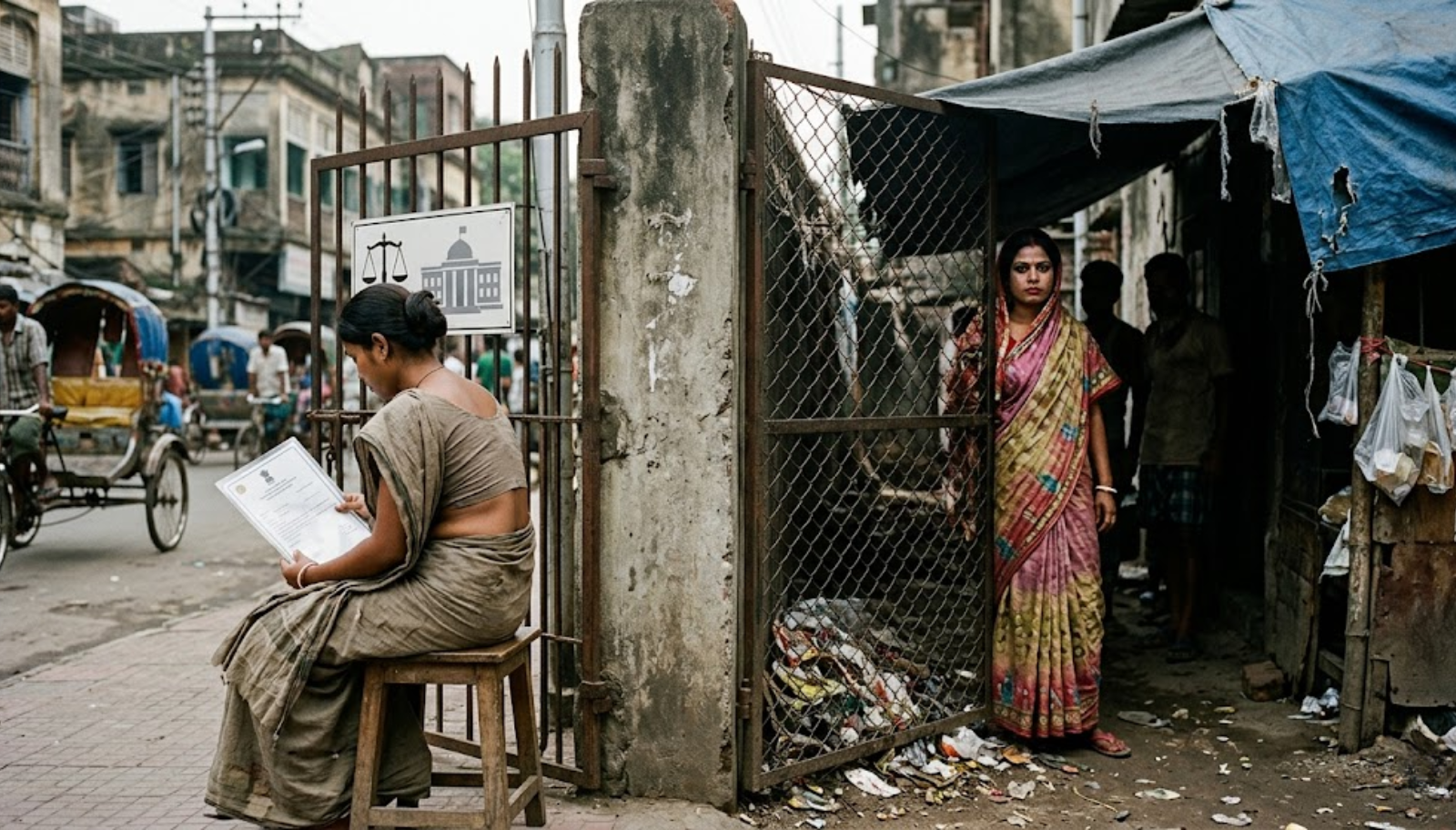
For decades, the legal status of sex work in Bangladesh and India has been marked by a fundamental contradiction. Neither country directly criminalises consensual sex work among adults, but various activities associated with sex work, including procuring, operating brothels, public solicitation, exploitation, and trafficking, are treated as offences under the law. As a result, sex work may have legal recognition on paper, while sex workers in practice remain vulnerable to insecurity, limited access to healthcare, inadequate legal assistance, and violations of human dignity. This article examines the gap between legal recognition and lived reality through a comparative analysis of the existing laws, enforcement mechanisms, trafficking concerns, health risks, and rehabilitation frameworks in Bangladesh and India.
In Bangladesh, the legal recognition of sex work by adult women was established following a High Court ruling in 2000. However, many activities associated with sex work remain regulated or criminalised under various laws, leaving sex workers in a state of legal uncertainty. This creates risks of harassment, extortion, and social discrimination by law enforcement agencies. At the same time, incidents involving deception, debt bondage, and forced involvement in sex work are directly linked to human trafficking.
A similar contradiction exists in India. Consensual sex work among adults is not directly prohibited, but the Immoral Traffic (Prevention) Act criminalises several activities surrounding sex work. In 2022, the Supreme Court of India reaffirmed the dignity of sex workers and their right to equal protection under the law. Despite this judicial recognition, social stigma, discrimination in healthcare, and the risk of trafficking continue to affect sex workers in practice.
Recognition in Bangladesh, Limited Protection
The most significant challenge in Bangladesh is the gap between legal recognition and actual protection. Alongside registered brothels, sex work also exists in hotels and on the streets. Various estimates place the number of female sex workers in the country between 100,000 and 200,000. Of particular concern is the so called “chukri” system, in which women may be deceived, sold, or brought into sex work by force and then trapped for extended periods through artificially imposed debts. This is not simply a question of sex work. It represents a serious human rights concern connected to human trafficking, coercion, and modern slavery. More concerning is that even where anti trafficking laws exist, weaknesses in investigation, prosecution, and conviction can prevent the law from becoming an effective deterrent.
India’s Framework: Legal Recognition and an Attempt at Judicial Protection
India’s legal framework differs from Bangladesh’s in some respects, but the central contradiction remains similar. Consensual sex work among adults is not itself a criminal offence, while activities such as operating brothels, public solicitation, and living off the earnings of sex work by third parties fall within the scope of criminal law.
The Supreme Court’s 2022 directions marked an important development. The Court made clear that sex workers should not be treated as criminals merely because of their profession and that they are entitled to equal protection under the law. The ruling created greater scope for considering the rights of sex workers not merely as a matter of morality, but as a question of human rights and the rule of law.
Health and Human Trafficking: A Shared Crisis
Access to healthcare remains a major challenge for sex workers in both Bangladesh and India. Social stigma, discriminatory treatment by healthcare workers, and a lack of confidentiality discourage many from seeking institutional healthcare. This increases their vulnerability to sexual and reproductive health problems, HIV, and other infections.
The realities of human trafficking in the two countries are also closely connected. The trafficking of women and children through border areas between Bangladesh and India remains a significant concern associated with the sex industry in both countries. Addressing trafficking therefore requires more than national legislation. Cross border cooperation in investigation and prosecution is also essential.
Differences in Rehabilitation and Social Protection
India’s federal structure allows individual states to develop and implement their own rehabilitation and welfare programmes. The country also has a relatively extensive network of non-governmental organisations working with victims of trafficking.
Bangladesh has a comparatively centralised social protection and rehabilitation system, which remains limited in relation to the scale of need. Children born in brothels face challenges in accessing education, healthcare, birth registration, and identity documents. Such discrimination places them at risk of experiencing social exclusion across generations.
What Kind of Reform Is Needed?
In both countries, the policy debate needs to move beyond the narrow question of whether sex work should be legal or illegal and focus instead on practical protection. Effective investigation and speedy prosecution of human trafficking cases, non-discriminatory healthcare, legal assistance, safe working conditions, and protection from violence and abuse are essential.
At the same time, those who wish to leave sex work should have access to rehabilitation programmes that provide skills training, alternative employment opportunities, safe housing, education, and financial assistance. Children should never face discrimination because of their parents’ occupation.
Conclusion
The experiences of Bangladesh and India demonstrate that legal recognition alone does not guarantee human protection. When a profession is not directly criminalised on paper, while almost every activity surrounding it remains subject to criminal law, the people involved can easily become vulnerable to legal uncertainty and exploitation.
The central question for policymakers in both countries, therefore, is not whether sex work should once again be declared legal or illegal. The more important question is how existing laws can prevent human trafficking, coercion, and exploitation while ensuring the dignity, health, safety, and legal protection of sex workers. Legal recognition becomes meaningful only when it is accompanied by effective protection in practice.
Reference: