
Ruksana Akhter
Freelance Architect
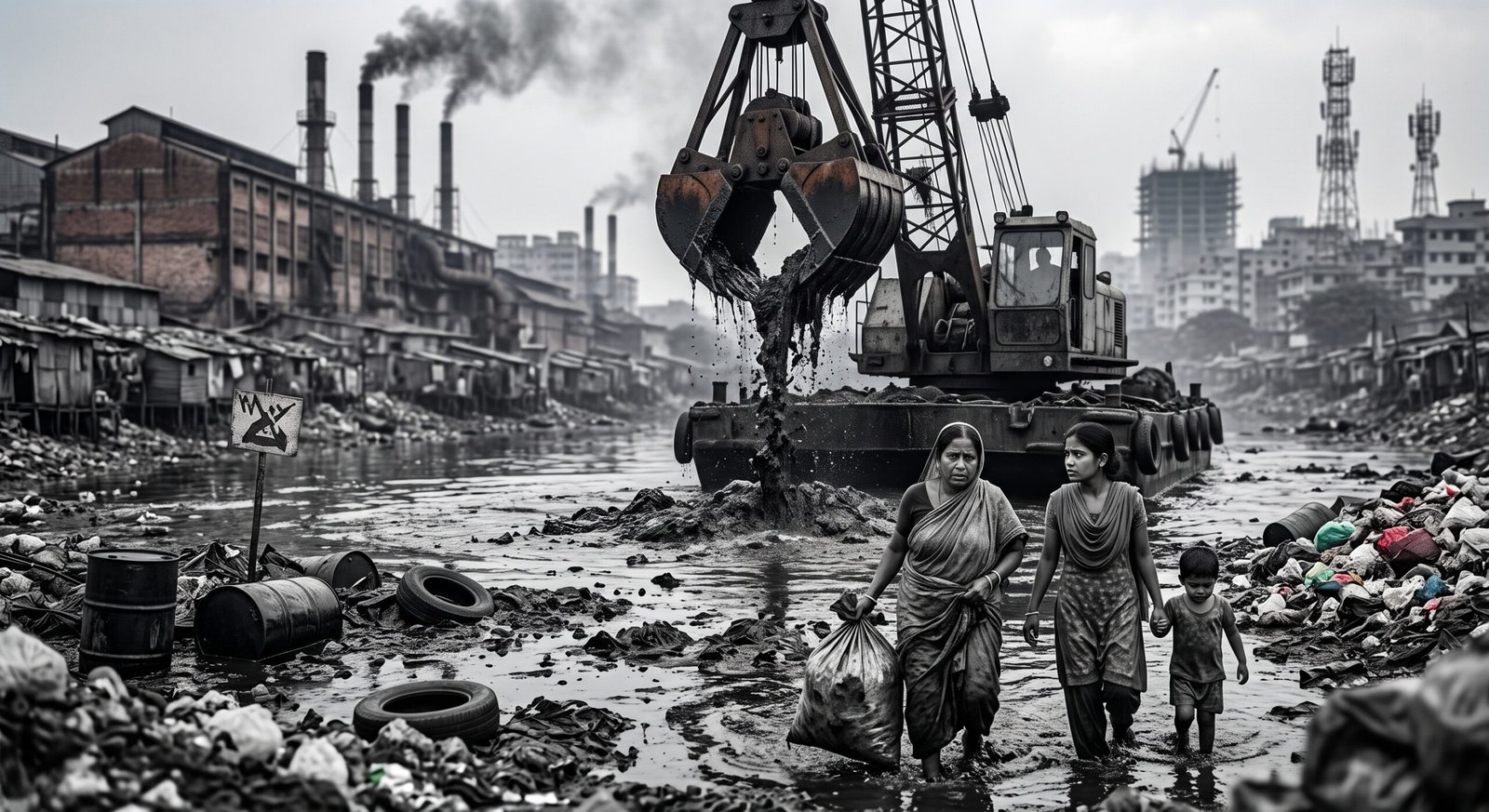
Dhaka’s rivers once anchored its identity as a hub of trade and settlement, but the Buriganga and Turag have since deteriorated into little more than open sewers along many of their stretches. The city sends more than eighty percent of its wastewater into these waterways untreated, and over half of its canals have either vanished entirely or become too clogged to function.
The damage compounds from multiple directions at once: industrial discharge, plastic debris, and raw sewage together drive dissolved oxygen in the Buriganga down to dangerously low levels for most of the year, leaving aquatic life gasping across large stretches of the river. Meanwhile, years of unchecked encroachment, such as illegal construction and dumping, have physically narrowed the riverbed, choking channels that once had room for major river traffic.
The Compounding Role of Sand Extraction and Dredging
Beyond chemical and organic contamination, unregulated sand extraction has emerged as a quieter but equally destructive force reshaping these rivers. Carried out largely without environmental clearance, sand mining destabilizes riverbeds, speeds up bank erosion, and disrupts natural flow patterns, trapping pollutants in place rather than letting the river flush them out. Dredging meant to restore navigability or improve flow has, ironically, repeatedly unearthed vast quantities of buried polythene and solid waste beneath the riverbed, exposing just how deeply contamination has seeped into the river system over time.
Commercial sand interests have also shown fierce resistance to environmental oversight, with past dredging efforts met by direct threats and intimidation from traders whose extraction activities were disrupted. This clash between genuine restoration work and unchecked commercial mining has left authorities struggling to tell beneficial engineering apart from exploitation that only deepens the ecosystem’s decline.
Impact on Fishery
The consequences for fish populations have been severe and, in many areas, effectively terminal. Local environmental groups have described sections of the Buriganga as functionally dead for fish life, since sediment, plastic accumulation, and chemically depleted oxygen levels leave no viable habitat for aquatic species to survive, let alone reproduce.
Sand extraction compounds this damage by destroying spawning grounds along riverbanks and disrupting the natural sediment structure that many native fish species depend on for breeding cycles. Communities that once relied on river fishing as a primary livelihood have been forced into alternative occupations such as street vending, representing not just an ecological loss but a significant economic displacement for riverside populations who had few other transferable skills.
Impact on River Transport
River transport, historically one of the most efficient and affordable ways to move goods and people through greater Dhaka, has also suffered considerably. Silt buildup and unregulated sand deposits reduce navigable depth, forcing vessels to reroute, delay, or reduce cargo loads.
The very Sadarghat terminal that anchors much of the region’s river commerce, handling tens of thousands of passengers daily, simultaneously contributes to the pollution burden through fuel discharge and vessel waste, illustrating how transport and pollution have become mutually reinforcing problems rather than separate issues. Restoring adequate channel depth requires continuous dredging, yet this same dredging, when tied to poorly regulated sand extraction, can further destabilize the banks it is meant to help protect.
Impact on Riverbank Habitat
Riverbank ecosystems have arguably suffered the most visible transformation. Natural banks that once supported diverse riparian vegetation and served as buffers against flooding have in many areas been replaced by informal settlements, waste dumping grounds, or commercial sand storage yards. This loss of natural buffer zones increases the river’s vulnerability to erosion during monsoon flows and eliminates habitat for the smaller organisms that form the base of the aquatic food chain. Where authorities have made progress evicting illegal structures along riverbanks, the reclaimed land is not always restored ecologically, leaving bare, unstable embankments that continue to erode into the water.
Toward Meaningful Reform
Treating these rivers as shared common property demands coordinated reform, not another round of one-off project funding. Sand extraction needs a strict, transparently enforced licensing system that draws a clear line between legitimate navigational dredging and unregulated commercial mining, backed by independent monitoring so political or financial pressure can’t override environmental limits. Industrial effluent treatment plants also need to be fully operational and continuously monitored, since restoring water flow alone can’t offset ongoing chemical discharge.
Riverbank zones should carry legal protection as ecological buffers, with cleared encroachment areas actively replanted rather than left empty and open to fresh occupation. Fishing and riverside communities affected by restoration work need structured compensation and retraining tied to clear timelines, so ecological recovery doesn’t come at the continued cost of the livelihoods these rivers were meant to support. Only a sustained, enforcement backed strategy, not another set of announcements, can keep Dhaka’s rivers from crossing the point of no return.