
Farzana Nupur
Stamford University
In the early 1990s, Bangladeshi cinema discovered a face capable of selling tickets on the strength of a poster alone. Chowdhury Mohammad Shahriar Emon, better known as Salman Shah, entered the industry in 1993 with Keyamat Theke Keyamat and, within roughly three years, redefined what a Bangladeshi leading man could look like on screen, bringing a softer, more urbane romantic sensibility to an industry long built on melodrama and larger than life heroics.
His pairings with Moushumi and later Shabnur yielded some of the decade’s most commercially successful romances, while his fashion sense, hairstyle, and screen presence were widely copied by young men nationwide.
What set his stardom apart was its sheer velocity. In under three years he starred in nearly thirty films, most of them hits, arriving just as Dhallywood urgently needed a bankable star to counter the rising pull of Indian and Pakistani satellite television. He embodied modernity without sacrificing the emotional core Bangladeshi audiences expected, and for a generation of viewers, he stood as a symbol of a film industry that briefly seemed capable of producing stardom of genuinely global calibre.
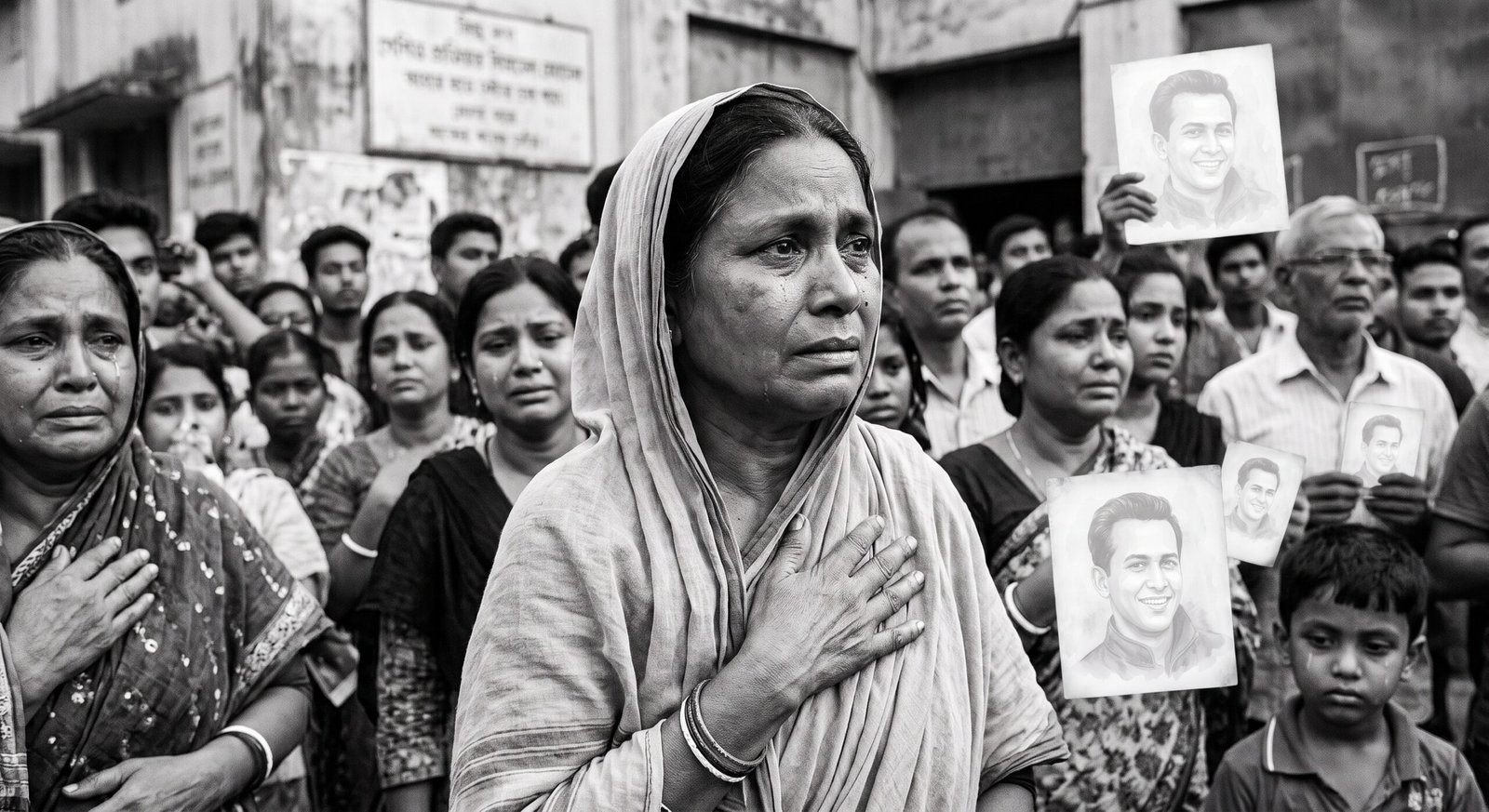
That promise ended abruptly on the sixth of September, 1996, when Salman Shah was found dead at his New Eskaton residence in Dhaka at age twenty-four. His wife told police she discovered him hanging in the dressing room, and he was pronounced dead after being rushed to hospital. Questions about whether this was suicide or a killing staged to look like one surfaced almost immediately.
A Case That Refuses to Close
Three decades on, the case remains legally unresolved, an extraordinary fact for a public figure of his stature. Investigators concluded in 2020 that Salman Shah died by his own hand following a family dispute tied to his personal life, a finding a magistrate accepted the following year, though his family never accepted it. In October 2025, a sessions judge granted the family’s petition, ordering the matter reopened and investigated as murder, effectively overturning the earlier conclusion.
Progress since then has been uneven. An accused actor identified as Don was arrested in 2026 after years evading capture, reviving hope that answers might finally surface. Investigators also obtained court approval to exhume Salman Shah’s remains for a fresh inquest and autopsy aimed at determining the true cause of death. Even so, the investigation report keeps slipping, with courts granting repeated extensions as deadlines pass unmet. This cycle, fresh leads sparking hope only to stall in procedural delay, has come to define the case nearly as much as the tragedy itself.
The Gap in Justice and Cinema
The unresolved nature of this case is not merely private grief confined to one family. It signals to an entire industry that even its brightest star could vanish without the state offering a credible, timely account of what happened. When investigative institutions fail to deliver swift, trusted findings, actors, producers, and technicians lose confidence that the industry, or the justice system surrounding it, will protect them.
This erosion of institutional dignity carries real costs, undermining the confidence a cinema industry needs to attract serious long-term investment, insurance backing, and international collaboration.
What Bangladeshi cinema lost with Salman Shah’s death was not simply a matinee idol but a particular creative direction, one blending restrained emotional performance with mass appeal, at precisely the moment the industry needed such a model to survive competition from abroad. Few actors since have managed to combine commercial success with that same aspirational, modern image, and the industry has instead leaned heavily on formulaic action films and remakes, arguably for lack of an equivalent figure to anchor a fresh creative identity.
The prolonged absence of resolution also denies the industry closure and narrative. Cinema thrives on stories told without fear, yet the story of its own most beloved star remains suspended in procedural limbo. Until the investigation reaches a conclusion the public and the family can trust, Salman Shah’s legacy will stay defined as much by the mystery of his ending as by the brilliance of his brief, luminous career.