Rehan Hossain
University of Dhaka
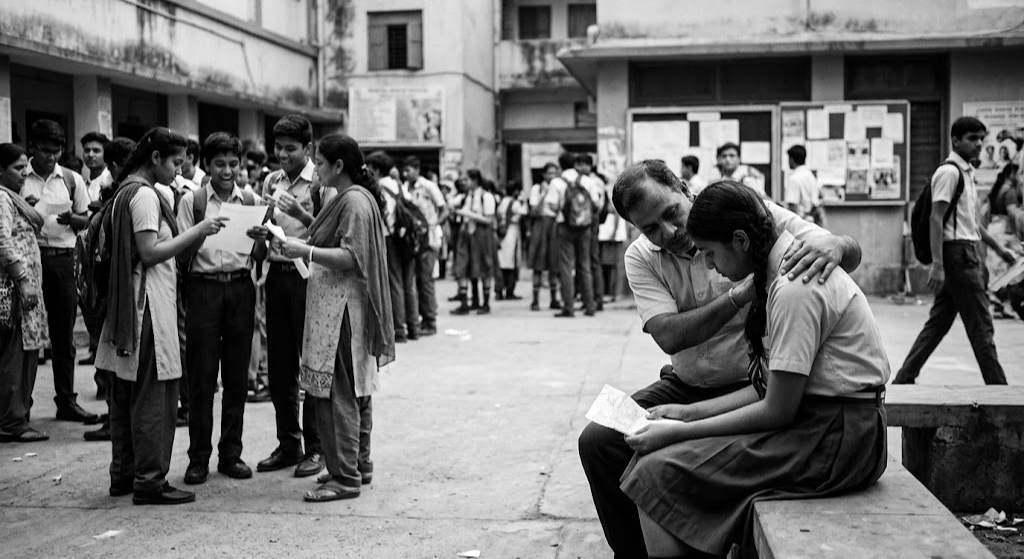
Every year, the publication of public examination results exposes a troubling reality in Bangladesh. When a student receives a results sheet, it does more than record marks in a handful of subjects. In the eyes of society, it often becomes a final verdict on the student’s intelligence, worth, and entire future. Under the weight of these artificial standards imposed by families and society, too many young lives are cut short before their time.
According to a recent statistic, around 403 students died by suicide in Bangladesh in 2025, approximately half of them school students. Not all these deaths were linked to examination results, but academic pressure is widely recognised as a serious source of distress among young people. When reports of student suicides emerge just days after results are published, or when we see figures documenting the deaths of hundreds of adolescents over the course of a year, they should prompt deep reflection and painful questions about the society we have created.
What kind of society are we building when a piece of paper is valued more highly than a human life?
We must first acknowledge that social ignorance and stigma surrounding mental health lie at the heart of this crisis. Statistics indicate that around 12.6 per cent of children in Bangladesh experience mental health difficulties, while more than 90 per cent of them receive no formal support. These figures, in my view, may reveal only part of the reality.
Mental health has long been treated as a luxury in our society. When a student struggles with depression or emotional distress, they may be dismissed as “lazy” or accused of “putting on an act”. Anxiety is often interpreted as a sign of weak character. When emotional suffering is treated as a personal failing and pushed aside, students learn to hide their pain rather than speak about it. Many continue to struggle in silence until they feel completely overwhelmed.
But did students create this harmful environment themselves? These children bear no responsibility for the conditions that have brought them to such a desperate point. They are victims of a suffocating culture shaped by adults.
Parents themselves live with profound uncertainty, rising household expenses, and fears about their children’s future. Many have come to believe that without good academic results, their children may struggle to earn a living. Often without realising it, they pass this fear on to their children through constant demands: “You must study harder”, “You must get better results”, and “You must make us proud”.
How can parents who spend their days crushed by their own anxieties hear the quiet cries hidden deep within their children’s minds? Many unconsciously transfer their fears about economic security and social standing onto their children. Expectations such as “You must get good marks” and “Do not bring shame upon us” can place an unbearable burden on a young mind.
Teachers, too, are caught within the same system. Overcrowded classrooms, extensive syllabuses, low salaries, and pressure to maintain institutional rankings leave many exhausted and emotionally drained. When a tired or distressed teacher mocks a student or compares them unfavourably with a classmate, the wound can remain for years. A single humiliating remark or moment of neglect may stay lodged in a child’s memory long after the incident has passed.
What is the result? Adults carrying unresolved emotional distress help create a society in which distress is passed from one generation to the next. The children growing up in that society inherit not only their expectations but also their emotional burdens.
The inflexible attitudes of society and the state should give us serious cause for concern. Can a single examination, or an assessment lasting just a few hours, determine a person’s abilities and potential for an entire lifetime? This unrealistic approach to evaluation needs urgent reform. Otherwise, the students struggling under today’s pressure may grow into the parents and members of society who impose the same pressure on the next generation.
Addressing this crisis requires fundamental changes to both our education system and our social attitudes.
Humanising the assessment system: Education should not depend primarily on one major examination at the end of the year. Continuous assessment, subject-based projects, and practical life skills should receive greater importance. The excessive celebration of students who achieve a GPA of 5, along with sensational media coverage of their results, should also end. Such coverage can deepen feelings of inadequacy among the many students who receive lower grades or fail to achieve the expected marks.
Making mental health support an institutional responsibility: Every secondary school should be required to have at least one trained mentor or counsellor available to provide support. During the particularly difficult period surrounding the publication of examination results, students need access to people who will listen with patience and compassion, without judgement, blame, or scolding.
Reforming the roles of teachers and parents: Teachers need better working conditions, fair salaries, and the professional respect they deserve. Improving their circumstances may also reduce their dependence on private coaching. Schools should regularly offer parenting guidance and counselling to help parents understand that comparing children with others can cause serious emotional harm and undermine their development.
Recognising diverse career paths: Our social attitudes must change. Becoming a doctor or an engineer cannot be the only accepted measure of success. Technical and vocational education, the arts, and creative professions deserve equal respect. When young people have access to a wider range of valued career paths, the relentless pressure surrounding examination results may begin to ease.
No person deserves to have their worth measured by a number or a GPA. Examination results do not represent a final victory or defeat in life. They are merely one small, temporary experience along a much longer journey. A child’s identity and potential cannot be defined by the figures printed on a results sheet.
If we want to build a healthy, confident nation, we must first stand firmly beside our children. Every adult has a responsibility to help young people understand this enduring truth. As responsible citizens, we must recognise that institutional reform alone is not enough. Families, too, must create environments where children can speak openly about their struggles without fear of judgement.
Whatever the results may be, the reassurance “We are here for you” can make a profound difference when a child is facing one of the darkest moments of their life. Knowing that family and society will not abandon them may help save a life.
Doing poorly in an examination does not mean life is over. A disappointing result is only one setback, not the end of the road. During such difficult moments, children need love rather than criticism, reassurance rather than blame. We must help them understand that examination results are not the sum of their lives.
Communicating this simple but deeply humane truth is the responsibility of every adult in society. A compassionate person who listens without judgement and offers reassurance can help a young person find a way forward when everything seems to have come to a standstill. Sometimes, that act of understanding is enough to plant the first seed of hope in a child’s heart.