
Hasan Hamid
CUET
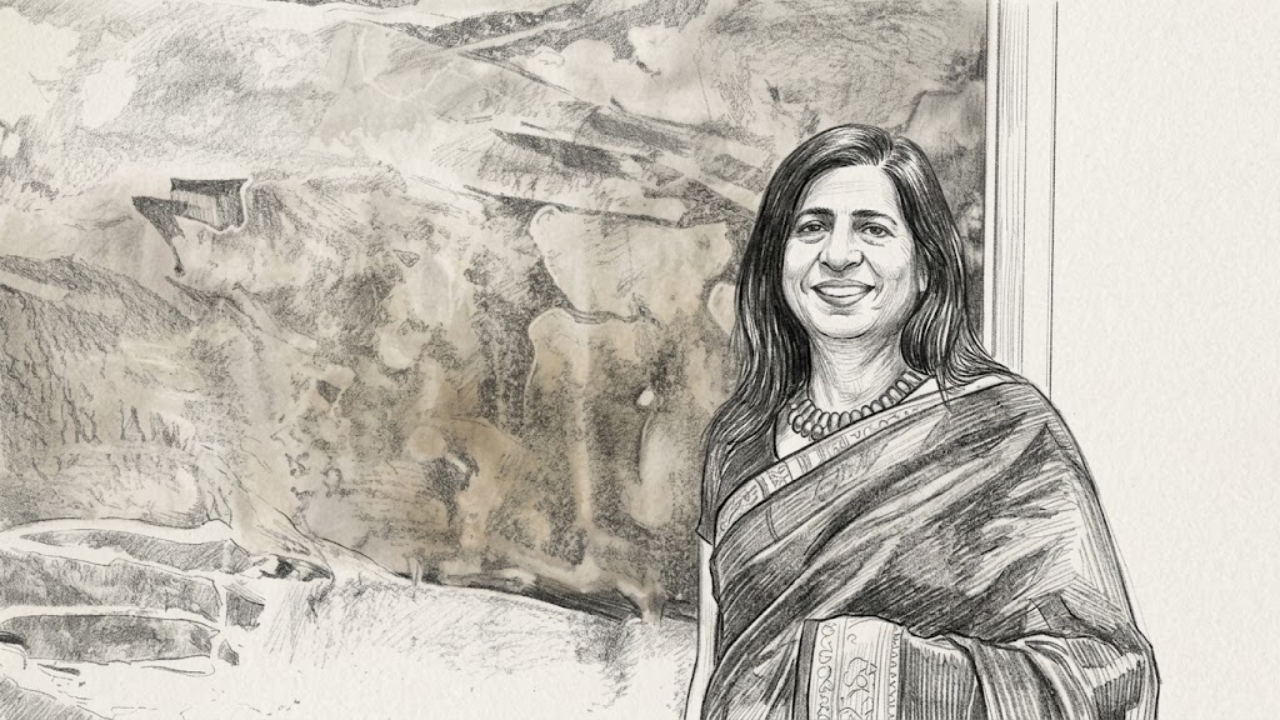
Rokeya Sultana ranks among Bangladesh’s most esteemed painters and printmakers. She was born in 1958 in Chittagong and earned a bachelor’s degree in printmaking from the Bangladesh College of Arts and Crafts in 1980. In 1983 she completed a master’s in the same field at Visva Bharati in Santiniketan. She later worked at the Atelier Lacourière et Frélaut in Paris and spent time at the University of Nebraska-Lincoln on a Fulbright grant, eventually becoming a printmaking professor at the University of Dhaka.
She grew up during the Liberation War, and the turmoil of 1971 and the displacement she experienced shaped her work in subtle ways, surfacing in images that deal with fragility, endurance and life’s transience. She has said her teacher Mohammad Kibria taught her that no artist can succeed without determination, a lesson her own career, forged in the face of obstacles, bears out.
Madonna, Earth and the Colours of a Sunlit Land
Sultana’s best-known work spans several series: the figural Madonna and Relations, the abstract landscapes of Earth Water, and the print series Fata Morgana. She insists Madonna is not one person but herself, her mother and her daughter. For her, Madonna is a movement and a protest against an unjust society, depicting the struggles of a middle-class mother.
Newer Madonna paintings carry mother and daughter out of the city and into nature, while Earth, Water, Air reads the country’s landscapes abstractly and doubles as an environmental warning. Colour is her signature; she says Bangladesh is bright and sunny, and her palette reflects that. She has experimented widely with media, adapting letterhead printing methods to her etching press for Fata Morgana.
The Canvas as Witness
Several convictions run through her practice. The first is that personal experience is a legitimate source of public art. She has spoken of being overlooked and obstructed because of her gender despite her awards, and the Madonna figure turns that experience into something shared. The second is that impermanence and loss are central human facts, which she approaches through delicate, symbolic imagery rather than direct reportage. The third is that tradition and modernity can coexist: her work draws on both modern and traditional Bangladeshi art. A reviewer notes that her art in many ways embodies the shared artistic legacy of India and Bangladesh.
A Thread in the Great Tapestry of Bengal
Bangladeshi modern art developed around a handful of core convictions: that art should reflect the lives of ordinary people, that regional identity could find expression in modern forms, and that the country needed institutions of its own to train artists. Masters such as Zainul Abedin, who recorded the 1943 famine, and S M Sultan, remembered again this August on his birth anniversary, established that tradition. The Cultural Affairs Minister called Sultan an artist of the soil and its people.
Rokeya Sultana belongs to the generation that took up this commitment and broadened it, placing women’s experience, printmaking and abstraction at the heart of the national canon. Her teaching is as significant as her own art, since she has shaped successive generations of artists and strengthened printmaking within art education in Bangladesh. Honours have followed, including the Grand Prize at the 3rd Bharat Bhavan Print Biennale in 1995 and the Bengal Foundation Award in 1999. She is also reported to have received the Ekushey Padak in 2025.
Lighting the Studio: What the State Can Do
The state already has the instruments it needs. The Bangladesh Shilpakala Academy was established by Act of Parliament in 1974, with district branches, grants and exhibitions, and an amendment ordinance approved in January 2026 aims to expand its departments and modernise its governance. The real question is how to use them well.
Rokeya Sultana has observed that art spaces are not available everywhere and that printmaking has received little attention, so shared print studios, presses and conservation facilities would help many artists. Grants, residencies and travel support could also let artists exhibit abroad without relying on private patrons. Bodies such as the Samdani Art Foundation already offer production grants and residencies with the ministry, and public programmes could complement them.
Documentation and collecting should follow. The Academy’s planned national digital database of artists ought to include print archives and catalogues raisonnés for senior artists, and a serious acquisition programme would put major works by living artists, women included, into public museums. None of this will work without independence. One curator has urged the government to drop bureaucratic inertia and politicised rituals for results-driven partnerships, and transparent juries, term limits and professional leadership would build the necessary trust.
Finally, education should link the canon to schools. Exhibitions and artist talks for students would show that art is a career, a form of civic reflection and a part of national identity.
The Last Brushstroke
Rokeya Sultana’s work shows that art can carry private memory and public protest at once. Her Madonna is a mother, a woman and a movement, and her landscapes remind viewers what is at risk. If the state treats artists like her as living heritage, supporting their studios, archives and teaching, it will protect not only individual careers but the continuing story of Bangladeshi art.