
Sumaiya Hasi
Oniket Research Group
The United Nations General Assembly has extended Bangladesh’s preparatory period for graduation from the Least Developed Country (LDC) category by three years, setting the new date at 24 November 2029. Much of the media coverage has described the decision as Bangladesh receiving a three-year extension or deferment. But why did Bangladesh seek this additional time? Why was the country unable to complete its preparations within the original timeframe? Was this simply a strategic decision, or an acknowledgement of gaps in its economic and institutional readiness?
The language used in reporting matters. Describing the decision as securing a three-year extension and describing it as a request for more time because of inadequate preparation may refer to the same event, but they convey different realities to readers. The first suggests an achievement, while the second raises questions about accountability.
Meeting the Criteria, or Falling Short on Preparation?
One point needs to be made clear from the outset: Bangladesh has not lost its basic eligibility for LDC graduation. It has met the required thresholds in all three indicators set by the United Nations. These are gross national income (GNI) per capita, the Human Assets Index (HAI), and the Economic and Environmental Vulnerability Index (EVI).
According to the UN’s 2024 review, Bangladesh’s GNI per capita stood at US$2,684, its HAI score was 77.5, and its EVI score was 21.9. The country met the graduation thresholds in all three indicators. After first qualifying in 2018 and meeting the requirements again in the 2021 review, Bangladesh received the final recommendation for graduation in 2021. The original graduation date was set for 2024. However, due to the COVID-19 pandemic, it was postponed to 24 November 2026.In other words, Bangladesh’s problem is not a failure to qualify for graduation. The real concern is whether the country is sufficiently prepared to manage the economic realities that follow.
Why Did Bangladesh Seek Another Three Years?
A country may meet the development indicators required for graduation, but that does not automatically mean it is ready to compete in international markets, maintain economic stability, strengthen production capacity, generate employment and protect its position in global trade.
On 18 February 2026, the Bangladesh government submitted a request to the United Nations Committee for Development Policy (CDP) to extend the preparatory period until 24 November 2029. The government cited uncertainty in global trade, geopolitical tensions, high inflation, pressure on energy supplies and supply chains, and domestic economic difficulties. It also pointed to the need for further progress in financial sector stability, revenue collection, production capacity and export diversification.
On 2 June 2026, the CDP recommended that the request be considered favourably. However, it stressed that Bangladesh would need to make significant progress in addressing its existing structural weaknesses during the extended period. Subsequently, on 21 July, the United Nations Economic and Social Council (ECOSOC) recommended that the General Assembly consider the matter. On 29 October 2026, the General Assembly approved the extension. The distinction is important: the United Nations did not declare Bangladesh ineligible for graduation. Rather, it allowed the country more time to prepare, while emphasising the need for measurable progress on reforms.
Where Do the Economic Risks Lie?
After graduating from the LDC category, Bangladesh faces the prospect of losing several international trade benefits. These include duty-free and quota-free market access, as well as special concessions available to least developed countries. Such benefits may be gradually withdrawn following graduation.
Around 73 per cent of Bangladesh’s total merchandise exports currently benefit from preferential market access linked to its LDC status. The country receives these benefits in 38 countries and trading blocs. As a result, the possibility of higher tariffs after graduation could put export-oriented industries, particularly the garment sector, under greater pressure in international markets.
A report published by The Daily Star on 30 October 2026 noted that although Bangladesh has signed trade agreements with Japan and South Korea, neither has yet come into force. Other major challenges include diversifying exports, improving governance in the banking sector, increasing the tax-to-GDP ratio and creating a more favourable environment for investment. This raises an important question: despite years of discussion about preparing for graduation, why has Bangladesh failed to make the expected progress in these areas?
What Is the Media Leaving Out?
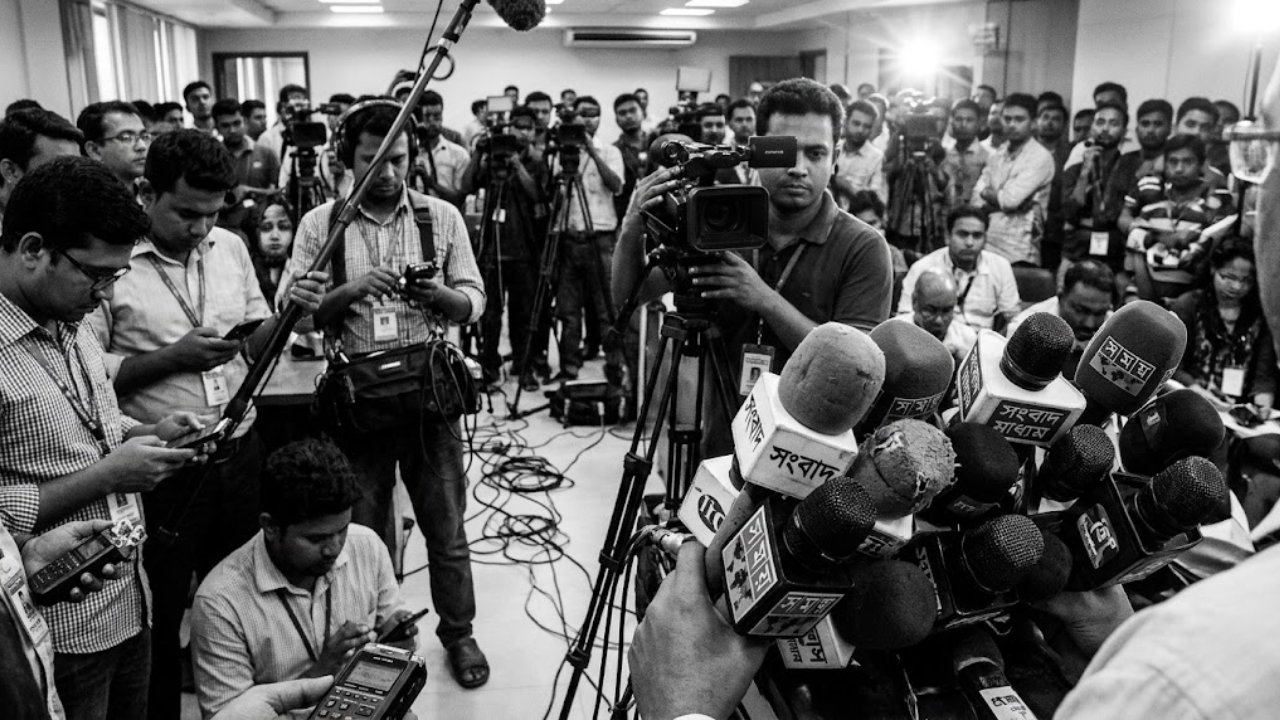
The media’s responsibility is not limited to reporting government decisions. It must also examine the reasons behind those decisions, their limitations and their implications for the public interest. Reporting that Bangladesh has received a three-year extension is not factually incorrect. However, if coverage focuses only on the additional time without examining why it was needed, the story remains incomplete.
That does not mean all media outlets are withholding information. Some have reported the decision, others have examined its economic implications, while some have questioned the country’s lack of preparation. The concern lies in the tendency to repeat official accounts of success without sufficient scrutiny. Headlines may reflect the significance of an achievement, but questions of public accountability deserve equal attention.
Can Three Years Become an Opportunity for Reform?
Bangladesh’s immediate challenge is to use the additional time to carry out meaningful reforms. Visible progress is needed in banking sector governance, modernising the tax system, diversifying exports, protecting workers’ rights, developing a skilled workforce, improving the investment climate and bringing international trade agreements into effect.
The government should publicly report which ministries are responsible for each reform, the deadlines for implementation and the results achieved. The media, in turn, must assess government commitments against actual progress.
Bangladesh was included in the LDC category in 1975. There is no reason to dismiss the country’s achievements over the past five decades. However, meeting the indicators for graduation and building the economic capacity to sustain it are not the same thing. An additional three years is an opportunity, not an achievement in itself.
The central question, therefore, should not simply be whether Bangladesh has secured a three-year extension. It should be: Why does Bangladesh need another three years of preparation despite having met the criteria for graduation? A country’s development is reflected not only in the achievements it announces, but also in its ability to acknowledge its limitations and address them.


