
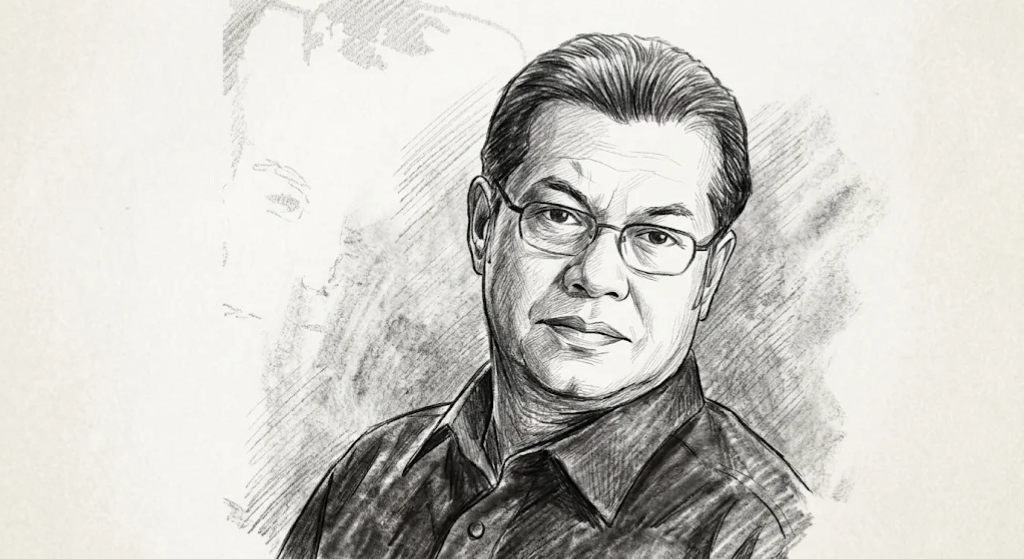
Sumaiya Hasi
Oniket Research Group
Birth, Family and Early Life
Subir Nandi, one of the most celebrated playback singers in Bangla music, was born on 19 November 1953 in Nandipara, Baniachong, Habiganj district, into a distinguished Kayastha family with a strong musical tradition. Known by his childhood nickname, Bachu, he grew up in an environment where music and cultural pursuits were deeply valued. His father, Sudhanshu Nandi, was a physician with a profound love for music, while his mother, Putul Rani Nandi, was also a keen singer. It was largely through his mother’s encouragement and dedication that he first developed an interest in singing.
Because of his father’s profession, Subir spent part of his childhood in the picturesque surroundings of remote tea gardens. He completed his early education at a local missionary school before attending Habiganj Government High School and later the historic Brindaban Government College in Habiganj. During the Liberation War of 1971, he was a second-year college student. The turbulent events of that period left a lasting impression on his understanding of patriotism and culture.
His passion for music emerged at an early age. In 1963, while still in Class Three, he began attracting attention through performances at various cultural programmes. Four years later, in 1967, he had the opportunity to sing on Sylhet Radio, marking one of the first significant milestones in his musical journey.
Musical Beginnings and Formal Training
Subir Nandi’s rise in the music industry was built on years of disciplined practice, formal training and dedication. His musical education began under the guidance of Ustad Babar Ali Khan, from whom he and his siblings received training in classical music and developed an understanding of its technical foundations. Alongside classical music, he had a strong interest in folk traditions and received specialised training from renowned folk musician Bidit Lal Das.
His professional career took a significant step forward in 1970 when he recorded his first song for Dhaka Radio. The song, Jodi Keu Dhoop Jele Dey, written by Mohammad Muzakker and composed by Ustad Mir Qasem, introduced his voice to a wider radio audience. Following his success on radio and television, he gradually established himself in the Bangladeshi film industry.
In 1976, he made his playback singing debut in the film Surjogrohon, directed by Abdus Samad. Over the course of his career, he lent his voice to more than 2,500 songs, establishing a remarkable body of work across different musical genres.
Music, however, was not his only professional pursuit. For much of his working life, he was also employed in the banking sector. He served at Janata Bank for 40 years before retiring in 2013. In his personal life, he married Purabi Nandi in 1981. The couple have a daughter, Falguni Nandi.
Popular Songs and Milestones in Cinema
Subir Nandi made a lasting contribution to Bangla film music through his distinctive melodic style, emotional depth and expressive voice. His breakthrough came in 1979 with the title song of Din Jay Kotha Thakey, written and composed by the celebrated Khan Ataur Rahman. The song brought him nationwide recognition and made his voice familiar to audiences across Bangladesh. Its emotional appeal and memorable melody quickly established him as one of the country’s leading playback singers.
Among his most celebrated performances was Ekta Chhilo Sonar Konya from Srabon Megher Din (1999), directed by acclaimed novelist and filmmaker Humayun Ahmed. Other memorable songs include Tumi Emoni Jal Petechho Songsare from Shubhada (1986), Amar E Duti Chokh Pathor To Noy from Mahanayak (1984), and the romantic number Koto Je Tomake Besechhi Bhalo from Ushila (1986).
His versatility was equally evident in socially conscious and character-driven films. Songs such as Master Shaheb, Ami Naam Dastakhat Shikhte Chai from Oshikkhito (1978), Pari Dilam Sagarer Jole and Hazar Moner Kachhe Proshno Rekhe became widely loved among listeners. Whether performing romantic melodies, modern songs, folk compositions or songs of heartbreak, Nandi brought a distinctive emotional quality to every performance. His voice connected with audiences across generations and remains closely associated with some of the most memorable moments in Bangla cinema.
Awards, Honours and National Recognition
Subir Nandi received numerous awards and honours in recognition of his contribution to Bangla music. He won the Bangladesh National Film Award for Best Male Playback Singer five times, an exceptional achievement in the country’s film music history. His award-winning performances were featured in Mahanayak (1984), Shubhada (1986), Srabon Megher Din (1999), Meghla Akash (2001) and Mohua Sundori (2015).
In recognition of his wider contribution to music and culture, the Government of Bangladesh awarded him the Ekushey Padak in 2019, the country’s second-highest civilian honour. He also received the Bangladesh Chalachitra Sangbadik Samity (BACHSAS) Award and the City Bank Lifetime Achievement Award in 2012.
These honours reflected the esteem in which he was held by the music industry and the wider cultural community. His repeated recognition at the National Film Awards demonstrated the consistency and quality of his contribution to Bangladeshi cinema.
Personal Life, Illness and Death
Away from the stage and recording studio, Subir Nandi was known as a warm, approachable and culturally minded individual. During the later years of his life, however, he faced serious health complications, including kidney, lung and heart-related conditions. Despite his declining health, his attachment to music remained strong.
In early April 2019, he suffered a heart attack and was admitted to a hospital in Dhaka. As his condition deteriorated, he was transferred to Singapore General Hospital for advanced medical treatment. Despite receiving intensive care, he died there on 7 May 2019, at the age of 66.
His death was a profound loss for the Bangladeshi music community and for the countless listeners who had grown up with his songs. Although Subir Nandi is no longer with us, his recorded performances continue to be heard and cherished. Through his music, he remains an enduring presence in the cultural life of Bangladesh, and his voice continues to find a place in the hearts of listeners across generations.