
Naima Onamika
Oniket Research Group
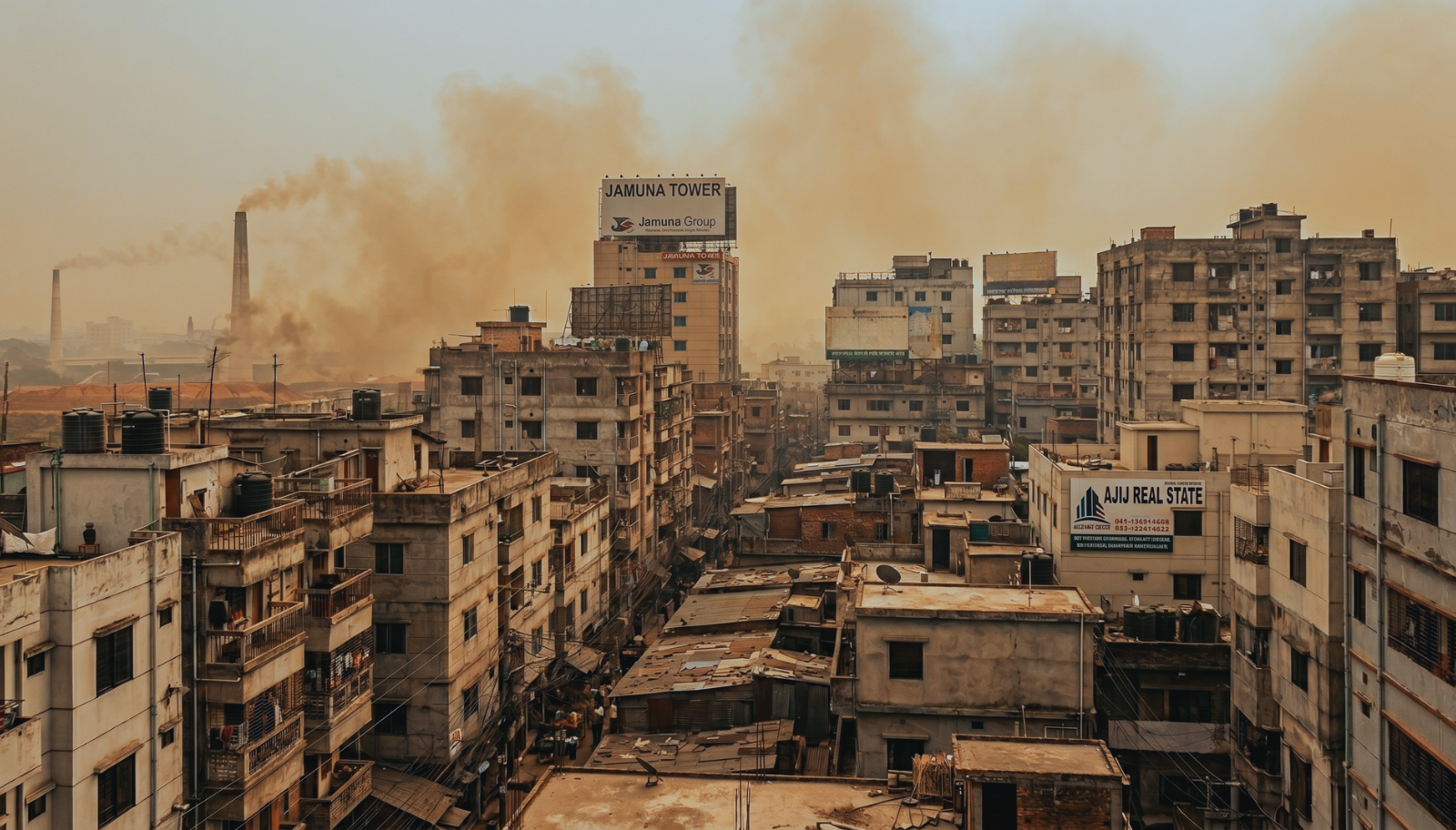
Dhaka is a densely populated metropolis that serves as a living symbol of an environmental crisis. The city of Dhaka is frequently identified as one of the most polluted cities worldwide, as indicated by the findings of the International Air Quality Index (IAQI). This issue is not merely a statistical concern but rather a testament to a well-orchestrated policy failure. This crisis has now evolved into a structural threat to public health, for which the blame lies not solely with nature, but with unchecked urbanization and inadequate environmental governance.
The impact on vulnerable populations is disproportionate
Dhaka’s air pollution index frequently exceeds 123, reaching hazardous levels. While this situation is detrimental to all, the repercussions are particularly severe for children, the elderly, pregnant women, and people with physical disabilities. In the domain of research, this phenomenon is designated as ‘differential vulnerability’ or ‘differential risk’. It pertains to the disproportionate impact on specific segments of society, characterized by the prevalence of chronic lung diseases, compromised immune systems and developmental challenges. This predicament constitutes an environmental injustice, and the absence of a structural solution will inevitably result in the exacerbation of social inequality.
Structural Causes: The Link Between Three Crises
An analysis of Dhaka’s air pollution reveals three interconnected causes. Firstly, the environmental carrying capacity of the city has been completely exceeded, with a population density of approximately 38,000 people per square kilometer.
It is evident that the maximum capacity has been surpassed. Secondly, the emissions from approximately 4 million registered vehicles have resulted in PM2.5 levels in the atmosphere that are many times higher than the limits set by the World Health Organization. Thirdly, and most significantly, research indicates that approximately 58 per cent of Dhaka’s air pollution originates from illegal brick kilns on the city’s outskirts, where short-term economic goals are being sacrificed for long-term environmental integrity.
The Depth of Ecological Degradation
Research conducted by the Bangladesh Institute of Planners (BIP) has revealed a significant decline in the extent of Dhaka’s wetlands. Over the past three decades, the percentage of wetlands in the city has diminished from 20 per cent to a mere 3 per cent. It is imperative to recognize that a minimum of 15 per cent green cover is requisite for the establishment of a livable city. However, Dhaka’s current green cover stands at a mere 9 per cent, which is significantly below the stipulated benchmark.
This pernicious imbalance in the ‘ecological footprint’ demonstrates that the city is progressively deviating from the minimum standards of livability.
Policy Obligations and the Path to Transformation
While extant legal frameworks, such as the National Environment Policy 2018, the Environmental Conservation Act 1995, and the Brick Preparation and Briquette Establishment (Regulation) Act 2013, are theoretically adequate, they are lamentably ineffectual in their practical application. The necessity for legislation is complemented by the requirement for a ‘Digital and Environmental Curation Framework’, which would incorporate real-time air quality monitoring, control of illegal sources, and greening verification under a unified framework, aligning them with the objectives of the (Bangladesh Delta Plan 2100).
Conclusion
The Imperative of Institutional Environmental Governance The issue of air pollution in Dhaka is, in essence, a political and policy crisis rather than a technical one. Personal awareness alone is not sufficient in this context. Rather, what is required is the strict and accountable application of “Environmental Governance” or institutional environmental governance. If the environment is not accorded a higher priority in the ongoing conflict between development and conservation, then the transition away from the fragile future towards which Dhaka’s current civic structure is heading will become impossible

