
Desk Report
Oniket Desk
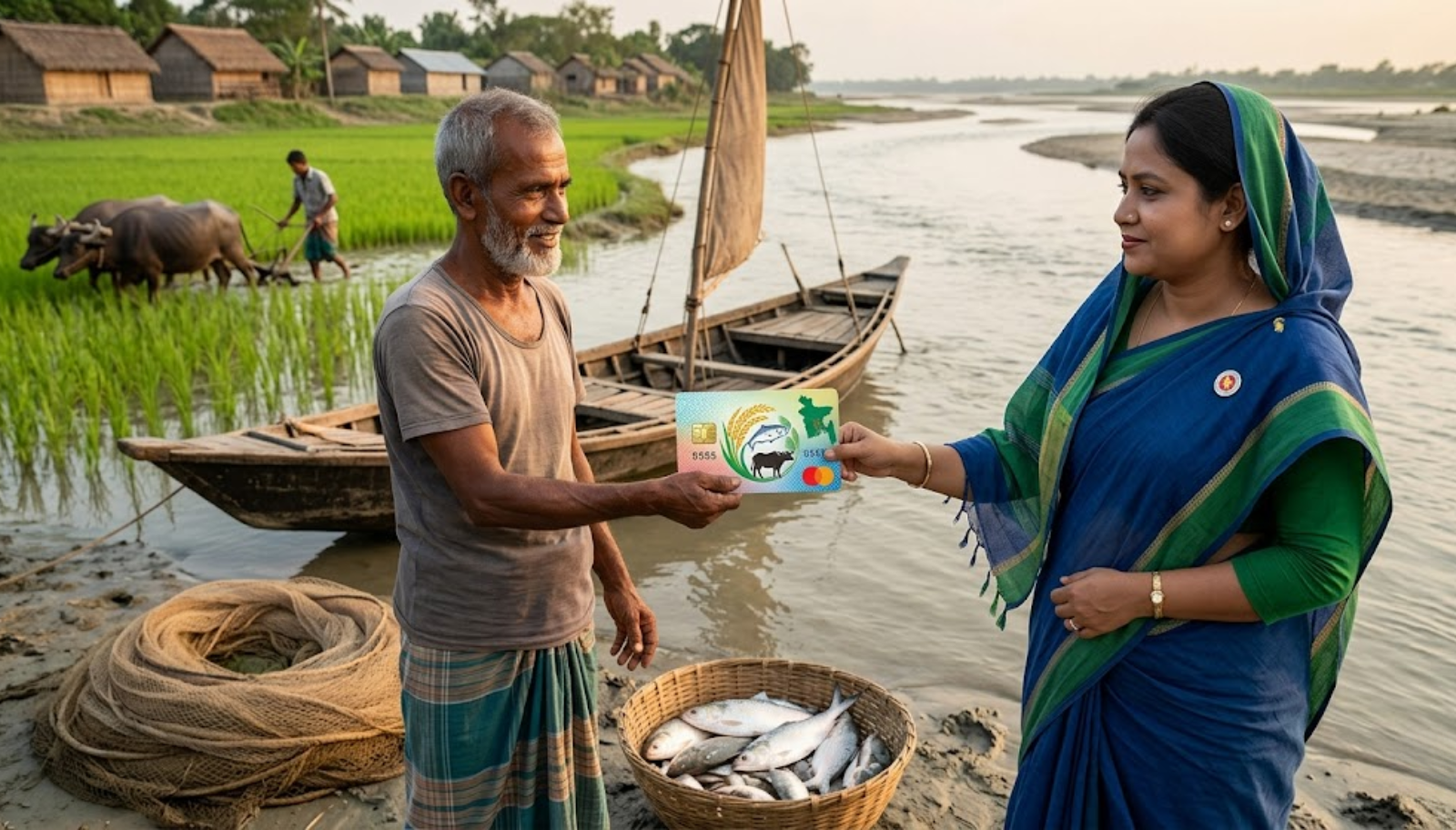
State Minister for Fisheries and Livestock Sultan Salahuddin Tuku’s recent announcement indicates a significant development in the recognition of Bangladesh’s fishing communities. The decision to include fishers and fish farmers under the government’s Farmer’s Card program is a crucial step in providing them with the benefits and support mechanisms previously exclusive to crop cultivators.
This move underscores a commitment to ensure that those who earn their livelihoods on the water are recognized as valuable contributors to the nation’s agricultural sector. Speaking as the chief guest at a ceremony held at the Rangamati Fisheries Development Corporation’s fish landing pier, the state minister revealed that the card will provide loan facilities alongside approximately ten other categories of support.
The decision to include fishing communities in the program represents a significant policy shift, recognizing that the challenges faced by fishers, including unstable incomes, limited access to formal credit, and exposure to environmental shocks, are comparable to those experienced by traditional farmers and warrant comparable state assistance. For a workforce that has long operated on the margins of agricultural policy, this change promises to open doors to financial services, input subsidies, and social protections that were previously out of reach.
The announcement was made during an event that included two significant initiatives: the release of carp fry into Kaptai Lake and the distribution of rice to local fishermen. Both actions highlighted the dual importance of maintaining fish stocks and supporting the communities that depend on them. The carp fry release is part of an ongoing initiative to replenish the lake’s dwindling fish populations, while the VGF rice distribution aims to address the immediate food security needs of fishers whose incomes have been affected by declining catches.
Indeed, the state minister did not shy away from acknowledging the severity of the situation. Fish production in Kaptai Lake, one of Bangladesh’s most important inland water bodies, has declined noticeably, and the state minister stressed the need to allow fish to mature so that local fishermen can sustain supply and meet the nation’s food demand. Overfishing, habitat degradation, and environmental pressures have all contributed to the lake’s diminishing productivity and reversing that trend will require both regulatory discipline and sustained investment in ecological restoration.
Central to that restoration effort is the government’s commitment to dredge Kaptai Lake to protect its navigability. Siltation has long reduced the lake’s depth and water-holding capacity, compounding the ecological stresses on fish habitats and threatening the livelihoods tied to the waterway. Dredging, when executed with proper environmental safeguards, has the potential to restore depth, enhance water circulation, and create more favorable conditions for fish breeding and growth. The state minister’s commitment to preserving the integrity of the lake is a testament to the recognition that industrial or agricultural runoff could nullify the benefits of physical interventions. The effectiveness of this pledge in translating into enforceable safeguards will serve as a critical gauge of the policy’s true intent.
Presided over by Bangladesh Fisheries Development Corporation Chairman, the event also drew senior officials including Secretary of the Ministry of Fisheries and Animal Resources Md Delwar Hossain and Director General of the Bangladesh Fisheries Research Institute Anuradha Bhadra, reflecting the breadth of institutional engagement the issue demands. The presence of policy, scientific, and administrative leadership in one event is encouraging, but the true measure of progress will be in the follow-through: the speed at which fishers receive their cards, the accessibility of loan terms, and the transition from commitment to execution of dredging.
Bangladesh’s fishing communities have sustained the country’s food security and rural economies for generations without commensurate state support. Including them in the Farmer’s Card programme is an important corrective, and attention to Kaptai Lake’s ecological health is a necessary complement. If implemented with the urgency and coherence the moment demands, these steps could mark the beginning of a more equitable and sustainable chapter for the millions who live by the water.
Read also –