
Desk Report
Oniket Desk
Bangladesh has undergone a noteworthy agricultural transformation, transitioning from a nation grappling with chronic food deficits to a predominantly self-sufficient cereal producer and a rapidly expanding exporter of high-value crops. However, maintaining this momentum necessitates more than the status quo.
The nation’s food security and its overarching commitment to the United Nations Sustainable Development Goals are contingent upon a strategic transition from the pursuit of immediate yield gains to a paradigm of sustainable, inclusive, and resilient agricultural transformation.
The foundations of Bangladesh’s agricultural progress are well established. These include improved rice varieties, expanded irrigation, intensified cropping, and effective public interventions in fertilizer and input distribution. However, structural and emerging constraints now cast a long shadow over prospects. The decreasing amount of arable land per capita, soil degradation, groundwater stress, and reliance on monoculture rice systems are eroding the natural resource base. Limited post-harvest infrastructure, fragmented landholdings, underdeveloped value chains, and low farmer incomes constrain economic returns. Climate risks (floods, salinity intrusion, and droughts) are intensifying, and youth migration away from farming, as well as persistent gender gaps in asset ownership, are further weakening the sector’s human capital.
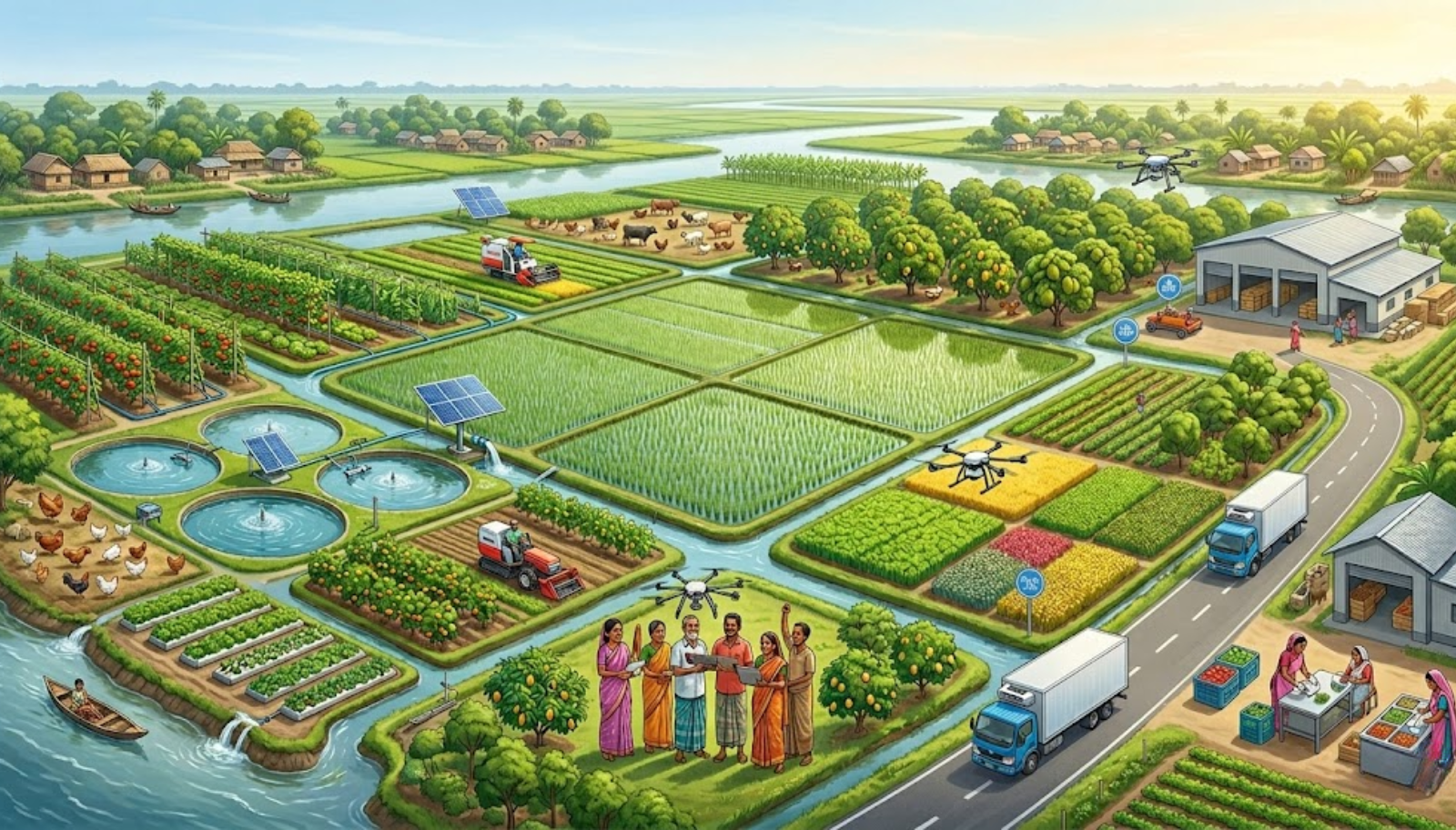
Addressing these challenges requires a coordinated agenda of complementary reforms. First, sustainable productivity intensification must move beyond rice-centric systems to embrace diversification into pulses, oilseeds, vegetables, fruits, and aquaculture, improving both nutrition and income resilience. Accelerating the adoption of precision agronomy, integrated pest management, and balanced fertilizer use can raise yields while reducing environmental footprints. Stronger linkages between agricultural research institutions and extension services, coupled with digital advisory platforms, are essential to translate innovation into field-level impact.
It is imperative that climate-smart agriculture become the norm rather than the exception. To mitigate these challenges, it is essential to promote the adoption of salinity-tolerant crop varieties, alternative wetting and drying methods for rice cultivation, conservation agriculture practices, agroforestry techniques, and water-efficient irrigation systems. Ecosystem restoration, including soil health programs, managed aquifer recharge, and sustainable groundwater governance, will ensure long-term productivity. Additionally, scaled-up community-based adaptation and early warning systems can safeguard crops and livelihoods from extreme weather events.
On the market and infrastructure front, expanding rural roads, cold chains, storage facilities, and small-scale processing can slash post-harvest losses and add value along the chain. Facilitating aggregation through cooperatives and farmer producer organizations will improve bargaining power and market access, while public-private investments in agro-processing and logistics, supported by streamlined regulations, can unlock significant growth.
Modernizing market information systems, broadening access to affordable credit and crop insurance, particularly for smallholders and women, and reforming subsidy regimes to target productivity and environmental objectives will further strengthen the enabling environment.
Implementing reforms to land policy that strengthen tenure security and facilitate voluntary leasing arrangements can enable economies of scale and mechanization uptake through custom-hiring centers, thereby easing labor shortages without sacrificing employment. Investment in human capital is equally vital. This includes expanding vocational training, agribusiness curricula, and digital skills for rural youth. It also ensures women’s equal access to land, inputs, credit, and technology. Furthermore, investment in human capital links social protection with nutrition-sensitive agriculture through school meals and maternal-child programs.
Finally, policy coordination must break down sectoral silos. Integrated multi-stakeholder platforms spanning agriculture, health, water, and environment can design coherent, nutrition-sensitive policies. Improved agricultural statistics, land-use data, and monitoring systems will enable targeted interventions and accountable SDG reporting, while strengthened regulatory frameworks for seed quality, input standards, and food safety will protect consumers and expand export opportunities.
Achieving food security in Bangladesh is a feasible objective, contingent upon the integration of productivity with sustainability and inclusivity. The pursuit of this agenda by the country would ensure the provision of nutritious diets for its population, increase rural incomes, and establish agriculture as a significant catalyst for equitable development.




Comments on “Bangladesh’s Path to Sustainable Agricultural Transformation”