
Farzana Nupur
Stamford University
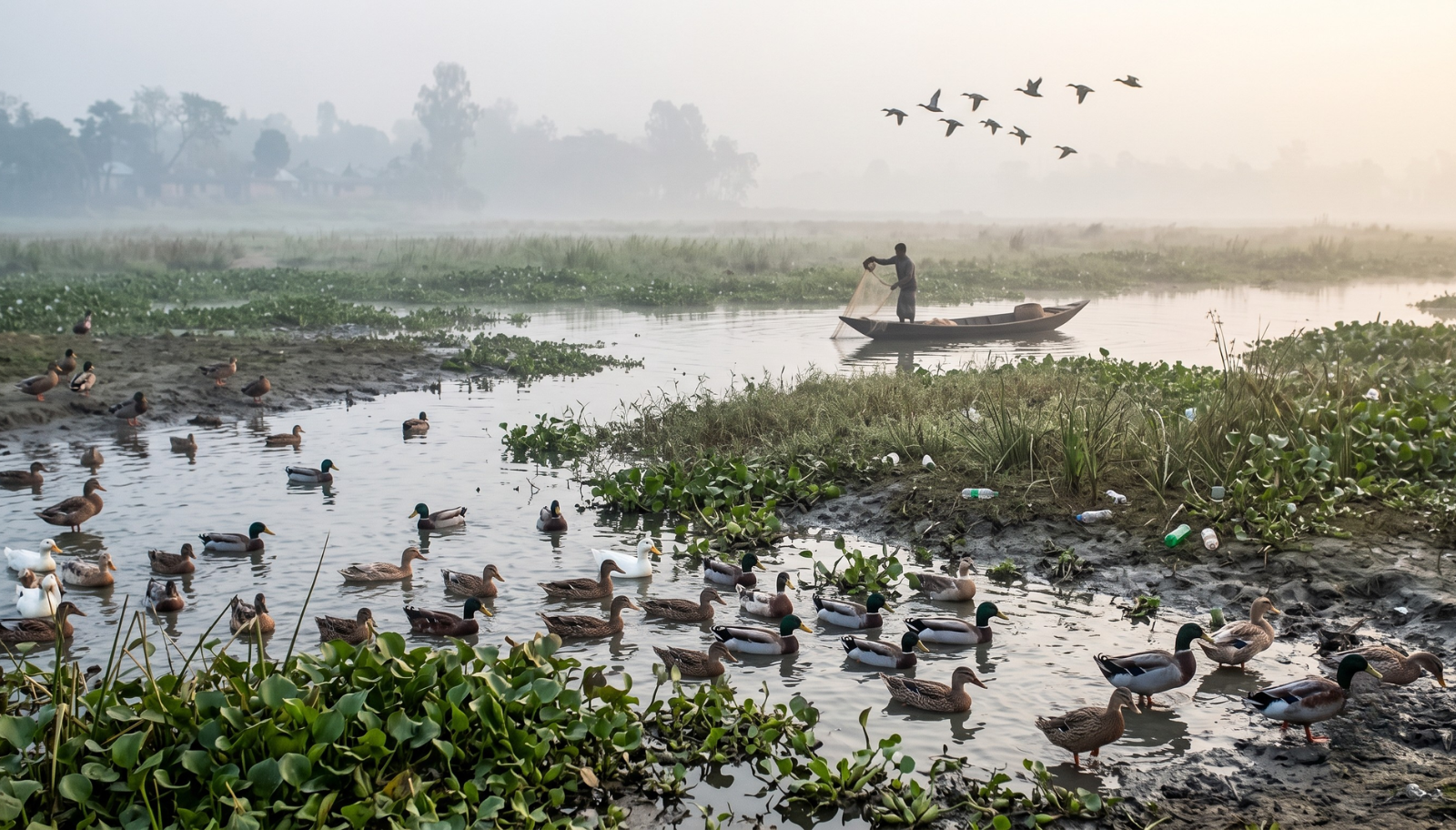
Bangladesh is one of the world’s most important wintering grounds for migratory waterbirds. Every year, thousands of ducks and other waterfowl travel from the colder regions of Central Asia, Siberia, Mongolia, and northern Europe to the country’s wetlands, rivers, lakes, and floodplains. These winter ducks play an essential role in maintaining healthy wetland ecosystems and contribute significantly to biodiversity.
However, despite their ecological importance, they face increasing threats from human activities. The decline of winter duck populations has become a growing environmental concern, with far-reaching consequences for the sustainability of Bangladesh’s ecosystems.
Bangladesh is home to numerous wetlands, known locally as haors, baors, and beels, which provide ideal habitats for migratory ducks during the winter months. These wetlands offer food, shelter, and breeding grounds for a wide variety of bird species. Winter ducks help maintain ecological balance by feeding on aquatic plants, insects, mollusks, and small fish, thereby regulating populations of these organisms. They also contribute to nutrient cycling by dispersing seeds and enriching wetland soils through their droppings. In addition, migratory birds attract birdwatchers and researchers, creating opportunities for ecotourism and environmental education.
But winter ducks are increasingly threatened by habitat destruction. Rapid urbanization, agricultural expansion, industrial development, and infrastructure projects have resulted in the loss and degradation of wetlands across Bangladesh. Many natural water bodies have been drained or converted into farmland, fish farms, or residential areas. Pollution from industrial waste, pesticides, plastics, and untreated sewage further degrades water quality, reducing the availability of food and safe habitats for migratory ducks. Climate change compounds these challenges by altering rainfall patterns, increasing temperatures, and affecting the seasonal flooding that sustains wetland ecosystems.
Illegal hunting is another major threat to winter ducks. Although hunting of many migratory bird species is restricted or prohibited, poaching remains common in several parts of the country. Birds are trapped using nets, poisoned bait, and firearms for consumption or sale in local markets. Such practices not only reduce duck populations but also disrupt migration routes and breeding success. The widespread hunting of migratory birds weakens the ecological integrity of wetlands and threatens species that are already under pressure globally.
Human disturbance also negatively affects winter ducks. Increased boat traffic, tourism without proper management, fishing activities, and noise pollution force birds to abandon their feeding and resting areas. As wetlands become more crowded with human activities, migratory ducks expend more energy avoiding disturbance, leaving them with fewer resources to survive the winter and complete their return migration.
The decline of winter duck populations has significant implications for environmental sustainability. Healthy wetlands depend on diverse wildlife to maintain ecosystem functions. As duck numbers decrease, the ecological services they provide, such as seed dispersal, pest control, and nutrient recycling, are diminished. This can lead to changes in aquatic vegetation, reduced biodiversity, and declining water quality. Since wetlands also serve as natural flood control systems and carbon sinks, their degradation increases the vulnerability of Bangladesh to flooding, soil erosion, and the impacts of climate change.
The loss of winter ducks also affects local communities. Many rural livelihoods depend on healthy wetlands for fishing, agriculture, and livestock grazing. A decline in wetland biodiversity often signals broader ecosystem degradation, which can reduce fish populations and diminish the natural resources upon which communities rely. Furthermore, Bangladesh risks losing opportunities for sustainable ecotourism, scientific research, and conservation partnerships that generate economic and educational benefits.
Protecting winter ducks requires a combination of effective conservation policies and community participation. Wetland restoration and the establishment of protected areas are essential for preserving critical habitats. Strict enforcement of wildlife protection laws can help reduce illegal hunting and trade in migratory birds. Public awareness campaigns should educate communities about the ecological importance of winter ducks and encourage responsible stewardship of wetland resources. Sustainable agricultural practices, pollution control measures, and integrated water resource management can further improve habitat quality for migratory species.
International cooperation is equally important because migratory ducks cross national boundaries during their annual journeys. Bangladesh should continue collaborating with neighboring countries and international conservation organizations to monitor bird populations, share research, and protect migratory flyways. Scientific monitoring and long-term ecological studies can provide valuable information for developing evidence-based conservation strategies.
Winter ducks are not a threat to Bangladesh; rather, they are under threat from habitat loss, pollution, illegal hunting, climate change, and human disturbance. Their decline poses serious risks to environmental sustainability by weakening wetland ecosystems and reducing biodiversity. Protecting migratory ducks is therefore not only a matter of wildlife conservation but also an essential step toward safeguarding the ecological health, economic well-being, and environmental resilience of Bangladesh. Through stronger conservation efforts, sustainable development practices, and increased public awareness, Bangladesh can ensure that its wetlands continue to provide a safe haven for winter ducks while supporting a healthier and more sustainable environment for future generations.