
Sumaiya Hasi
Oniket Research Group
History is not simply a story of the past. It is part of a nation’s identity, its art and culture, and the roots that keep that identity alive. Every brick of our ancient buildings and archaeological sites carries memories preserved across centuries. These places are not merely structures made of brick and stone. They are living records of our past, keeping our heritage alive and carrying it from one generation to the next.
In recent years, however, many of these priceless sites have come under growing pressure from commercial entertainment, public carelessness, and uncontrolled use. The situation deserves serious attention.
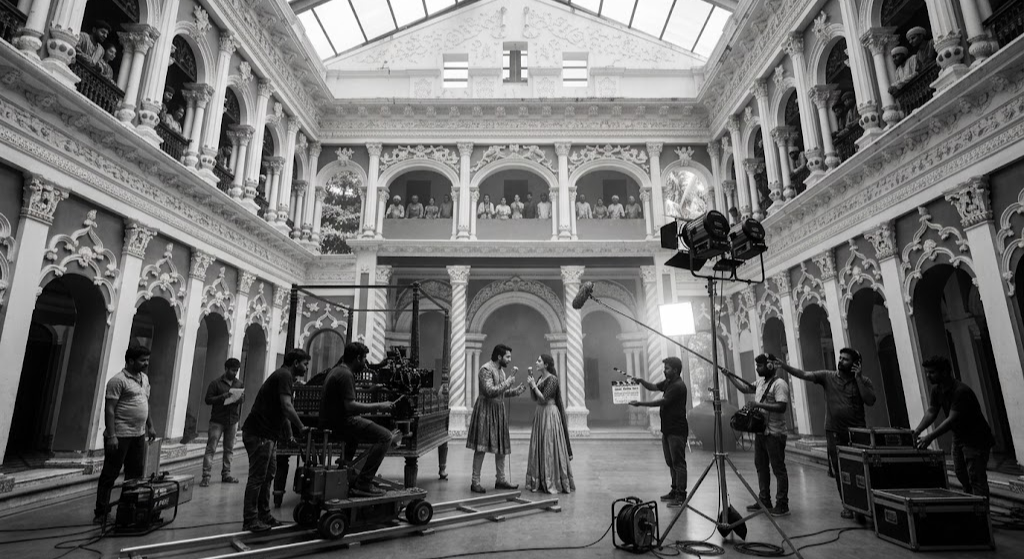
The recent filming of “Patar Banshuri”, a song from the fourth season of Coke Studio Bangla, at the historic Bara Sardar Bari in Sonargaon has brought this concern into sharp focus. Allegations have emerged that the centuries’ old archaeological structure and its surroundings were damaged while the site was being used for a large-scale musical production. The incident has raised questions about how historic places are being used for commercial entertainment and whether adequate safeguards are in place.
A closer look shows that this is not simply a matter involving Bara Sardar Bari. Across the country, places such as Lalbagh Fort in Old Dhaka, Panam City, Mahasthangarh, and historic zamindar houses are regularly used as locations for dramas, films, music videos and commercial advertisements, often without sufficient control.
The Fragility and Structural Risks of Historic Sites
Historic landmarks such as Bara Sardar Bari in Sonargaon preserve rare evidence of periods in our political, social and architectural history. Many of these sensitive structures have survived centuries of storms, rain and natural deterioration. Their ability to withstand additional pressure is limited.
When heavy technical equipment is brought into a protected archaeological site, loud sound systems are operated without proper control, powerful lasers or projection lights are used, and large crowds are allowed to gather, the delicate architectural details and internal structures can suffer serious damage.
There is no question that artistic expression and cultural production deserve support. But when the demands of a particular music video or film begin to weaken a nation’s historical foundations, the value of that creative work must also be questioned.
Film City: A Sustainable Long-Term Solution for Protecting Heritage
Bangladesh cannot and should not hold back the growth of its film and entertainment industry. At the same time, entertainment cannot be allowed to place the country’s history and archaeological heritage at risk.
The practical way to maintain a lasting balance between these two important interests is to establish a comprehensive, modern and internationally standard film city. A well-planned film city would not only strengthen the film industry. It could also play an important long-term role in protecting the country’s heritage.
1. Building Alternative Sets for Historic Locations
A modern film city can use advanced technology and engineering to recreate royal palaces, historic forts, zamindar houses and even entire sections of ancient cities as replicas or purpose-built sets.
Filmmakers could then create convincing historical settings without entering original archaeological sites. This would allow them to achieve the visual atmosphere they need while protecting the actual historic structures from unnecessary damage.
2. Creative Freedom Without Putting Heritage at Risk
Filming inside protected historic sites inevitably comes with restrictions. For the safety of the structures, the use of sound, lighting, cameras and heavy equipment must be carefully controlled.
A dedicated film city would give production teams much greater freedom to use lighting, sound, cranes and other large-scale equipment according to the needs of their films or music videos. The result would be better production facilities while the original heritage sites remain protected.
3. Cultural Preservation and Economic Development
A properly planned film city would allow historic sites to remain protected for tourism, research and the education of future generations. At the same time, a permanent film city could give the country’s entertainment industry a stronger institutional foundation and create a commercially viable sector with employment and wider economic opportunities.
If Bangladesh had a modern, internationally standard film city, large budget productions such as Coke Studio Bangla would have far less reason to take unnecessary risks by filming inside sensitive locations such as Bara Sardar Bari.
Our Responsibility and the Way Forward
We must remember that historic sites are not temporary entertainment spaces or convenient locations for today’s productions. They are part of the historical inheritance entrusted to us for future generations.
Art created at the cost of our own heritage cannot truly enrich a nation. Commercial filming at Bara Sardar Bari and other archaeological sites should either be prohibited or brought under strict regulation. The Department of Archaeology, the Ministry of Cultural Affairs and policymakers need to introduce and enforce stronger rules without delay.
The most pressing task now is to protect our history and heritage while creating a safe and modern framework for artistic production. Establishing a modern film city could protect archaeological sites for generations while also giving Bangladesh’s entertainment industry the infrastructure it needs to grow. Our creative industries must move forward by protecting our heritage, not by allowing that heritage to disappear.