
Farah Zahir
Editor, Oniket Research Group
This article examines a recurring pattern in Bangladesh’s cultural life: the state’s tendency to honour its artists only after they have died. Using the examples of Azam Khan, Ayub Bacchu, Helal Hafiz, and Rudra Mohammad Shahidullah, it questions why recognition so often arrives as a postscript rather than a timely tribute, and what this delay costs both the artists and the culture they built.
This piece traces how several of Bangladesh’s most influential musicians and poets were overlooked during their working lives, only to be celebrated with national honours after death. It argues that posthumous recognition is not simply poor timing but a pattern with real consequences: it strips artists of the ability to use their platform, denies them the material support that living recipients would receive, and quietly teaches younger artists that the state values sentiment over sustained investment in living culture.
We suggest that Bangladesh address this gap by introducing a structured, time-bound nomination process for national cultural awards, one that requires panels to actively consider working artists at fixed intervals, rather than waiting for public campaigns or obituaries to prompt action. Pairing recognition with tangible support, such as healthcare access or performance grants awarded during an artist’s active career, would help ensure that honour arrives when it can still make a difference, rather than as a monument to hindsight.
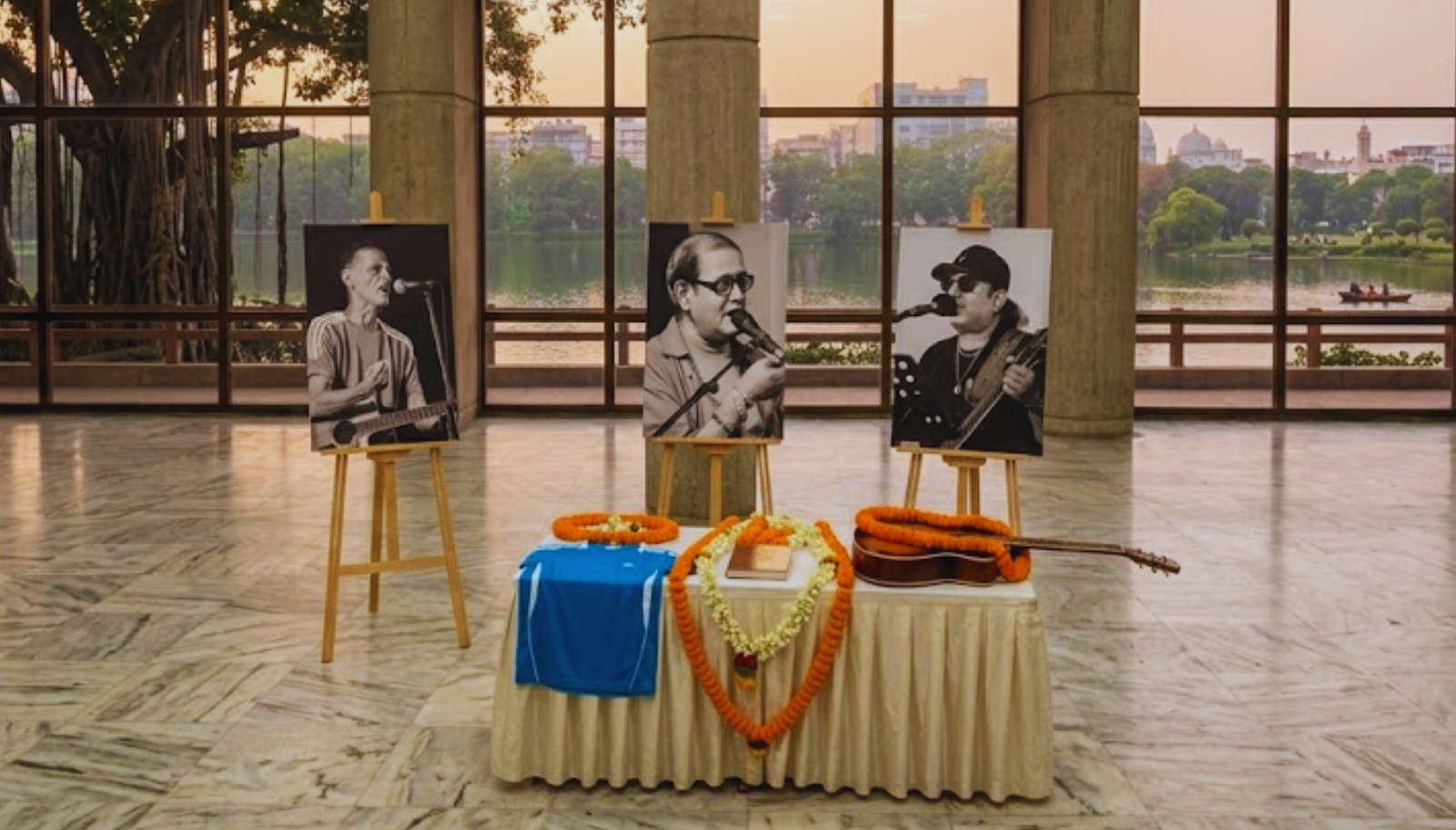
When Azam Khan received the Ekushey Padak in 2019, the citation celebrated his pioneering contribution to Bangladeshi rock music. The ceremony was dignified. The functionaries were respectful. The only person absent from the occasion was the one who mattered: Azam Khan himself, who had died eight years earlier in 2011. The state that had spent decades indifferent to the man who gave Bangladesh its rock vocabulary now honoured the memory it had once refused to honour. The award arrived, as it so often does in this country, as a postscript to a life that had already ended.
This is not an isolated case. It is a pattern, one so persistent that it has become, in effect, an unspoken policy: the state recognises its cultural figures most reliably when they can no longer receive recognition. Ayub Bacchu, the guitarist and vocalist who defined an entire generation’s sound through LRB and whose voice soundtracked the private griefs and public enthusiasms of millions, died in 2018 without ever receiving a national honour. The calls for his recognition grew louder only after his death.
Helal Hafiz, the poet whose lines were quoted on walls and in protests long before they were quoted in official citations, lived for decades in circumstances that betrayed his cultural standing, receiving the Ekushey Padak only after years of public campaigning, and even then, the recognition felt like an overdue correction rather than a timely celebration.
Rudra Mohammad Shahidullah, the poet who shook Bengali verse loose from its proprieties and introduced a register of raw, insurgent feeling that changed the language of poetry itself, died in 1992 at the age of thirty-six, his contributions canonised only after his death, when the anger in his verse could no longer embarrass the audiences who had once found it uncomfortable.
The Arithmetic of Neglect
The mathematical logic of posthumous awards is straightforward: a dead artist cannot decline, cannot protest the conditions of the award, and cannot use the platform to say what the state would rather not hear. A living Ayub Bacchu, handed an Ekushey Padak, might have used the occasion to speak about the neglect of musicians in a country where cultural labour is treated as a public good to be consumed but not compensated. A living Rudra Mohammad Shahidullah, given an award, might have pointed out that the state’s embrace of his poetry came only after his suffering had been aestheticised into safe tribute. The posthumous award removes the recipient’s agency entirely. The state speaks to a memory, and the memory cannot answer back.
This is not merely an aesthetic offence. It is an economic one. National level awards in Bangladesh carry material consequences: stipends, medical benefits, state provided housing, and most critically, the institutional validation that enables other forms of income, from publishing contracts to performance fees. Azam Khan spent his final years in financial difficulty, a fact that no posthumous citation can amend.
Ayub Bacchu, who performed until his body would no longer allow it, received no state support for medical treatment. Helal Hafiz lived in a modest room; his needs were unmet by the republic that quoted his verses in its textbooks. An award distributed after death is, in its material dimension, an award that provides no benefit to the person who earned it. The money, the stipend, the medical access, all of it goes to survivors, or expires, or was never attached to the honour in the first place. The recognition is real. The support is not.
The Demotivation Mechanism
The psychological effect on working artists is cumulative and corrosive. When a young musician in Dhaka watches Azam Khan die unrecognised and then sees the same state that ignored him perform the rituals of belated tribute, the lesson is not subtle. The lesson is that the state will honour you when you can no longer feel it. The lesson is that your contribution will be weighed not by its impact on living culture but by the sentimental gravity of your obituary. The lesson is one every artist in Bangladesh already knows: the state does not invest in your vigour, it mourns your passing.
This creates a demotivation that operates below the threshold of open protest. Artists do not organise rallies against posthumous awards. They simply recalibrate their expectations. The exclusion of popular rock musicians from national honours during their lifetimes, while bureaucrats, party loyalists, and safely deceased cultural figures are regularly elevated, communicates a hierarchy of cultural value that places proximity to power above cultural impact.
An entire lineage of musicians, from Azam Khan through Ayub Bacchu to the generations they influenced, has been systematically excluded from the state’s definition of culture worth honouring, because their art was loud, electric, and insufficiently deferential. The posthumous award does not correct this exclusion. It confirms it by acknowledging the contribution only when the contributor can no longer demand what the acknowledgment implies.
What a Living Award Means
An award given in time is a different thing from an award given too late. It provides the recipient with resources that extend their work. It signals to younger artists that a path exists between cultural labour and institutional recognition. It allows the honouree to stand on a stage and speak, about their art, about the conditions of their profession, about what remains unresolved. The posthumous award provides none of this. It is a monument to hindsight, erected by a state that confuses grief with justice.
A more deliberate approach is possible. A standing committee tasked with reviewing working artists on a fixed schedule, rather than responding only to public pressure or death, would shift the incentive structure entirely. Attaching real support, healthcare coverage, housing assistance, or performance grants, to recognition given during an artist’s active years would ensure the honour functions as encouragement rather than epitaph. Until such a system exists, every year that Bangladesh waits until an artist has died to call them worthy tells every living artist that worth is something the state discovers only in absence. The frustration accumulates. The demotivation deepens. And the next generation of artists learn what Rudra Mohammad Shahidullah already knew: that the recognition that matters is the kind you never have to wait for.