
Iftekhar Rahman
Verdant Global
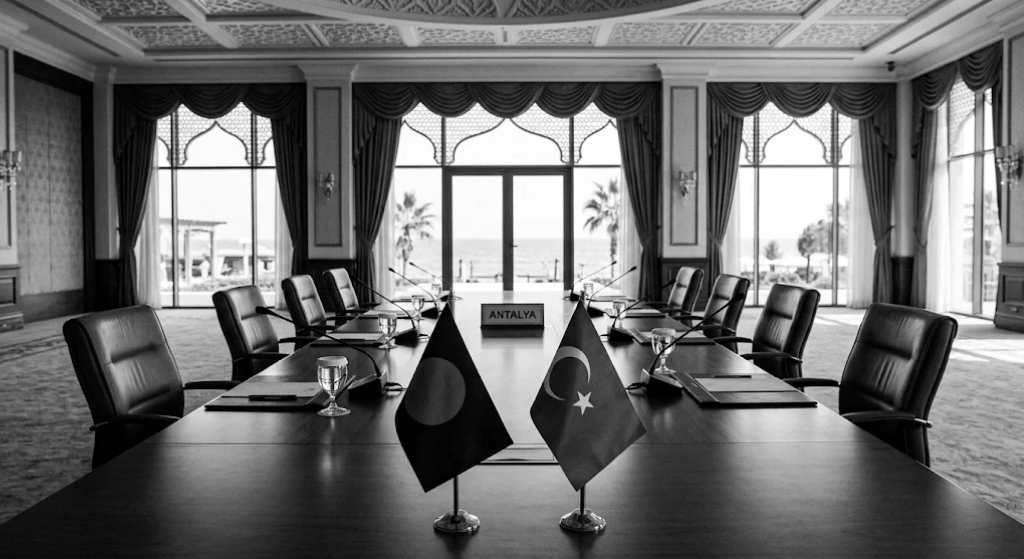
The meeting between Prime Minister Tarique Rahman and President Recep Tayyip Erdoğan in Antalya on 10 November 2026 placed trade, defence-industry cooperation and climate resilience on the bilateral agenda. Public accounts disclosed no newly signed commercial agreement or quantified investment commitment.¹ ² The economic question is therefore prospective. Can this engagement improve Bangladesh’s export competitiveness, foreign-exchange earnings and productive capacity at a time when investment and fiscal resources remain constrained?
Dhaka’s Economic Interest
Bangladesh’s interest in Türkiye is primarily structural. Ready-made garments dominate its exports, and most sales go to the European Union and the United States. The deferral of LDC graduation buys time to find new markets and products; it does not remove the need. Türkiye offers a sizeable consumer market, an industrial base in machinery and electrical goods, and engineering experience in flood management and resilient infrastructure.
Dhaka therefore seeks four things: export diversification, durable foreign-exchange inflows, technology that lifts industrial productivity, and affordable climate finance.
Trade and the Limits of a Bilateral Surplus
Bangladesh-Türkiye merchandise trade reached approximately US$1.05 billion in FY2024-25, comprising Bangladeshi exports of US$634.53 million and imports of US$416.76 million. ³ Yet the surplus of nearly US$218 million reveals little about national economic gain. Export products often contain imported inputs. The relevant questions concern domestic value addition, margins and access to new buyers.
Bangladesh should make export market access the priority in the proposed free trade agreement, discussions on which were under way in October. ⁴ Garments, footwear, jute goods and pharmaceuticals should lead, supported by workable standards and rules of origin. A narrow tariff bargain would offer limited value if exporters still faced costly logistics, delayed payments or inconsistent certification. Concessions on imported finished goods also require scrutiny where local manufacturers face uneven competition.
The Foreign-Exchange Test
Additional export receipts could strengthen the balance of payments and ease pressure on trade finance. Turkish machinery imports, by contrast, might initially raise foreign-currency demand, even where they improve productivity over time. From a finance director’s seat, foreign-currency scarcity rarely shows up first in reserve statistics. It shows up in delayed letter-of-credit openings, higher confirmation fees and suppliers asking to be paid in advance. Investment appraisal should weigh the immediate cost against the later gain.
The World Bank’s October 2026 Bangladesh Development Update highlights soft investment, weaker export momentum, banking-sector vulnerabilities and limited fiscal space. ⁵ Against that backdrop, bilateral trade matters most when it improves Bangladesh’s overall external position, as opposed to simply changing the source of its imports.
Investment and the Productivity Dividend
The Dhaka Chamber of Commerce and Industry (DCCI) reported in May 2026 that Turkish investment in Bangladesh stood at US$74.05 million. ³ That is a modest base. Productive foreign direct investment can create employment, transfer technology and raise export capacity. Assembly that imports most components and repatriates most earnings yields a weaker return than investment that trains technicians and develops local suppliers.
Bangladesh should prioritise Turkish partnerships in electrical equipment, industrial machinery and agro processing, with incentives tied to supplier development, training and export performance. Investors, in turn, will judge Bangladesh by energy reliability, customs performance, contract enforcement and access to working capital. Having worked in banking and treasury, I would add one further test: whether profits and loan repayments can be transferred abroad without undue delay. International banks assess and price that risk long before a factory is built.
Ankara’s Economic Interest
Türkiye has its own objectives. At the May DCCI meeting, Turkish business representatives identified demand for electronic equipment, home appliances and generators in Bangladesh, alongside interest in industrial partnerships. ³ Ankara has also emphasised defence-industry cooperation, while hosting COP31 gives it an opportunity to demonstrate climate leadership. ²
The two countries’ interests converge most clearly where Turkish market participation can support domestic manufacturing and technology transfer. That convergence is Dhaka’s principal leverage. Bangladesh could use its growing demand for Turkish appliances and electrical equipment to negotiate investment partnerships that support local manufacturing, supplier development, skills transfer and export-oriented production.
Climate Resilience and Public Debt
Erdoğan’s references to flood management and Türkiye’s proposed Climate Implementation Bridge give climate cooperation a practical opening. ² The World Bank estimates that severe flooding could lower Bangladesh’s GDP by as much as 9% under an extreme scenario. ⁶ Resilience investment therefore protects agriculture, transport, factories and public finances.
Bangladesh’s NDC 3.0 estimates that its conditional greenhouse-gas reduction target to 2035 will require US$90.23 billion, in addition to US$25.95 billion for its unconditional target. ⁷ The conditional figure measures a financing need; it does not represent pledged funds. Climate partnerships should therefore begin with appraised projects and realistic financing structures. Concessional finance or grants may suit public flood protection, while revenue-earning projects may attract private capital. Foreign-currency borrowing without credible repayment capacity would turn climate exposure into debt risk.
From Commitments to Outcomes
With Bangladesh scheduled to graduate from LDC status in November 2029, ⁸ and subsequent trade-preference transitions varying across export markets, the first year after Antalya should deliver three results:
- an agreed negotiating framework covering priority products and rules of origin;
- a shortlist of three independently appraised Turkish-linked industrial investments; and
- one flood-resilience project with published costs, funding terms and expected avoided losses.
Quarterly disclosure of contracts, disbursements, jobs and local value added would allow Parliament, businesses and taxpayers to distinguish political access from economic delivery.
Conclusion
Antalya creates an opening, not an economic dividend. Bangladesh should pursue export access and technology-rich investment first, while insisting on disciplined climate-finance terms. Success will be measured in durable foreign-exchange earnings, more competitive firms and infrastructure that withstands future shocks. The meeting’s economic significance will be decided in negotiations, factories and project accounts.
References
- Presidency of the Republic of Türkiye, Directorate of Communications, ‘President Erdoğan Meets with Bangladeshi PM Rahman’, 10 November 2026.
https://www.iletisim.gov.tr/english/haberler/detay/president-erdogan-meets-with-bangladeshi-pm-rahman - Anadolu Agency, ‘Turkish President Meets Bangladesh’s Prime Minister on Sidelines of COP31 Climate Conference in Antalya’, 10 November 2026.
https://www.aa.com.tr/en/turkiye/turkish-president-meets-bangladeshs-prime-minister-on-sidelines-of-cop31-climate-conference-in-antalya/4119395 - Dhaka Chamber of Commerce and Industry (DCCI), ‘Bilateral Trade Discussion Held Between DCCI and Turkish Business Delegation’, 13 May 2026.
https://www.dhakachamber.com/media/news/bilateral-trade-discussion-held-between-dcci-and-turkish-business-delegation - Bangladesh Sangbad Sangstha (BSS), ‘Bangladesh, Turkey Seek to Advance FTA Talks’, 5 October 2026.
https://www.bssnews.net/news-flash/431419 - World Bank, Bangladesh Development Update: Make Subsidies and Social Protection Work Better for the Poor, Report No. 215515, 13 October 2026.
https://documents.worldbank.org/en/publication/documents-reports/documentdetail/099124110052619383 - World Bank, ‘Key Highlights: Country Climate and Development Report for Bangladesh’, 31 October 2022.
https://www.worldbank.org/en/news/feature/2022/10/31/key-highlights-country-climate-and-development-report-for-bangladesh - United Nations Development Programme (UNDP), ‘Bangladesh’, Climate Promise, NDC 3.0 Country Profile, last updated 2 March 2026.
https://climatepromise.undp.org/what-we-do/where-we-work/bangladesh - United Nations, ‘Bangladesh Graduation Status’, Least Developed Countries Portal, including the General Assembly decision of 29 October 2026.
https://www.un.org/ldcportal/en/content/bangladesh-graduation-status