
Sheikh Selim
Oniket Research Group
The forthcoming West Bengal state assembly elections, scheduled for 23 and 29 April, are indicative of a broader geopolitical landscape. The contest between Mamata Banerjee’s Trinamool Congress and Narendra Modi’s BJP is indicative of a broader strategic and ideological struggle in the Indian subcontinent, rather than being confined to the domestic political arena. A substantial amount of discourse has emerged on this issue across a wide range of national public media outlets in both Bangladesh and India.
For the nation of Bangladesh, they symbolise a concentrated lens through which the entire architecture of India-Bangladesh relations must be re-examined and, more importantly, re-strategised.
Domestic Politics and Regional Stress
The utilisation of the term ‘Bangladesh’ as a political prop in West Bengal’s electoral arena is neither a recent nor an incidental phenomenon. The recurrence of this practice becomes evident when domestic politics becomes regional stress.
For over a decade, the BJP-led campaigns have utilised the concept of Bangladeshi infiltrators to consolidate nationalist votes, while the Trinamool Congress has countered with its own brand of Bengali cultural identity, most recently embodied in the slogan “Joy Bangla”, which has become a rallying cry for the party. It is evident that the strategies under consideration have the potential to cast Bangladesh in a destabilising light, as a possible source of demographic threat or cultural anxiety. The impact on bilateral sentiment is evident: there is a shift in border behaviour, a hardening of media framing, and an escalation in public discourse on both sides. Bangladesh is, in effect, being used as a ‘dumping ground’ for electoral calculations that it is not involved in designing.
The situation is further exacerbated by the case of Assam. The NRC process, detention camps, and the systematic labelling of Bengali-speaking Muslims as Bangladeshis have created a humanitarian grey zone that official diplomacy has struggled to address with adequate candour. There is a paucity of documentation concerning border pushback incidents. However, the recurrence of such incidents indicates the presence of a systemic issue that cannot be addressed solely through bilateral goodwill.
The Significance of Unresolved Agreements
In view of the two critical water-sharing frameworks, it is imperative that urgent attention be given to them. The Ganges Water Treaty, which was signed in 1996 and is set to expire in 2026, governs the dry-season flow to millions of Bangladeshi farmers and communities. The renewal of the agreement is not only subject to diplomatic manoeuvring in New Delhi, but also to internal political dynamics in Kolkata and the influence of agricultural lobbies. The Teesta issue, which has been in a state of stagnation for a period exceeding ten years, introduces an additional layer of frustration, which is now further compounded by China’s growing interest in infrastructure development in northern Bangladesh. This geopolitical subtext, characterised by its discomfort, is something that neither Delhi nor Dhaka can afford to ignore.
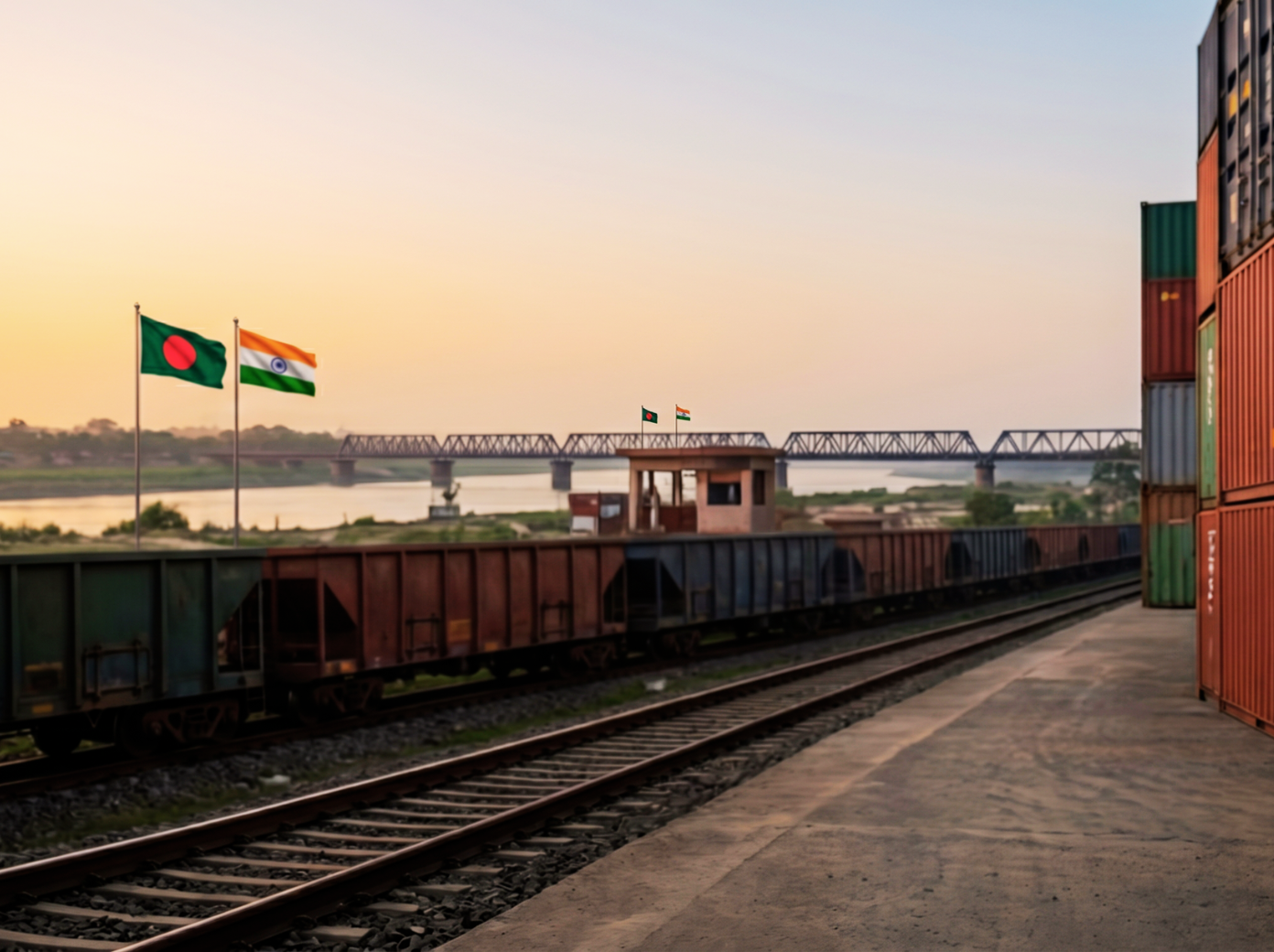
Conversely, trade relations have been demonstrated to offer a more robust foundation. Bangladesh continues to be India’s most significant trade partner in South Asia, with bilateral trade exceeding USD 12 billion in recent years. The potential for connectivity projects linking Bangladesh to India’s northeastern states represents a genuine opportunity for both countries, provided that such projects are managed transparently and without displacing local communities or creating new political leverage points.
A Cautious yet Justified Optimism
The post-election de-escalation evident at the central government level constitutes a welcome shift from the pronounced stress that characterised the preceding period. The present government’s foreign policy posture, which prioritises structured, interest-based engagement over reactive nationalism, is precisely the calibrated approach that this complex relationship demands.
Engaging not only New Delhi but also Kolkata, Guwahati, and Agartala through policy dialogue, academic exchange, and public diplomacy is a strategy that breaks the bilateral conversation out of its historically narrow centre-to-centre channel.
Nevertheless, the caveats persist in their authenticity. It is evident that issues such as state-level anti-Bangladesh sentiment, unresolved water disputes, and violations of border rights will not be resolved through goodwill at the central level alone. Nevertheless, the direction is accurate. Bangladesh is entering a new democratic chapter with hard-won political clarity, and its foreign policy must reflect that maturity being firm on national interest, open to partnership, and immune to the seasonal fevers of its neighbour’s electoral cycle. The public’s confidence in this approach is not merely warranted; it is strategically essential.

