
Dr. Sharmeen Bhuiyan
Sylhet Medical University
The July floods have once again demonstrated the vulnerability of many regions of Bangladesh to widespread flooding and its associated public health consequences. While immediate rescue and humanitarian assistance are essential, the period following a flood often presents even greater health risks due to contaminated water, disease outbreaks, food insecurity, disrupted healthcare services, and deteriorating sanitation. The purpose of this article is to identify the essential public health directives and government actions that should be implemented immediately to protect flood-affected communities, prevent disease outbreaks, strengthen emergency health services, and support long-term recovery through a coordinated and sustainable public health response.
Effective flood response requires much more than emergency relief. The highest priorities include ensuring access to safe drinking water, restoring sanitation facilities, strengthening disease surveillance, expanding emergency healthcare, protecting mothers, children, older adults, and people with disabilities, maintaining food safety, preventing vector-borne diseases, supporting mental health, and improving public communication.
We also suggest that successful recovery depends upon coordinated action among government ministries, local authorities, healthcare institutions, humanitarian organisations, and community leaders. Immediate preventive measures can significantly reduce illness, mortality, and long-term health consequences while improving community resilience against future floods.
Safe Drinking Water Must Become the First Priority
Floodwater frequently contaminates tube wells, ponds, reservoirs, and household water storage systems with sewage, industrial waste, agricultural runoff, and harmful microorganisms. Without immediate intervention, outbreaks of diarrhoeal diseases, cholera, typhoid, hepatitis, and other waterborne illnesses may occur.
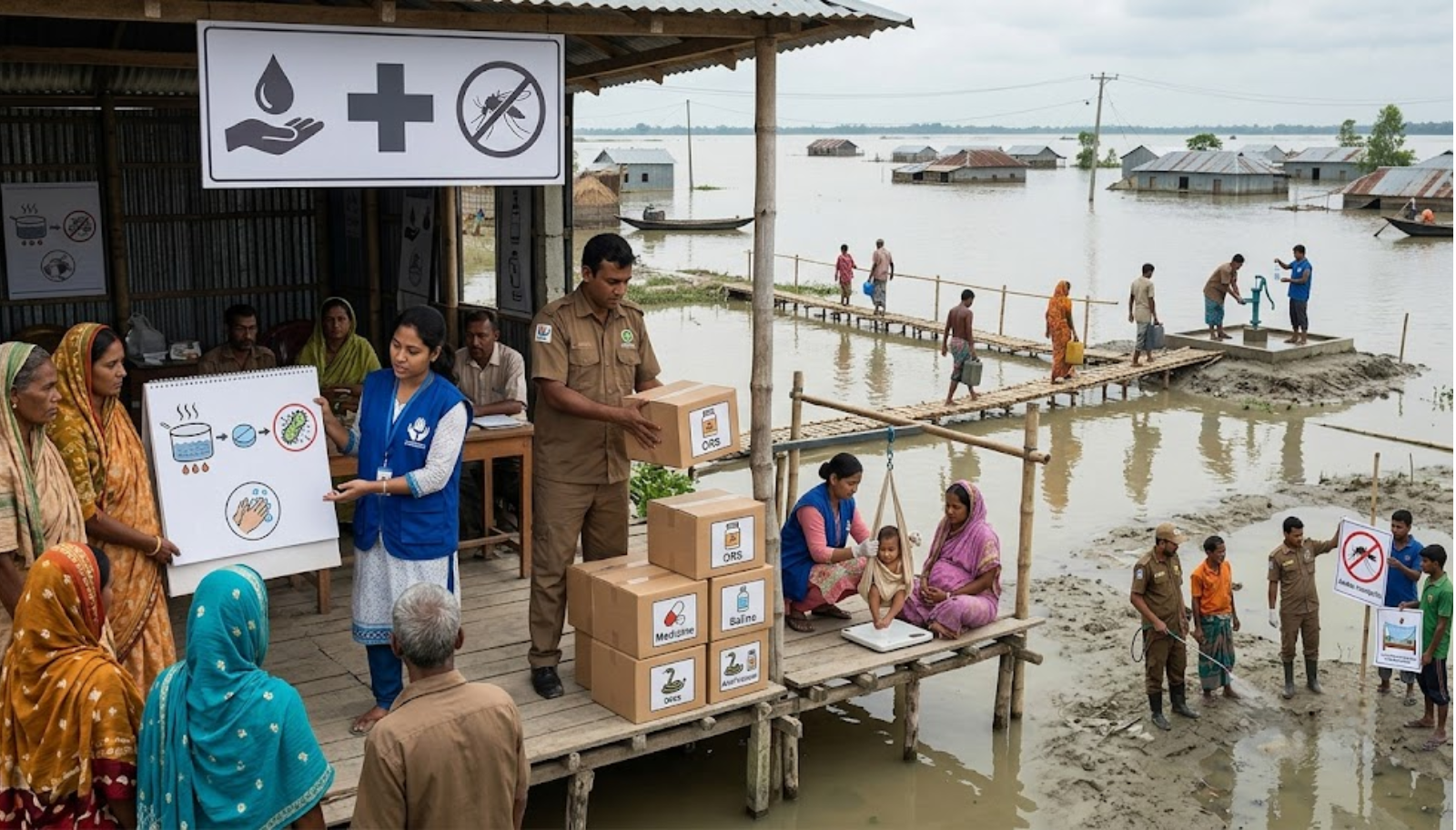
The government should prioritise emergency water purification through chlorination, distribution of water purification tablets, mobile water treatment units, and regular testing of drinking water sources. Safe water points should be established in shelters and affected communities, while damaged tube wells should be inspected before being returned to public use. Public awareness campaigns should encourage boiling or treating drinking water whenever safe supplies cannot be guaranteed.
Restore Sanitation and Hygiene Services
Floods often destroy toilets, drainage systems, and waste disposal facilities, creating conditions that accelerate disease transmission. Temporary sanitary latrines should be rapidly installed in evacuation centres and flood-affected communities. Solid waste collection must resume as quickly as possible to reduce environmental contamination and discourage breeding of insects and rodents.
Handwashing facilities with soap should be available in shelters, schools serving as emergency centres, healthcare facilities, and food distribution points. Hygiene promotion campaigns should emphasise handwashing, safe food preparation, and proper disposal of waste to minimise infectious disease transmission.
Strengthen Disease Surveillance and Rapid Response
The weeks following major floods are particularly critical for identifying and containing disease outbreaks before they spread widely. Health authorities should strengthen disease surveillance through community health workers, local clinics, hospitals, and mobile medical teams. Daily reporting of diarrhoeal illness, dengue, malaria, respiratory infections, skin diseases, leptospirosis, and other communicable diseases should be closely monitored.
Rapid response teams should investigate unusual clusters of illness immediately and ensure that medicines, diagnostic supplies, and laboratory services are available where they are needed most. Early detection remains one of the most effective public health tools for preventing large-scale outbreaks.
Expand Emergency Healthcare Services
Floods frequently disrupt access to hospitals, pharmacies, maternal health services, and routine medical care. Mobile medical units should be deployed to isolated communities where transportation remains difficult. Temporary health centres should provide treatment for infectious diseases, injuries, chronic illnesses, pregnancy-related complications, and childhood illnesses.
Essential medicines, oral rehydration salts, antibiotics where clinically indicated, insulin, blood pressure medications, and emergency medical supplies should be pre-positioned in flood-prone districts to avoid shortages during future emergencies. Vaccination services should also resume promptly where disruption has occurred to prevent secondary outbreaks of vaccine-preventable diseases.
Protect Vulnerable Population Groups
Certain groups face substantially higher health risks during and after floods. Infants, pregnant women, older adults, persons with disabilities, individuals with chronic illnesses, and those living in extreme poverty require targeted protection measures. Nutrition programmes should prioritise children and pregnant women to prevent malnutrition and micronutrient deficiencies.
Shelters should include accessible sanitation facilities, privacy for women, safe infant feeding areas, and adequate protection for vulnerable individuals. Community health workers should actively identify people requiring specialised medical attention rather than waiting for them to seek assistance.
Preventing Mosquito-Borne and Environmental Diseases
Standing water created by floods provides ideal breeding conditions for mosquitoes that transmit dengue and other vector-borne diseases. Vector control measures should begin immediately after floodwater recedes. Drainage of stagnant water where feasible, environmental clean-up campaigns, community awareness, and targeted mosquito control interventions can significantly reduce mosquito populations.
Households should be encouraged to use mosquito nets, window screens where available, and protective clothing during peak mosquito activity. Public education should also address snakebite prevention, safe handling of flood debris, and protection from contaminated floodwater.
Address Mental Health and Psychosocial Needs
Flood disasters affect emotional well-being as well as physical health. Families who lose homes, livelihoods, or loved ones may experience grief, anxiety, depression, and prolonged psychological stress. Children are particularly vulnerable to emotional trauma following displacement and disruption of daily life.
Mental health support should therefore become an integral part of emergency health services. Psychological first aid, community counselling, school-based support for children, and referral pathways for individuals requiring specialised mental healthcare should be incorporated into disaster response planning. Reducing stigma surrounding mental health can encourage affected individuals to seek timely support.
Improve Public Communication and Community Participation
Clear and consistent communication is essential during public health emergencies. Government agencies should provide regular public updates through television, radio, mobile messaging, community leaders, and social media. Health messages should explain safe drinking water practices, sanitation, food safety, disease symptoms requiring medical attention, mosquito prevention, and available healthcare services.
Community participation should be encouraged through local volunteers, youth organisations, religious institutions, and civil society groups. Local engagement improves public trust and ensures that health interventions respond to the specific needs of affected communities.
Conclusion
The public health consequences of flooding often extend well beyond the immediate disaster period. Preventing disease outbreaks, protecting vulnerable populations, restoring healthcare services, and rebuilding community resilience require coordinated planning and rapid implementation. Bangladesh’s response to the July floods should therefore integrate emergency relief with comprehensive public health action that prioritises safe water, sanitation, disease surveillance, healthcare access, nutrition, mental health, environmental protection, and effective public communication. By acting promptly and systematically, the government can reduce preventable illness and mortality while strengthening the country’s capacity to respond to future climate-related emergencies with greater preparedness and resilience.