
Desk Report
Oniket Desk
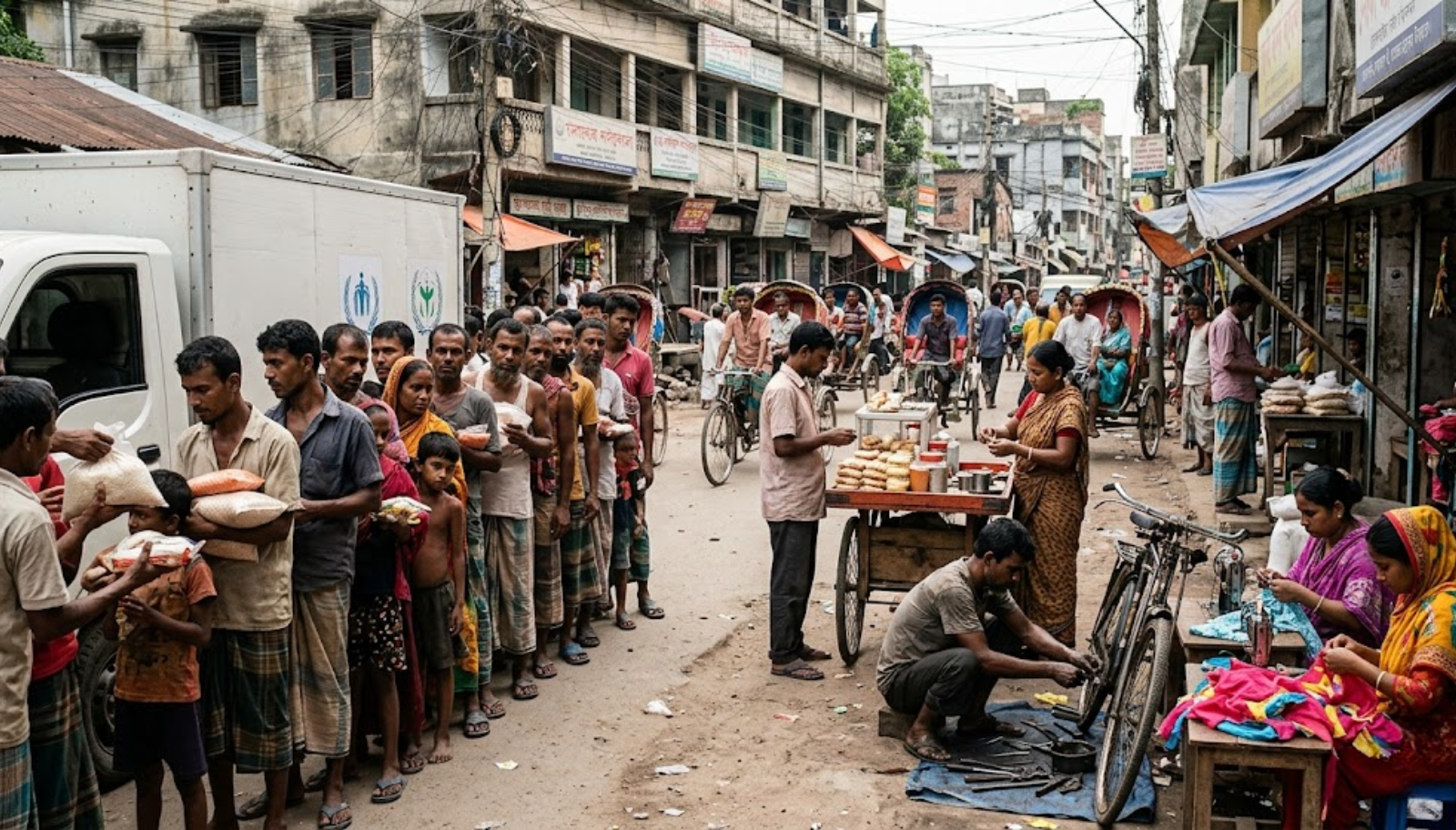
Bangladesh has a long history of people giving to charity. Many people believe that aiding the economically disadvantaged is a commendable act, often motivated by religious principles, sense of community, or memories of times when hunger and other challenges were prevalent.
As charities expand, a critical and uncomfortable question is being raised: is Bangladesh’s charity system beginning to hinder the efforts aimed at alleviating poverty?
The problem isn’t charity itself, but how it’s delivered. When aid is unconditional, ongoing, and not linked to any expectation of effort or progress, it can slowly change the idea of poverty. It can make poverty seem like a permanent part of a person’s life instead of a temporary situation that can be fixed. In poor areas of Dhaka and in rural communities in Barisal and Mymensingh, NGOs are providing aid. In some areas, this aid has led to what economists call “welfare dependency.” This is when households decide to work less because they expect to receive aid instead of working to earn money.
The psychological aspect is also important. When a community perceives that financial contributions to charity are not contingent on the individual’s personal efforts, it conveys the notion that success is derived from the generosity of others rather than from one’s own endeavors. This phenomenon gradually erodes the concept of earning a living with dignity, the contentment and esteem that comes from self-sufficiency, and the aspiration for families to improve their lives in the future.
In areas with many NGOs, especially in districts that are often hit by floods and cyclones, it has been seen that giving out food and cash often leads to lower local wages. Farmers and construction companies often have trouble finding workers for short-term jobs during and right after busy times. The message that money sends about whether people should work hard or not is temporarily ignored when money is received for no effort. This problem gets worse over time. It causes lasting problems in the local labor market.
This doesn’t mean we should get rid of charity or stop helping people who are poor. Instead, it suggests changing the system based on the following ideas.
Conditional and graduated transfers must replace unconditional recurring distributions wherever beneficiaries can participate in the economy. Assistance that helps people maintain their dignity while also encouraging them to seek employment can improve their lives. The government’s social safety net programs must be modified promptly.
Charitable organizations must be required to share information about the jobs and incomes of the people they help over three to five years. A transparency framework administered through the NGO Affairs Bureau would allow donors and the public to see which programs help people become more independent and which ones make people dependent on others.
Zakat and corporate social responsibility funds, which together represent a lot of money, should be used to provide microenterprise seed grants, vocational certification subsidies, and support for starting cooperatives instead of providing food and cash handouts. It’s more generous to give someone the chance to earn money than to give them the money itself.
School curricula must explicitly celebrate the dignity of skilled and manual labor. A culture that values office jobs and sees manual labor as less important will continue to produce college graduates who don’t match what the economy actually needs. This is true no matter what the charity sector does or doesn’t provide.
True charity in the Bangladeshi context must evolve from the relief of immediate suffering to the construction of permanent capability. The best thing a society can do for its poorest members is to make sure that when they do work, the pay is fair, they can count on it, and it’s enough to make it worth their while.