
Farah Zahir
Editor, Oniket Research Group
Bangladesh is currently facing a critical misinformation crisis that threatens the core of its social stability. Data from fact-checking organizations reveals a worrying trend: in 2025 alone, there was a 30 percent spike in false or misleading content compared to the previous year. This digital epidemic is highly targeted and dangerous. Nearly two out of every three fact-checked items involved fabricated political narratives, while half of all recorded disinformation was spread through easily digestible video formats.
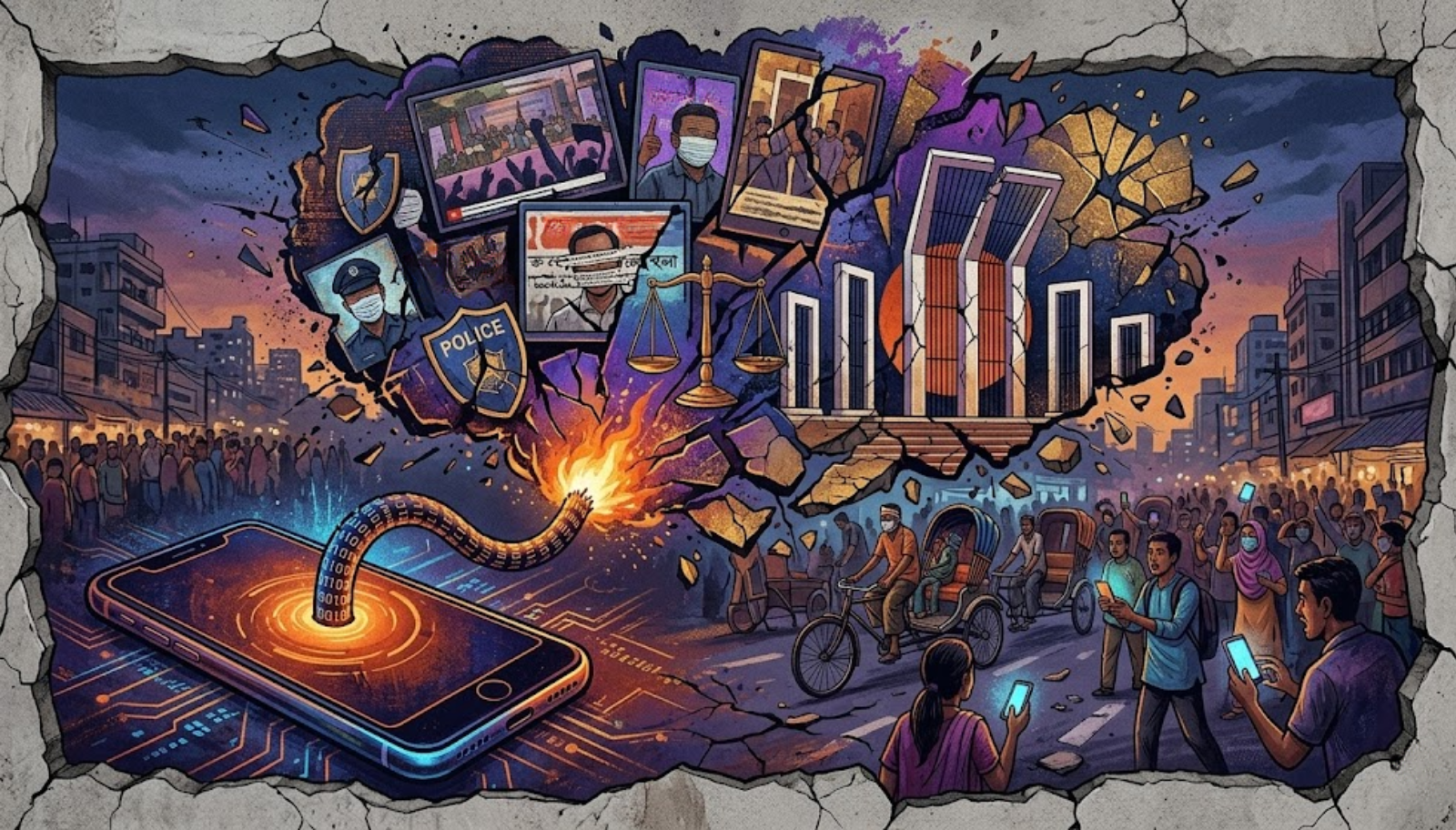
More alarming is the technological evolution of these lies, with one in ten pieces of false content now generated using artificial intelligence and deep-fake tools. On hyper-connected networks like Facebook, WhatsApp, and Telegram, unverified posts regularly transform digital outrage into physical devastation. Communal attacks, widespread vandalism, and brutal acts of mob justice have left lasting scars on communities nationwide. This is no longer a minor internet issue; it is a full-blown national emergency that demands immediate policy intervention and systemic reform.
The Social Fabric as a Catalyst: How Rumors Weaponize Trust
To design effective policies, we must first understand the social psychology of how rumors operate in Bangladeshi society. Digital platforms have largely replaced traditional village courtyards and tea stalls, drastically accelerating how information spreads. Rumors that trigger physical violence are never neutral; they are calculated “moral emergencies.” They typically involve fabricated claims regarding the desecration of religious texts, insults against revered figures, or manufactured emergencies about attacks on specific communities. These stories bypass rational thought by tapping directly into deeply ingrained identities, collective fears, and historical anxieties.
In the social landscape of Bangladesh, the medium is often trusted more than the message. Once a rumor enters a private WhatsApp family group, a neighborhood Telegram channel, or a locally popular Facebook page, it borrows unearned credibility from the person sharing it. Because interpersonal relationships carry immense weight, verifying a post shared by a friend, relative, or community leader is often socially viewed as disloyalty.
This human vulnerability is fiercely exploited by algorithmic designs. Social media platforms are engineered to reward high-emotion content with maximum visibility. Outrage, fear, and moral shock generate high engagement, meaning algorithms push them to the top of user feeds far faster than calm, evidence-based corrections. By the time a factual clarification is issued, the lie has already traveled through closed digital networks and manifested as an angry mob on the streets.
Structural Vulnerabilities: Why Current Governance Fails
The rapid escalation from digital notification to street-level violence highlights major weaknesses in the state’s current administrative and legal frameworks. The primary policy gaps include:
Institutional Delay: Public institutions respond slowly and defensively to viral falsehoods. When authorities remain silent or ambiguous during a brewing digital crisis, local communities interpret that silence as official validation of the rumor.
A Trust Deficit in Top-Down Communication: Traditional government press releases hold minimal weight among fragmented online audiences, particularly when institutional trust is low. Top-down denials rarely reach the specific digital subcultures where the rumor is actively spreading.
Lack of Platform Accountability: Global tech conglomerates treat Bangladesh as a low-priority market. Current state engagements with these platforms are reactive, focusing on post-damage content removal rather than preventing algorithmic escalation.
Deficits in Civic Digital Literacy: The national education system has failed to equip citizens with basic digital verification skills. Millions of first-generation internet users enter the digital space without the tools to spot AI-generated media, deep fakes, or altered context.
A Comprehensive Policy Blueprint
Structural Interventions for the state and society relying entirely on individual caution is a losing strategy against optimized algorithms. Turning the tide requires a legally backed, structurally sound governance framework.
1. Establish an Institutional Rapid Response Network
The government must replace slow bureaucratic channels with a centralized, non-partisan National Anti-Misinformation Coordination Centre (NAMCC). This body must be legally mandated to issue clear, simplified, and verified counter-narratives within hours of a rumor going viral. Speed, clarity, and widespread distribution across all media channels are just as vital as factual accuracy when defusing a crisis.
2. Mandate Algorithmic Friction and Local Platform Accountability
Instead of relying on late content takedowns, the Ministry of Information and Communication Technology (ICT) must establish strict operational protocols with social media platforms. During sensitive periods or localized crises, authorities must compel platforms to implement “algorithmic friction measures.” These include temporary sharing delays, mandatory warning labels on unverified breaking news, and the immediate throttling of automated recommendations for content flagged as potentially inciting public unrest.
3. Embed Digital Media Literacy into the National Curriculum
Long-term resilience depends on educating the youth. Digital media literacy must be integrated as a compulsory, graded component of the national school curriculum. A younger generation trained to critically analyze sources, identify reverse-image search techniques, spot deepfakes, and understand how algorithms manipulate emotions will protect society far better than any state-run censorship tool.
4. Decentralize Verification through Trusted Community Networks
To bridge the institutional trust deficit, the state must build decentralized verification networks. This involves actively training and empowering locally respected, non-state actors: school headmasters, sports coaches, local journalists, and religious leaders, such as mosque imams. When a trusted local leader uses their personal credibility to publicly declare a viral social media claim as false, they can de-escalate a volatile crowd far more effectively than an official government notice.
Securing a Resilient Future
Bangladesh’s rich cultural and religious diversity is one of its greatest strengths, making it a prime target for actors who manufacture digital chaos to destabilize the nation for political or malicious gains. Protecting this social harmony from weaponized information is a core necessity for public safety and national security. Both the state and its citizens must treat the fight against misinformation with absolute seriousness, because in our current digital age, a lie shared in seconds can cost human lives in minutes.
Given that a significant portion of viral misinformation in Bangladesh relies on highly engaging video content and AI-generated media, what specific regulatory or technical checks should the government enforce on local internet service providers (ISPs) and mobile networks to slow down the spread of suspicious multimedia during an active public security crisis?
In this era of unprecedented technological advancement, it is impossible to defuse the digital powder keg through mere verbal awareness. What is required instead is a balanced national policy that safeguards the digital rights of citizens on one hand, while ensuring public safety through targeted and scientifically sound technical regulations during times of crisis on the other. To keep our digital platforms secure and responsible, these strategic measures can serve as our greatest shield in the days to come.