
Desk Report
Oniket Desk
Bangladesh’s prison system is in a state of protracted crisis, where the aspiration to correct and rehabilitate is consistently overwhelmed by the daily reality of overcrowding, inadequate infrastructure, and a legal architecture rooted in a colonial-era Prisons Act of 1894. A meaningful shift has recently begun, signalled by the symbolic and substantive renaming of the Bangladesh Jail to the Bangladesh Correction Service in August 2025, reflecting a stated national intention to reorient incarceration towards rehabilitation rather than mere punishment.
Yet symbolic change must be accompanied by structural transformation if the system is to fulfil its corrective mandate and genuinely contribute to crime prevention.
The Severity of Prison Conditions
The most immediate and measurable crisis inside Bangladesh’s correctional facilities is overcrowding. As of August 2025, Dhaka division alone held nearly 28,000 inmates across 18 prisons, while Chattogram division housed over 15,800 in 11 facilities. Nationally, prisons operate at more than three times their design capacity in several divisions. The consequences are not merely logistical. Severe overcrowding creates conditions that are harsh and at times life threatening, with inadequate access to clean water, sanitation, medical care, and proper sleeping space.
Physical abuse by prison staff and between inmates has been documented by both national and international human rights observers. The psychological toll of these conditions on prisoners, a large proportion of whom are undertrial detainees awaiting hearings rather than convicted individuals serving sentences, is considerable and largely unaddressed.
An inefficient, slow-moving criminal justice system contributes directly to overcrowding. Prolonged pretrial detention, caused by case backlogs and irregular hearing schedules, ensures that thousands of individuals are held in conditions of punishment before any finding of guilt. This structural dysfunction traps the prison system in a cycle of population pressure that no amount of physical infrastructure alone can resolve.
The Failure of Rehabilitation
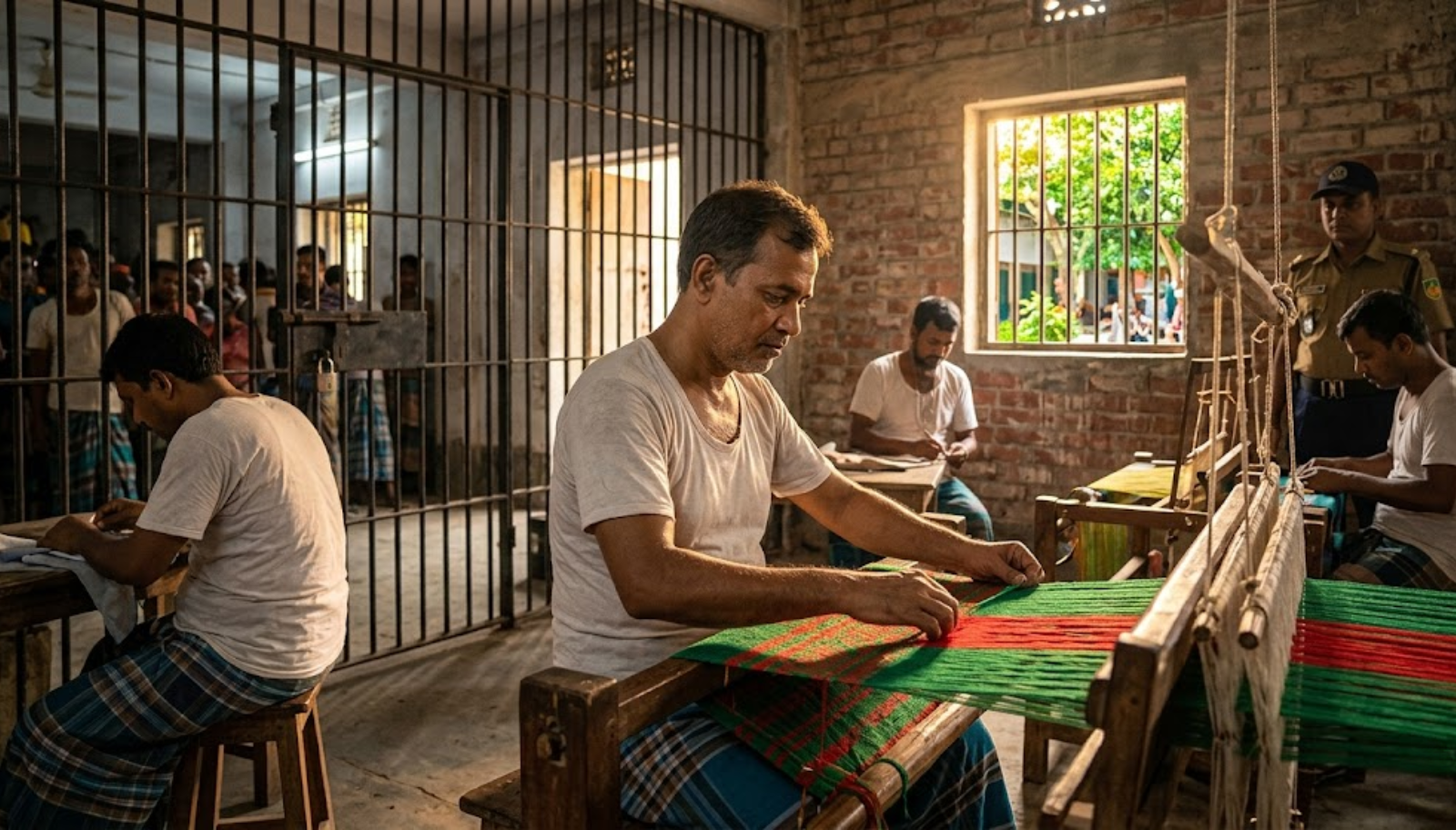
Rehabilitation within Bangladesh’s prisons remains underdeveloped as a formal practice. Vocational training programmes exist in some facilities but lack scale, consistency, and alignment with labour market needs. Access to education, mental health counselling, and legal aid within prisons is limited and unevenly distributed. High rates of recidivism among released prisoners reflect a system that processes individuals through incarceration without equipping them with the skills, psychological stability, or social support required for successful reintegration into society. Crime prevention, in this context, is sacrificed at the point when it is most achievable.
Essential Reforms
The reforms required are both structural and programmatic. First, the criminal justice system must urgently reduce pretrial detention through expanded use of bail, plea agreements, and fast-track courts, reducing the prison population to manageable levels without compromising justice. Second, non-custodial alternatives including community service, probation, and restorative justice mechanisms must be legislated and implemented for non-violent and first-time offenders, freeing institutional resources for those who genuinely require incarceration.
Third, and deserving particular emphasis, every correctional facility in Bangladesh must establish mandatory, structured vocational and educational programmes that are directly linked to viable employment pathways upon release.
The current provision of vocational training across Bangladesh’s prison system is fragmented, underfunded, and disconnected from the realities of the labour market. Where training does exist, it tends to involve low-skill activities without recognised certification, offering prisoners little competitive advantage when they re-enter civilian life. This disconnect between what is taught inside prison and what the economy demands outside it is a primary driver of the country’s high recidivism rate.
A reformed vocational programming framework must begin with a national skills audit conducted jointly by the Bangladesh Correction Service, the Ministry of Labour and Employment, and the Bangladesh Technical Education Board. This audit should map the specific industries and skill shortages in each division of the country and align prison training curricula accordingly.
In Dhaka and Chattogram, where the garment and manufacturing sectors dominate, programmes in industrial sewing, quality control, electronics assembly, and supply chain management would offer direct employment bridges. In agricultural regions, training in modern farming techniques, aquaculture, and agro-processing would serve regional economic needs while preparing prisoners for productive rural livelihoods. Digital literacy and basic IT skills must be incorporated universally, given the rapid expansion of technology-dependent employment across all sectors.
Crucially, all completed vocational programmes must result in nationally recognised certificates issued by the Bangladesh Technical Education Board, ensuring that a prisoner’s qualification carries the same weight as one earned by a civilian student. The stigma of incarceration is already a formidable barrier to employment. A certificate that is institutionally credible and free from any prison-identifying mark on its face gives a released individual the best available chance of being evaluated on competence rather than criminal history. A parallel literacy and numeracy programme must underpin all vocational training, as a meaningful proportion of the prison population lacks the foundational education required to benefit from technical instruction.
Finally, the impact of vocational programming must be tracked rigorously through a national prisoner reintegration data system that records employment outcomes, recidivism rates, and earnings trajectories for released individuals. Evidence-based refinement of programme content based on these outcomes would create a feedback loop of continuous improvement, transforming prison vocational training from a nominal gesture into a measurable instrument of crime prevention and social repair.
The Prisons Act of 1894 must be fully replaced by a modern Correctional Services Act that enshrines rehabilitation as the primary purpose of incarceration, establishes independent oversight mechanisms, and creates enforceable standards for prisoner treatment and facility conditions. Bangladesh has named its intention through the renaming of its prison service. It must now build the laws, institutions, and resources that give that name its meaning.