
Ruksana Akhter
Freelance Architect
The Sundarbans, a vast expanse of mangrove forest, occupy the southwestern coast of Bangladesh and extend into India. The Khulna division in Bangladesh constitutes the heartland of this natural wonder. Once an impenetrable wilderness characterized by tidal waterways, dense mangroves, and extraordinary biodiversity, this UNESCO World Heritage Site now faces critical decisions that will determine its future.
Decades of climate change, human encroachment, and institutional neglect have led to a state of ecological instability, and the recovery of this irreplaceable ecosystem will be arduous and protracted.
The Current State of the Sundarbans
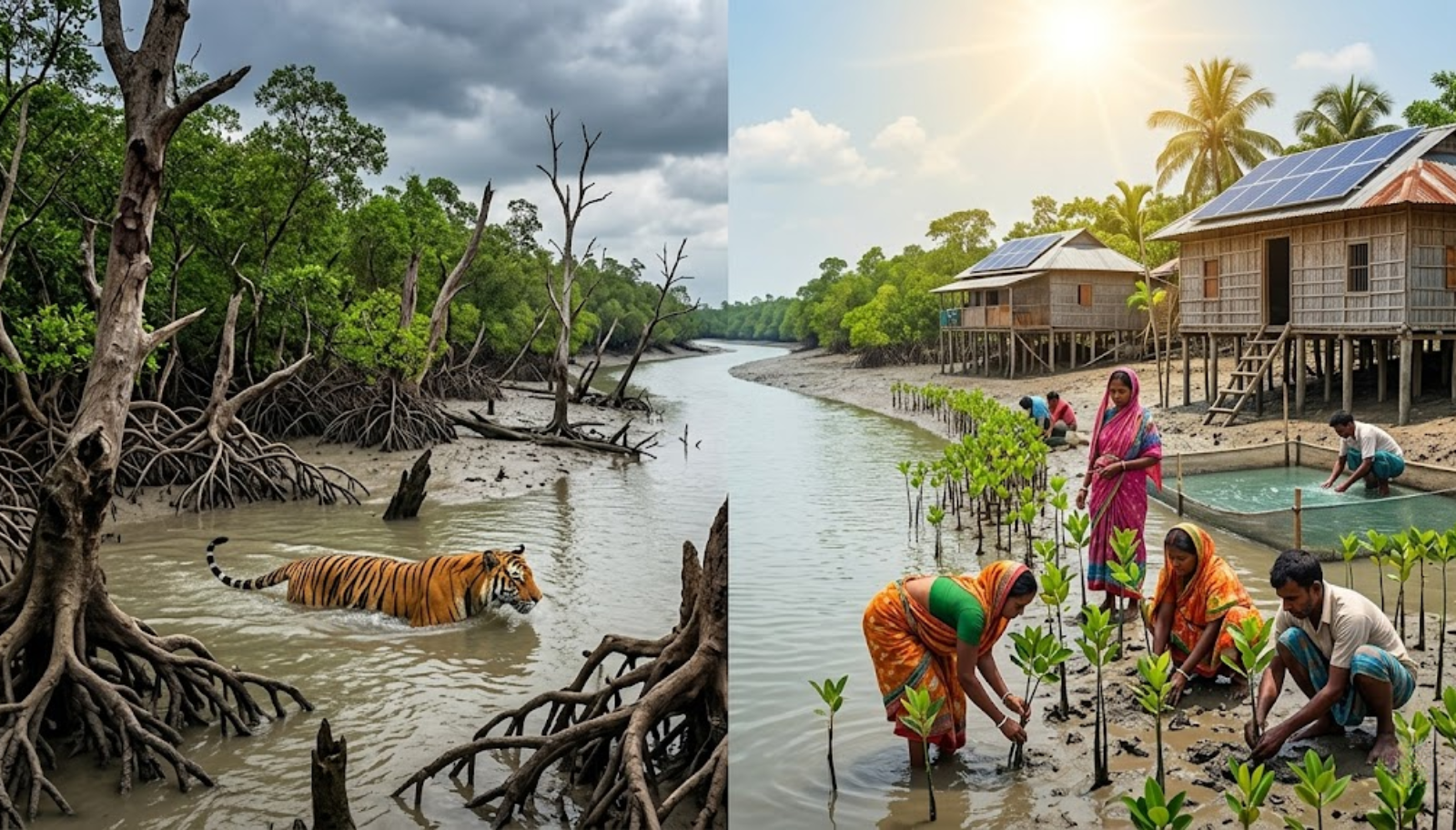
The Sundarbans in Khulna have been visibly impacted by increasing pressures. Rising sea levels, driven by global climate change, have accelerated saltwater intrusion into the forest’s interior, altering the delicate salinity balance that mangroves depend upon to survive. The forest is named after the iconic Sundari tree, which is dying at an alarming rate due to excessive saline stress, a phenomenon locally known as “top dying.” Across vast stretches of the forest, the upper canopy of these trees is withering, leaving bare and skeletal outlines where green crowns once stood.
The frequency and intensity of cyclones have increased significantly. In the late 2000s, the region was subjected to the devastation of two major cyclones, Sidr and Aila, which resulted in the flattening of trees and significant reshaping of the delta’s terrain. The Sundarbans, a natural ecosystem located along the coast of West Bengal, India, has historically served as a natural buffer, providing protection to coastal communities from storm surges.
However, recurrent damage caused by cyclones has gradually diminished the Sundarbans’ protective capacity. The forest’s capacity for regeneration is further compromised by ongoing deforestation, as local communities that depend on timber, fuelwood, honey, and fish extraction continue to exert pressure on the ecosystem.
Wildlife within the Sundarbans is also under severe stress. The Royal Bengal Tiger, the forest’s most iconic inhabitant, faces shrinking habitat and increased human conflict as its range contracts. Populations of Irrawaddy dolphins, estuarine crocodiles, and numerous migratory bird species have declined. Illegal poaching and fishing in protected zones remain persistent problems despite government restrictions, largely because enforcement mechanisms are understaffed and underfunded.
The confluence of industrial threats and ecological crises is a subject of growing concern. The Rampal coal-fired power plant, which was constructed near the forest boundary, has raised serious concerns among environmental scientists and international conservation bodies. The region’s aquatic and terrestrial ecosystems are vulnerable to long-term risks posed by thermal discharge, oil spills resulting from increased river traffic, and air pollution.
What Must Be Done
The Bangladesh government must adopt a comprehensive, science-driven strategy to halt the deterioration of the Sundarbans and restore its long-term sustainability. The priority must be strengthening legal enforcement within the forest. Buffer zones must be demarcated strictly, and the presence of forest guards must be significantly increased, with competitive salaries and modern equipment to combat poaching, illegal logging, and unauthorized fishing. Digital surveillance technology, including drone monitoring, should be integrated into the management framework.
Concurrently, the government must allocate resources to the livelihoods of the approximately two million individuals residing along the periphery of the forest, many of whom depend on it for survival. Absent viable economic alternatives, restrictions alone will inevitably prove ineffective. The development and subsidization of ecotourism, sustainable aquaculture, and honey cultivation programs is imperative to ensure that forest-edge communities become stakeholders in conservation rather than agents of degradation.
Climate adaptation must be built into every layer of forest policy. Replanting programs should prioritize salt-tolerant mangrove species capable of withstanding intensified saline conditions. Freshwater flow into the Sundarbans must be restored by negotiating equitable water-sharing agreements with India over the Ganges and Gorai river systems, which directly influence the delta’s hydrology.
Bangladesh must capitalize on international climate finance mechanisms, such as the Green Climate Fund and bilateral development partnerships, to ensure the procurement of sustained funding for the conservation of the Sundarbans. The establishment of a dedicated, autonomous Sundarbans Management Authority with transparent governance and adequate budgetary allocation is imperative to coordinate policy across the Khulna, Satkhira, and Bagerhat districts.
The Sundarbans is not merely a forest. It is a living shield for millions of Bangladeshis, a reservoir of biodiversity, and a symbol of the nation’s natural heritage. Protecting it is not an environmental luxury but a national imperative.