
Desk Report
Oniket Desk
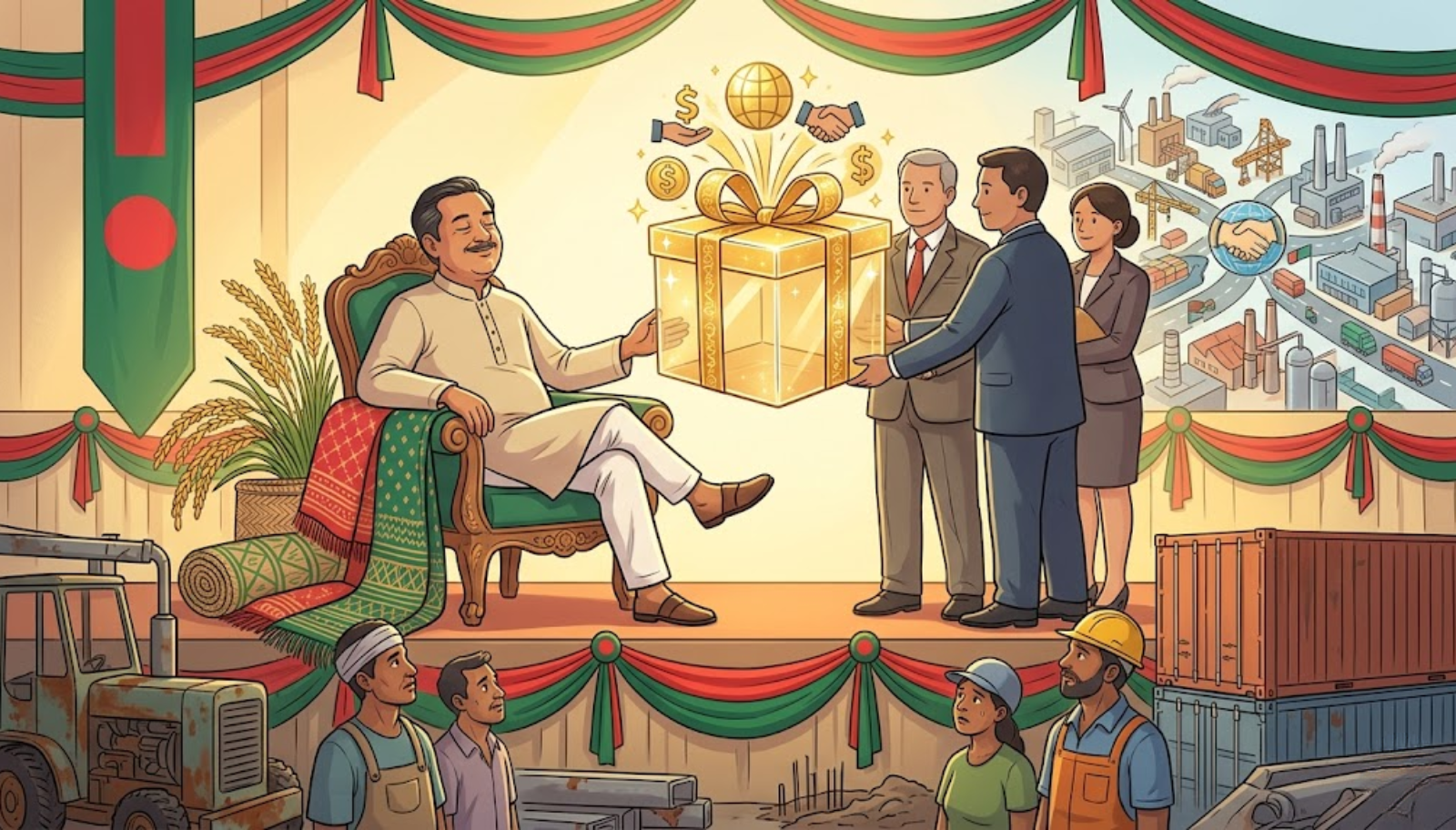
When Bangladesh’s Commerce Minister Khandaker Abdul Muktadir emerged from a meeting with a United States trade delegation and told journalists there was ‘nothing to worry about’ regarding the US-Bangladesh mutual trade agreement (the Daily Star), the reassurance sounded confident. On closer examination, it raises more questions than it answers.
The minister’s core argument rested on two claims: first, that the agreement contains built-in ‘self-caring elements’ allowing problematic clauses to be amended; and second, that because it is a state-level agreement inherited from a previous government, it cannot simply be discarded. Both points are legally defensible. Neither is particularly reassuring for a trade-dependent economy navigating an increasingly assertive US trade posture.
The acknowledgment that certain clauses may not be ‘in Bangladesh’s favour’ is a telling admission. If the agreement were genuinely balanced (the minister’s stated ‘win-win’) there would be little need to emphasize the amendment provisions. That these safeguards are being cited as the primary source of comfort suggests that the terms, as they stand, are not comfortable. Pointing to an escape clause is not the same as demonstrating that the underlying deal is sound.
The minister’s refusal to directly answer whether Bangladesh would consider cancelling the agreement is similarly evasive. Diplomatic caution is understandable in ongoing negotiations, but the absence of a clear strategic position (particularly as the United States has reportedly launched an investigation into Bangladeshi trade practices) signals either uncertainty or a reluctance to acknowledge the full weight of the situation. Bangladesh sought clarification on that investigation and noted that its initiation was regrettable given the existing agreement. That is a mild response to what could represent a significant challenge to export revenues.
The denial of dumping allegations is on firmer ground. Bangladesh’s garment sector operates under rigorous international compliance frameworks, and the claim that most goods are imported rather than dumped carries credibility. Yet robust denial of one charge does not resolve the broader question of whether Bangladesh has the negotiating leverage to defend its interests if the trade relationship comes under sustained pressure.
The deeper concern is one of asymmetry. The United States is Bangladesh’s largest single export market, making the relationship structurally unequal. In that context, a strategy built on reassuring the public and invoking amendment clauses falls well short of what a proactive trade policy demands. Acknowledging inherited constraints is honest; treating those constraints as sufficient protection is a different matter entirely. Bangladesh’s policymakers would serve the country better by engaging critically with the agreement’s terms, strengthening their negotiating position, and preparing concrete responses to US trade scrutiny, rather than advising the public simply not to worry.
Read also –

