
Desk Report
Oniket Desk
Bangladesh possesses a rich and historically deep creative tradition spanning literature, music, and cinema. Yet despite this cultural wealth, the creators who sustain it (authors, composers, filmmakers, lyricists, and performers) remain among the most legally unprotected and economically unrewarded in the region.
The absence of enforceable formal agreements, functioning royalty systems, and robust institutional arrangements has left intellectual property rights largely aspirational in practice, even where they exist on paper.
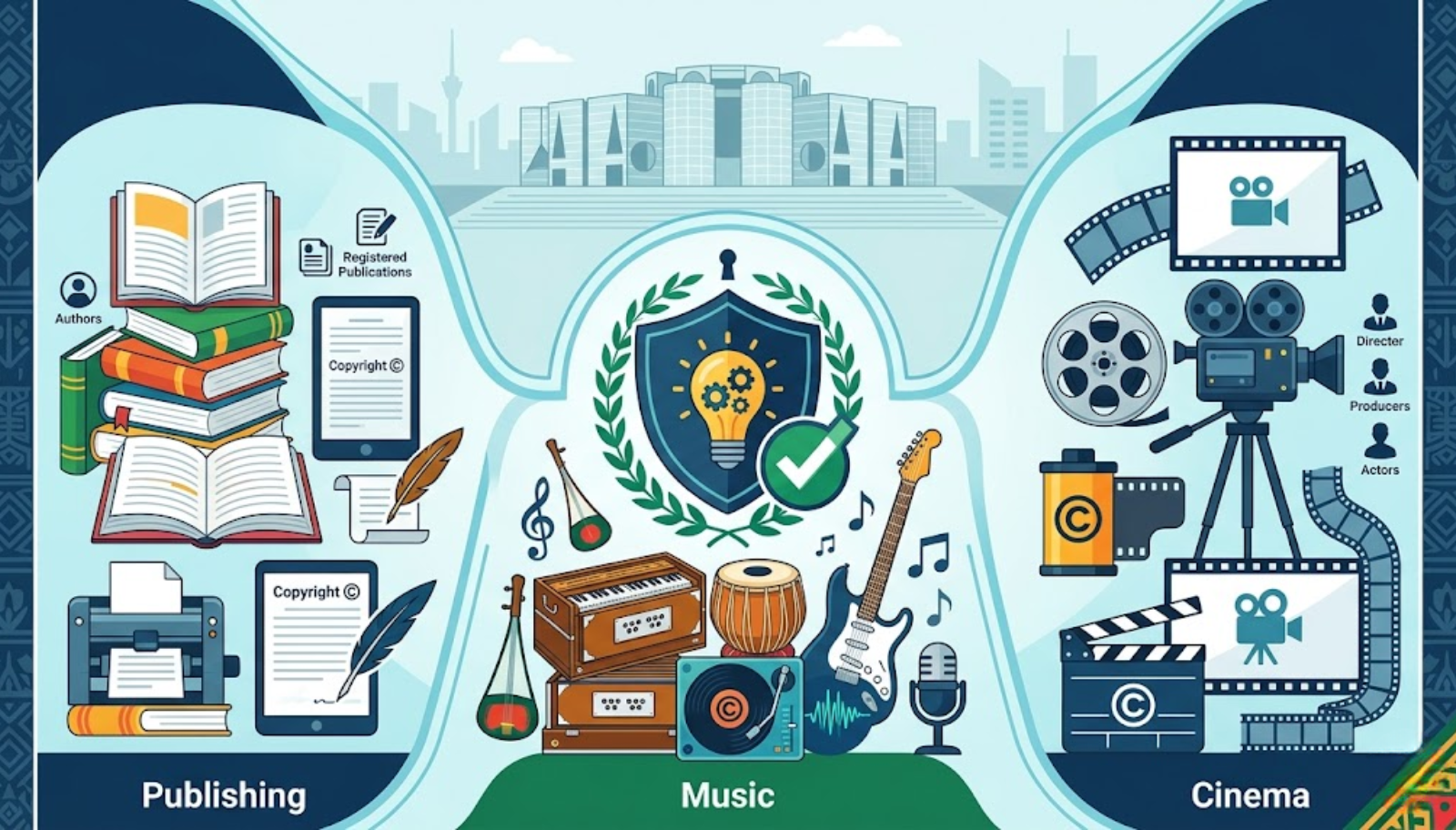
The Publishing Sector: Authorship Without Ownership
The Bangladeshi publishing industry operates predominantly on informal understandings between authors and publishers. Contracts, where they exist at all, are often one-sided, poorly drafted, and rarely reviewed by legal counsel. Authors (particularly emerging writers) routinely surrender rights to their manuscripts without comprehending the long-term implications. Royalty structures, when agreed upon, are inconsistently honored, and mechanisms for independent audit or financial accountability are virtually nonexistent.
The consequences are severe. Piracy of printed books is rampant, with unauthorized reproductions circulating freely at street markets and online platforms. Authors derive no income from these reproductions, and publishers seldom pursue legal remedy due to the cost and inefficiency of litigation. Translated works, anthologies, and educational reprints are produced without licensing agreements, and foreign publishers have increasingly grown wary of entering the Bangladeshi market, limiting readers’ access to international literature while denying local authors global exposure.
Music: An Industry Built on Exploitation
The music industry in Bangladesh presents an equally troubling picture. Composers, lyricists, and performing artists generate enormous commercial value. Their work underpins film soundtracks, television productions, digital streaming, and live entertainment. Yet they rarely receive structured, ongoing compensation beyond a one-time payment at the point of creation. The concept of performance royalties, standard practice in most developed music economies, is largely absent in Bangladesh’s commercial landscape.
Digital disruption has dramatically worsened the situation. With the explosive growth of YouTube channels, streaming applications, and social media platforms, Bangladeshi music is consumed by millions globally, yet revenue repatriation to original creators remains negligible. Aggregator platforms and content distributors frequently appropriate musical works without licensing, and artists lack the institutional support needed to negotiate, enforce, or even identify unauthorized uses of their intellectual property. The absence of a functioning collective licensing body (equivalent to a performing rights organization) means that even willing platforms have no clear mechanism through which to remit royalties to rights holders.
Cinema: Structural Gaps in a Struggling Industry
Bangladesh’s film industry, once a vibrant cultural force, has struggled for decades under the dual pressures of piracy and institutional neglect. Formal co-production agreements between production houses are rare, and contracts governing the rights of directors, screenwriters, and actors are routinely informal or verbal. When disputes arise, the absence of documented agreements renders legal resolution slow, expensive, and often futile.
The rise of OTT platforms has opened new avenues for Bangladeshi cinema, but the legal infrastructure to govern digital distribution rights, residual payments, and international licensing has not kept pace. Filmmakers who license their works to streaming platforms frequently do so without legal advice and without understanding the territorial or temporal scope of the rights they are transferring. The result is a systemic transfer of value away from creators and toward distributors and aggregators.
Legal and Policy Reforms Required
Bangladesh’s Copyright Act of 2000, amended in 2005, provides a foundational legal framework, but it is widely regarded as outdated, inadequately enforced, and ill-equipped to address the realities of the digital creative economy. Comprehensive reform is urgently needed across several dimensions.
First, the Copyright Act must be modernized to explicitly address digital rights, streaming royalties, and platform accountability. Provisions must be introduced that require OTT platforms and digital aggregators operating in Bangladesh to enter into licensed agreements with rights holders and to remit royalties through transparent, auditable channels. Second, a national Collective Management Organization or a network of sector-specific rights societies for music, literature, and film must be formally established, legally empowered, and adequately funded to collect, manage, and distribute royalties on behalf of creators.
Third, the government must mandate the use of written contracts in all commercial creative transactions above a defined threshold, with standardized minimum terms protecting the creator’s right to attribution, remuneration, and reversion of rights. Legal aid and contract literacy programs, delivered through cultural ministries, writers’ associations, and film guilds, must be instituted to ensure that creators can negotiate from a position of basic legal awareness.
Fourth, enforcement mechanisms must be substantially strengthened. The Department of Patents, Designs and Trademarks and the Copyright Office require increased staffing, digital monitoring capabilities, and prosecutorial authority to pursue infringers meaningfully. Fast-track judicial procedures for intellectual property disputes would reduce the deterrent effect of prolonged litigation costs.
Protecting intellectual property is not a bureaucratic formality; it is an economic and moral imperative. When creators are systematically denied ownership of and compensation for their work, the cultural ecosystem deteriorates: fewer original works are produced, talented individuals abandon creative careers, and the national cultural identity is impoverished. Bangladesh’s publishing houses, music industry, and cinema deserve a legal architecture that matches their creative ambition. Meaningful reform, rooted in enforceable contracts, functioning royalty systems, and empowered institutions, is the foundation upon which a sustainable creative economy must be built.