
Naima Onamika
Oniket Research Group
Bangladesh’s health sector is widely regarded as one of the country’s most significant development success stories of the past two decades. Reductions in maternal and child mortality rates, the expansion of immunization programs, the growth of medical education, and improvements in healthcare infrastructure have all received international recognition and praise. Yet behind these achievements lies a structural challenge that continues to hinder the sector’s long-term qualitative development and sustainable progress. That challenge is gender inequality within the health sector.
Today, women in Bangladesh are participating in medical education, nursing, public health, and a wide range of healthcare professions in greater numbers than ever before. However, their presence remains limited in decision-making roles, leadership positions, research, entrepreneurship, and policy formulation. This raises an important question: although women’s participation in the health sector has increased, why has their empowerment not progressed at the same pace?
This question brings several critical issues into focus, all of which deserve closer examination.
Numerical Progress but Persistent Inequality in Empowerment
The presence of female students in Bangladesh’s medical colleges has increased significantly. In many institutions, the number of female and male students is nearly equal. On the surface, this appears to be a positive indication of gender equality.
However, a very different reality emerges at the higher levels of professional life. Women remain significantly underrepresented in positions such as hospital directors, departmental heads, medical college policymakers, leaders of specialized healthcare institutions, and senior roles within professional organizations.
This suggests that the problem is not one of access to education but rather one of unequal access to power, leadership, and influence. In other words, women are participating in the health sector, but they are not gaining equal opportunities to shape decisions and lead institutions.
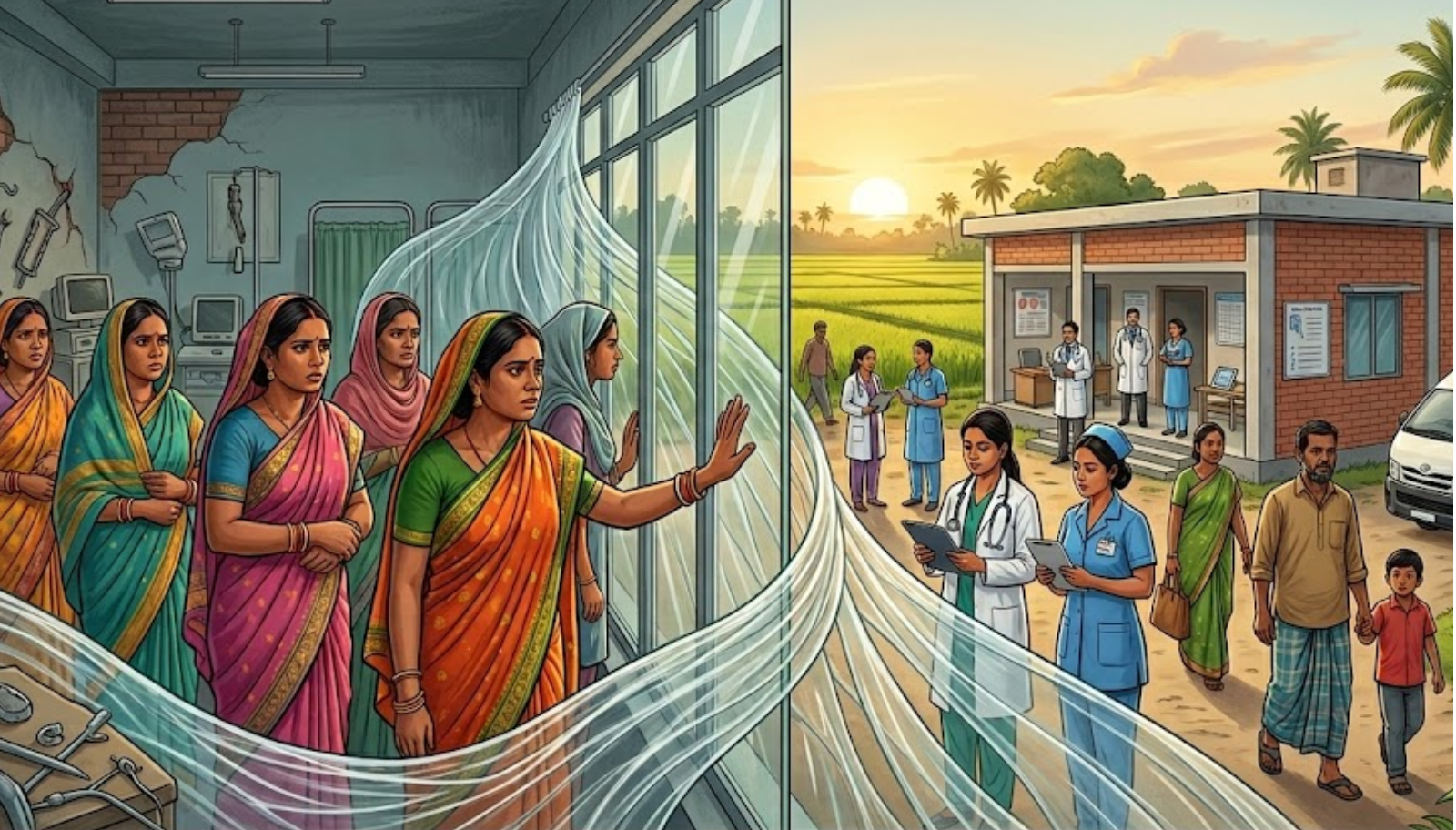
The Reality of the “Glass Ceiling” in healthcare
One of the most significant barriers to women’s advancement is the so-called “glass ceiling”, an invisible barrier that may not be formally acknowledged but effectively restricts women’s access to senior positions.
Bangladesh’s social structure continues to place the primary burden of family and household responsibilities on women. Female physicians often must balance long hospital hours, emergency duties, and professional development alongside family obligations, childcare, and social responsibilities.
As a result, many women reach a stage in their careers where they are unable to pursue advanced training, research opportunities, or leadership roles. This is not a personal failure; rather, it reflects the limitations of existing social and institutional structures.
Facing Discrimination as Entrepreneurs
Bangladesh has earned international recognition for women’s achievements in microfinance, the ready-made garment industry, and social business initiatives. Yet the number of female entrepreneurs in the healthcare sector remains relatively low.
Establishing clinics, diagnostic centers, pharmaceutical businesses, or health technology enterprises requires capital, professional networks, and administrative support. Women frequently encounter barriers in each of these areas.
Many financial institutions still exercise greater caution when providing loans to female entrepreneurs. At the same time, business networks, supply chains, and investment structures within the health sector are largely male dominated, limiting women’s opportunities to enter and grow within the industry.
As a result, the full potential of innovative service models, patient-centered healthcare solutions, and women-led entrepreneurial initiatives remains underdeveloped.
Occupational Segregation Within the Health Sector
A clear gender-based division of labor is evident within Bangladesh’s healthcare system. Women are predominantly concentrated in nursing, midwifery, and community healthcare services, while men continue to dominate surgery, hospital administration, specialized medical practice, and healthcare management.
This division is often portrayed as a matter of personal preference or natural choice. However, it is the product of long-standing social norms, professional cultures, and institutional biases.
Female surgeons, for example, continue to face challenges such as skepticism from patients and colleagues, discrimination in promotion processes, and limited access to professional networks. Consequently, many highly capable female physicians move away from specialized fields where they could have made even greater contributions.
Impact on the Quality of Healthcare Services
The effects of gender inequality extend beyond healthcare workers themselves; they directly influence the quality and effectiveness of healthcare services.
Research has shown that organizations with diverse leadership tend to be more innovative, more accountable, and better equipped to provide patient-centered services. When women are underrepresented in leadership positions within the health sector, issues such as women’s and children’s health, workplace safety, reproductive health, and gender-sensitive services may not receive adequate attention.
Furthermore, if more than half of the sector’s human resources are unable to utilize their full potential because of structural inequalities, the efficiency and productivity of the entire healthcare system inevitably suffer.
The Need for Reform
Considering the issues discussed above, immediate and far-reaching measures are needed to address these inequalities and implement meaningful reforms.
Achieving gender equality in the health sector requires not isolated initiatives but coordinated and structural reforms.
First, clear representation policies should be adopted to ensure women’s participation in leadership positions within both public and private healthcare institutions.
Second, career development opportunities, research support, and leadership training programs for female physicians and healthcare professionals should be expanded.
Third, low-interest loans, startup funds, and specialized investment support should be introduced for women health entrepreneurs.
Fourth, measures should be taken to prevent workplace harassment and to ensure maternity and paternity leave, as well as access to childcare services.
Fifth, medical education curricula should incorporate lessons on gender equality and professional diversity to foster anti-discriminatory perspectives among future healthcare professionals.
Conclusion
A comprehensive review of the issue makes one fact clear: the future of Bangladesh’s health sector depends on far more than constructing new hospitals, purchasing modern equipment, or increasing the number of physicians. It depends on how inclusive, equitable, and diverse the sector is willing and able to become.
Increasing women’s participation alone is not enough. Their opportunities for leadership, innovation, and decision-making must also be ensured. Gender inequality does not merely limit the potential of women; it also restricts the overall progress of a nation’s healthcare system.
Therefore, gender equality in the health sector is not a social luxury. It is a developmental necessity and an essential condition for achieving long-term and sustainable progress.