
Sumaiya Hasi
Oniket Research Group
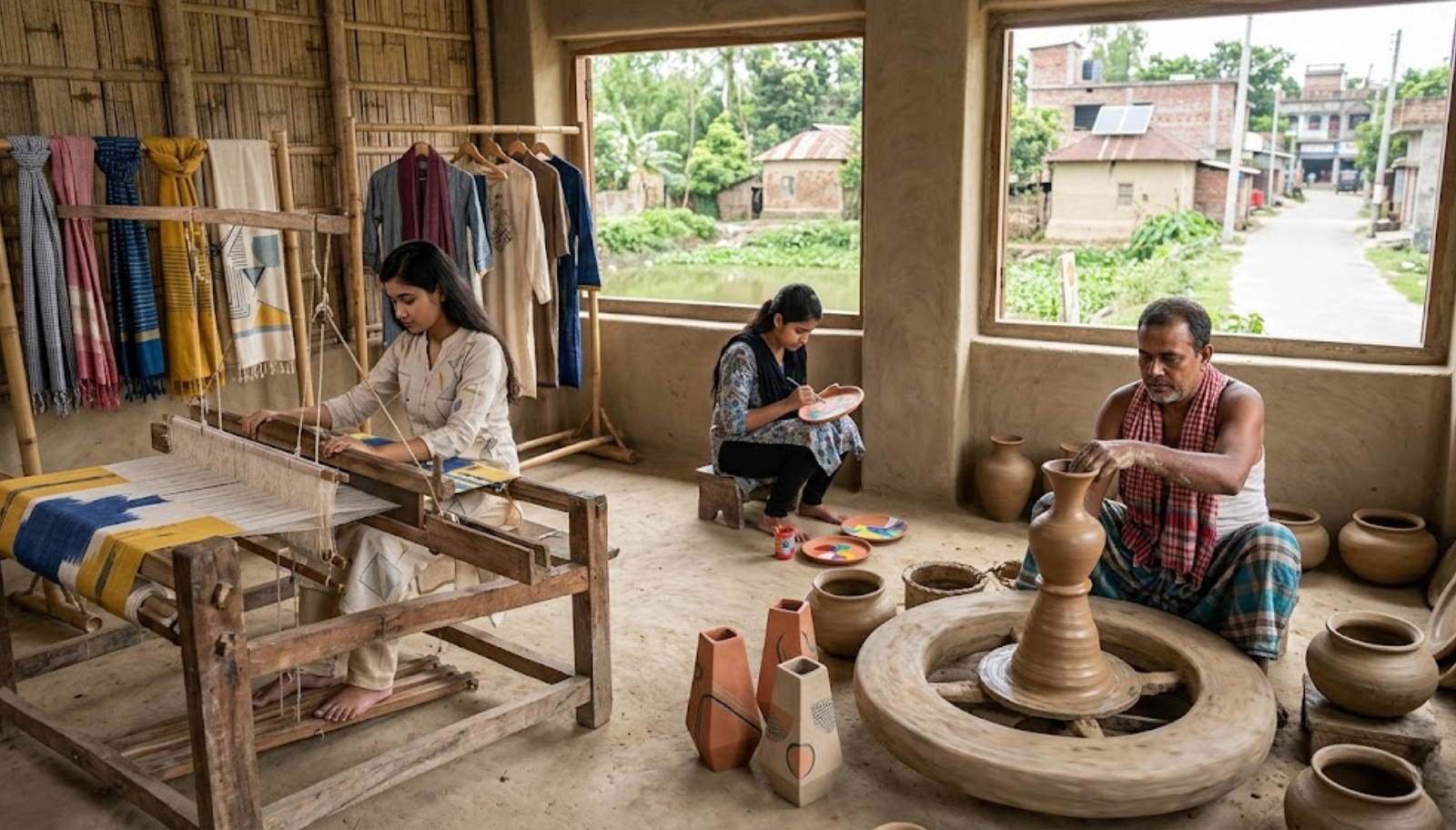
On the map of Bangladesh, Comilla (including the greater historic Comilla region) is not merely a geographical area; it is a living museum of artistic and cultural heritage that stretches back thousands of years. The story of this region’s creativity is deeply connected to the mineral-rich red soil of Lalmai and intertwined with the rhythmic clatter of looms in Chandina. It is through the combination of earth, thread, and centuries of tradition that Comilla has developed its unique legacy of handicrafts.
Ancient Clay Art: From Terracotta to Bijoypur
The history of Comilla’s clay art dates back nearly a thousand years or even more. Archaeological excavations at Mainamati have uncovered terracotta plaques, sculptures, and decorative panels from Buddhist monasteries dating between the seventh and twelfth centuries, providing some of the strongest evidence of this rich heritage. Researchers believe that pottery in those early centuries was not limited to the production of household utensils. Rather, it served as a sophisticated artistic medium through which rural life, nature, and religious beliefs were skillfully depicted on a canvas of clay.
The artisans of the Pal community in the Bijoypur area have preserved this ancient Mainamati tradition through generations. Using the region’s mineral-rich red clay, they create a remarkable variety of earthenware, including pots, pitchers, decorative vases, and toys. In 1961, the renowned social reformer Dr. Akhtar Hameed Khan helped institutionalize the craft through the establishment of the Bijoypur Rudrapal Pottery Cooperative Society. Although local workshops were destroyed during the devastation caused by the Pakistani military in the Liberation War of 1971, the artisans persevered and rebuilt their craft. Today, more than a thousand varieties of aesthetically crafted clay products and decorative items from Bijoypur are exported to markets in Europe and Japan, showcasing Bangladesh’s ancient artistic heritage on the global stage.
Khadi: The Celebrated Fabric of Self-Reliance and Fashion
If clay represents Comilla’s oldest artistic resource, then khadi fabric symbolizes the region’s cultural identity. The origins of this weaving tradition can be traced back to the Mughal era. Its extensive reach is documented in the Tripura Gazetteer of 1890, which records that nearly 15,000 men and women in Mainamati, Chandina, and surrounding villages were engaged in the craft. The visit of Mahatma Gandhi to Chandina in 1921 gave the industry renewed momentum. For ordinary weavers, hand-spun khadi became more than a source of livelihood; it emerged as a symbol of self-reliance and resistance during the anti-colonial movement.
Following the Partition of the Indian subcontinent, the industry nearly disappeared. Once again, Dr. Akhtar Hameed Khan played a pivotal role in its revival. Through the Khadi and Cottage Industries Association that he established, along with the tireless efforts of visionary figures such as Shailen Guha of Chandina, widely known as “Khadibabu,” the khadi industry regained its strength. Khadi woven from yarn collected from rural communities eventually reached markets as far as Kolkata. In recent decades, the work of internationally acclaimed designer Bibi Russell and leading entrepreneurs has transformed khadi from a simple rural fabric into a celebrated element of contemporary fashion. Today, Comilla’s khadi enjoys widespread popularity among people of all ages, particularly the younger generation.
Conclusion
The ancient terracotta of Mainamati, the clay dolls of Bijoypur, and the khadi textiles of Chandina may appear distinct, yet they are all connected by a common thread. Together, these traditions have made Comilla one of Bangladesh’s most vibrant and significant centers of handicrafts. This harmonious blend of heritage and modernity has sustained Comilla’s craft traditions through the centuries and will continue to stand as a source of cultural pride for generations to come.




Comment on “Comilla’s Handicrafts: Weaving Modernity into a Canvas of Tradition”