
Tanzina Fardoush
Managing Editor, The Oniket Bulletin
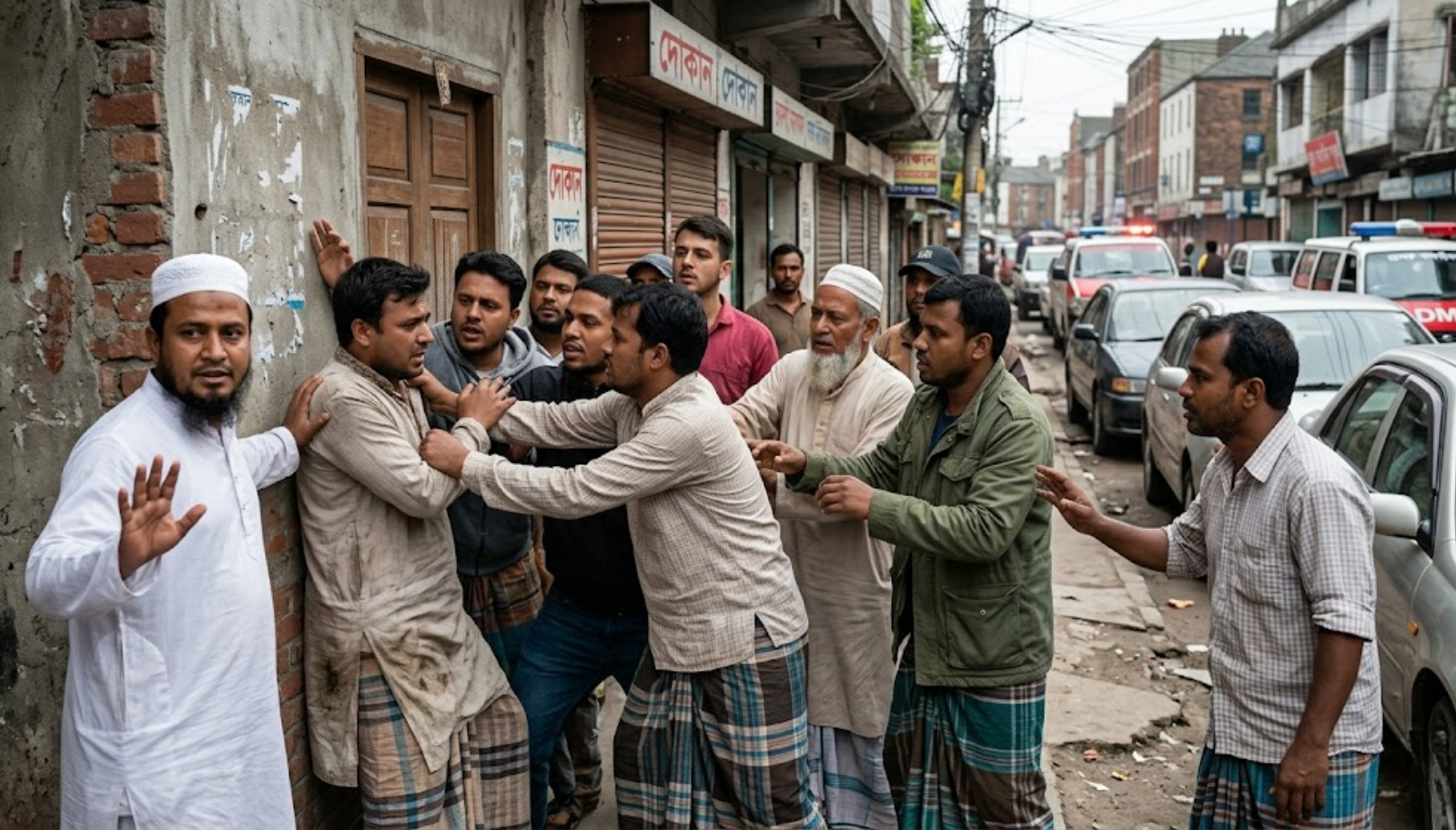
Between August 2024 and September 2025, a period of just thirteen months, at least 220 people were killed by mob violence across Bangladesh. That figure translates to approximately seventeen deaths every month at the hands of vigilante crowds. These are not statistics abstracted from human experience. They represent men beaten to death on university campuses, families slaughtered in their homes because of rumour, persons with mental illness lynched because a crowd mistook confusion for criminality, and minors who never stood before a judge or heard an accusation they could answer.
Mob violence in the title of justice has become one of the most urgent threats to Bangladesh’s social fabric, its legal order, and its international human rights commitments.
The Social Destruction of Mob Violence
The social consequences of mob justice extend far beyond the immediate victims. Each incident tears at the shared trust that holds communities together. When crowds appoint themselves as prosecutors, judges, and executioners, they signal to every resident that the formal institutions of the state, the police, the courts, and the rule of law, are not worth respecting or waiting for. This normalisation of extrajudicial violence produces a community culture saturated with fear. Neighbours become informants. Suspicion becomes a death sentence. The weakest and most marginalised members of society, the poor, religious minorities, migrant workers, people with mental illness, and children, become the most frequent targets because they are the least able to defend themselves or demand accountability.
The psychological trauma radiating outward from each incident is also deep. The families of the victims continue to live without justice, answers, and often without acknowledgement from the state. Witnesses, particularly children, often experience long-lasting psychological effects as a result of what they have witnessed. Communities that have experienced mob violence often face long-term consequences, including collective guilt, social fragmentation, and the normalization of aggression. These issues become deeply entrenched in the local culture, affecting the community’s cohesion and well-being. This cycle undermines the social cohesion that is essential for Bangladesh’s development, prosperity, and stability.
A Catalogue of Human Rights Violations
Mob justice is not merely a law-and-order problem. It is a systematic violation of fundamental human rights guaranteed under both Bangladeshi constitutional law and international legal instruments that Bangladesh has freely ratified. Article 32 of Bangladesh’s constitution declares that no person shall be deprived of life or personal liberty except in accordance with law. Article 31 guarantees the protection of the law. Article 27 promises equality before the law. Article 35 prohibits torture and cruel, inhuman, or degrading treatment. Every act of mob lynching violates all these provisions simultaneously.
Bangladesh’s obligations under the International Covenant on Civil and Political Rights and the Universal Declaration of Human Rights are equally clear. Article 10 of the UDHR ensures that every individual has the right to a fair and public hearing before an independent and impartial tribunal. When an individual is killed by a mob for alleged theft or sorcery, that right is permanently and irreversibly revoked.
The state’s failure to prosecute these perpetrators effectively transforms these violations from isolated incidents into a systemic state complicity. A comprehensive analysis of 46 documented lynching incidents revealed that charges were filed in only 36 cases. Of the more than 9,000 accused individuals, just 114 were arrested, resulting in an arrest rate of barely 1.27 percent. Impunity at this scale is not merely a failure of capacity; it is a failure of political will.
The SDG Imperative
Bangladesh’s commitments under the United Nations Sustainable Development Goals make addressing mob justice a matter of binding development policy, not optional reform. SDG 16 calls for peaceful and inclusive societies, access to justice for all, and effective, accountable institutions at all levels. A country where mobs routinely execute citizens and perpetrators to walk free cannot claim meaningful progress toward this goal.
SDG 10, which targets reduced inequalities, is equally relevant: the disproportionate targeting of vulnerable populations, minorities, the poor, and the disabled, reveals that mob violence is not random but structurally concentrated against those who already face the deepest disadvantages. SDG 3, which promotes good health and well-being, must also be invoked, as the mental health consequences of widespread vigilante violence on communities, survivors, and witnesses represent a serious and largely unaddressed public health burden.
What the Home Ministry Must Do
The Ministry of Home Affairs carries the primary responsibility for restoring the rule of law and ending the culture of impunity that sustains mob justice. Its actions must be both immediate and structural.
A zero-tolerance policy must be enforced with genuine consequences. In the event of mob violence, an impartial criminal investigation must be initiated automatically, irrespective of external pressures from the media or political entities. The current pattern of swift arrests only when cases attract public outrage, while lesser-known incidents receive no response, is itself a form of selective justice that deepens community distrust. The Home Ministry is tasked with establishing rapid response units that are trained specifically in crowd control and de-escalation. These units will be deployed to high-risk areas during periods of social tension.
Law enforcement personnel are obligated to receive mandatory human rights training. Police officers who fail to intervene during mob attacks, arrive after the victims have perished, or neglect to file charges against known perpetrators must face disciplinary consequences. Community policing models that cultivate authentic relationships between law enforcement officials and residents, particularly in rural and semi-urban regions where mob violence is most prevalent, must be expanded and adequately resourced.
The implementation of expedited trials for mob violence cases is imperative to ensure the timely completion of prosecutions within a defined timeframe. This will serve to demonstrate to communities that the formal justice system is both functional and equitable.
What the Ministry of Social Welfare Must Do
It is incumbent upon the Ministry of Social Welfare to address the underlying social conditions that facilitate the proliferation of mob violence. The phenomenon of mob violence often emerges in communities where institutional trust has eroded, where legitimate avenues for expressing grievances are absent, and where vulnerable populations face a lack of protection. The ministry is tasked with leading on three critical fronts.
Firstly, a nationwide community awareness programme must be developed and delivered through schools, mosques, community centres, and local government offices. This programme must teach citizens not only that mob justice is illegal but why the presumption of innocence, due process, and the right to a fair trial are the foundations of a dignified society. Civic education that connects these principles to Islamic values of justice and equity can be particularly effective in Bangladeshi communities.
Secondly, the ministry should be tasked with the establishment of dedicated psychosocial support services for communities affected by mob violence. Survivors, witnesses, and the families of victims must have access to comprehensive mental health counseling and legal aid. The absence of such services can perpetuate the cycle of trauma, leading to the escalation of grievances and violence.
Thirdly, the ministry must develop targeted social protection programmes for the groups most frequently victimised: religious minorities, persons with psychosocial disabilities, the homeless, and migrant workers. These groups are vulnerable partly because they are socially isolated and economically marginalised. Investments in their inclusion, recognition, and protection are investments in preventing the conditions under which mob justice flourishes.
A Nation That Must Choose
Bangladesh finds itself at a critical juncture in its history. The nation has achieved significant progress in terms of poverty reduction, women’s empowerment, and economic growth. However, the notion that development can be sustained when it is built upon a foundation of mob rule and systematic impunity is demonstrably fallacious. It is incumbent upon the government to demonstrate, through a series of concrete actions rather than mere declarations, that every individual in Bangladesh is protected equally by the law.
This commitment is not merely a constitutional obligation and an international human rights commitment; it is the essential precondition for attaining the just, peaceful, and inclusive society that the Sustainable Development Goals envision and that the people of Bangladesh deserve.