
Desk Report
Oniket Research Group
Bangladesh is changing in ways that are both measurable and deeply uncomfortable for a society rooted in conservative family values. Rising female literacy, expanding economic participation, and a generation of women who carry both confidence and legal awareness into their marriages have altered the terms on which intimate partnerships are negotiated and dissolved. Divorce rates, once vanishingly low by cultural design, have climbed steadily.
Understanding why requires looking honestly at the relationship between progress and rupture, and critically, at the maternal health consequences that follow when bonds break.
Social Transformation and Its Maternal Health Cost
The single most significant driver of rising divorce rates is the transformation in women’s social and economic standing. The garment industry alone employs millions of women, giving them independent incomes and personal agency that was inaccessible to previous generations. Many divorces filed today represent escapes from domestic violence, enforced financial dependency, and coerced marriages. For these women, divorce is a recovery of self. Yet the maternal health fallout is severe and largely invisible. Pregnant women and new mothers undergoing marital separation face heightened risks of antenatal depression, postpartum depression, and anxiety disorders.
Studies globally confirm that psychosocial stress during pregnancy directly increases the likelihood of preterm birth, low birth weight, and obstetric complications. In Bangladesh, where haemorrhage and eclampsia already account for over half of all maternal deaths, the unmonitored stress burden on divorced or divorcing mothers adds a lethal dimension that the healthcare system does not currently track or treat.
Urban and Rural Realities
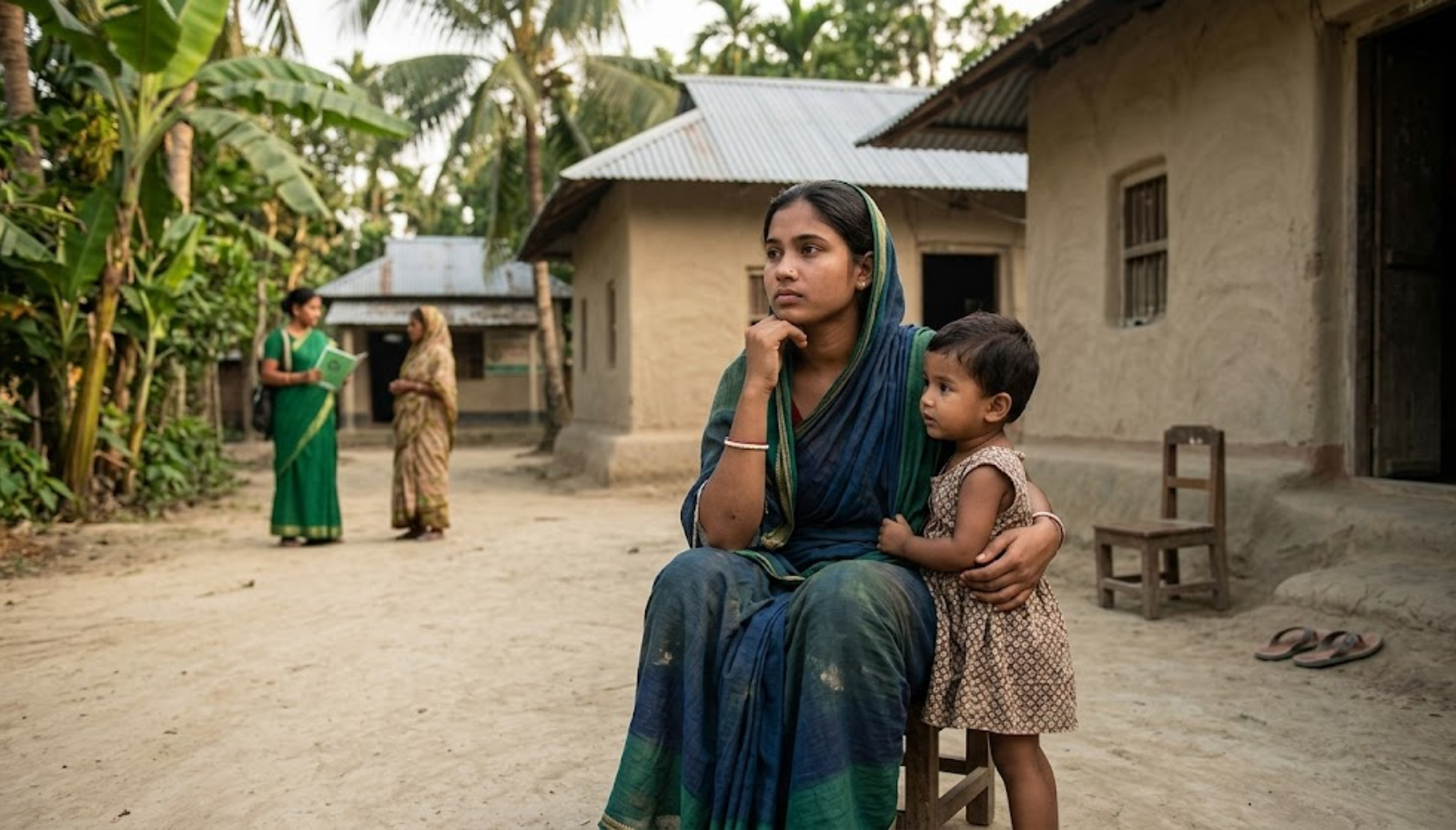
In urban centres such as Dhaka and Chattogram, divorce has become noticeably less stigmatised. Urban women are better connected to legal aid and social networks that absorb the consequences of separation. In rural Bangladesh, the picture is more troubling. Many rural divorces are still effected through informal talaq pronouncements that leave women without adequate financial settlements.
A divorced rural woman who is pregnant or caring for a newborn typically loses access to her husband’s income and health insurance precisely when she most needs antenatal care, facility delivery, and postnatal support. With only 7% of women in the lowest wealth quintile receiving quality antenatal care, divorce pushes mothers further into the category where maternal mortality is highest. Rural women who approach union parishad offices and NGO legal aid desks to initiate proceedings do so without any integration of health screening or referral, meaning the system that liberates them from a marriage simultaneously abandons them in their most medically vulnerable window.
Reforms That Protect Mothers
The goal of reform must be to make marriage stronger and to ensure that when divorce is unavoidable, maternal health is not a casualty. First, mandatory premarital counselling through community clinics and local government bodies should include reproductive health planning, ensuring that couples entering marriage understand maternal healthcare rights and available services.
Second, a mandatory mediation period of thirty to sixty days should be inserted into the divorce process before any filing is formalised, except in cases involving documented domestic violence, where immediate exit pathways must remain unobstructed. During this mediation window, pregnant women and new mothers must receive mandatory health checkups and referral to antenatal or postnatal care.
Third, the mehr in Muslim marriages should be set at realistic and enforceable levels through regulatory guidance, ensuring that women have genuine financial security to access facility delivery and emergency obstetric care if marriage dissolves. Fourth, legal aid services for women in rural areas must be expanded and integrated with maternal health outreach, so that no woman navigating divorce does so without healthcare coverage during pregnancy and the postpartum period.
Fifth, the Maternal and Perinatal Death Surveillance and Response system must record marital status and recent divorce as risk factors, enabling the health system to identify and intervene with mothers in transition.
Bangladesh does not face a crisis of too much divorce. It faces the challenge of ensuring that when marriages end, mothers do not pay with their lives.