
Naima Onamika
Commissioning Editor, The Oniket Bulletin
The recycling of used lead-acid batteries has emerged as a major public health and environmental crisis in Bangladesh. Rapid industrialisation, urbanisation, and the widespread adoption of electric three-wheelers have driven a sharp increase in the number of discarded batteries each year.
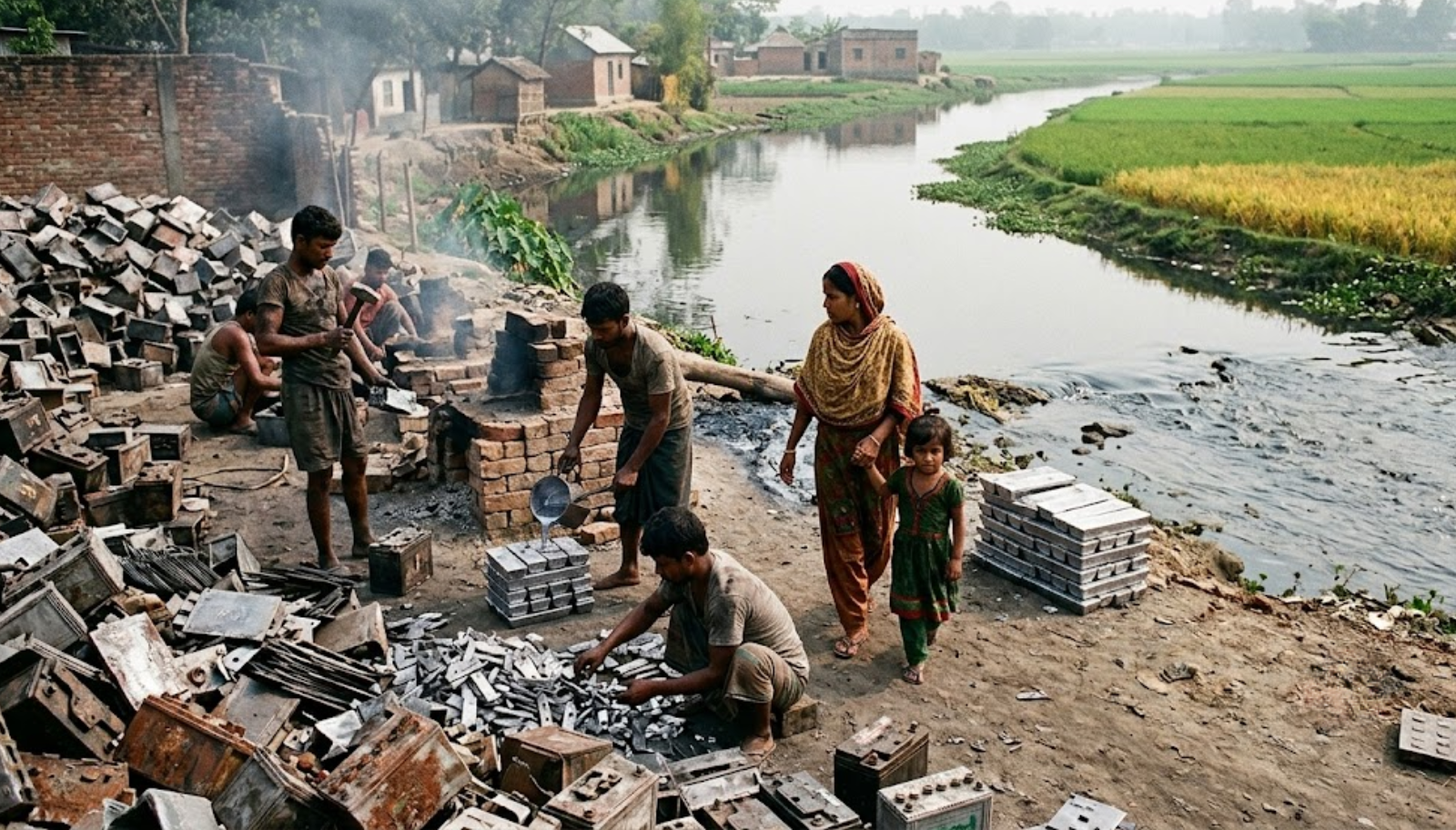
Unfortunately, a large proportion of these batteries are not recycled through safe and environmentally responsible facilities. Instead, they are processed in unregulated and illegal recycling plants, making lead contamination one of Bangladesh’s most serious, though often overlooked, environmental and public health threats.
The Current State of the Crisis
Bangladesh generates approximately 200,000 tonnes of lead waste each year, with nearly 80 percent processed through informal and illegal recycling facilities. Because these operations rely on outdated and unsafe technologies, an estimated 10 to 20 percent of the lead is released directly into the environment, contaminating the air, soil, and water.
Bangladesh currently ranks as the third most affected country in the world by lead pollution. Approximately 38 percent of children under the age of five have blood lead levels above internationally accepted safety thresholds. Studies estimate that lead-related health impacts and productivity losses cost Bangladesh nearly US$29 billion annually, equivalent to around 8 percent of the country’s Gross Domestic Product (GDP).
Why Informal Recycling Continues to Dominate
This crisis is not simply the result of weak law enforcement. It also represents a classic example of market failure. Informal recyclers reduce their operating costs by avoiding taxes, environmental regulations, and workplace safety standards. As a result, they gain a significant competitive advantage over licensed and environmentally compliant recycling companies.
The sector also reflects the well-known “Lemons Problem” in economics. Consumers often struggle to distinguish between durable, high-quality batteries and inferior alternatives. This information gap discourages manufacturers from investing in higher-quality products and encourages the continued production and purchase of cheaper, shorter-lasting batteries.
More than 1,100 informal recycling facilities operate across Bangladesh, many of them located within residential neighbourhoods. In these facilities, lead is frequently melted in open-air furnaces, releasing toxic fumes, acid, and lead-contaminated waste into surrounding communities. The consequences extend far beyond factory workers. Their families and nearby residents face prolonged exposure to hazardous pollutants. Of particular concern is the involvement of children in some recycling activities, while many others living near these facilities are exposed daily to dangerous levels of lead contamination.
The Public Health Consequences
Lead is one of the most toxic heavy metals affecting human health. Children are particularly vulnerable because lead exposure can cause permanent damage to brain development. It is associated with reduced cognitive ability, learning difficulties, behavioural disorders, neurological impairment, and delayed physical development.
Among adults, prolonged exposure to lead increases the risk of hypertension, kidney disease, cardiovascular illness, and reproductive health complications. Consequently, lead pollution should be viewed not only as an environmental issue but also as a long-term human capital and national development challenge.
Policy Reforms Required for Lasting Solutions
Addressing this crisis requires far more than isolated interventions. A coordinated and comprehensive policy framework is essential. First, Bangladesh should introduce Extended Producer Responsibility (EPR) legislation requiring battery manufacturers to collect and safely recycle used batteries. Such a policy would make producers accountable for the entire lifecycle of their products. Second, the government could impose a smelting fee on the sale of new batteries. Revenue generated through this mechanism could be used to subsidise licensed recycling companies that invest in environmentally sound technologies, helping to reduce the unfair cost advantage currently enjoyed by informal operators.
Third, tariff policies should be restructured to reduce dependence on lead-based technologies while encouraging the adoption of safer alternatives such as lithium-ion batteries. At the same time, the import and sale of low-quality or second-hand lithium batteries should be subject to strict regulatory oversight. Fourth, Bangladesh should introduce a QR code-based traceability system to monitor every battery throughout its lifecycle, from production to final recycling. Such a system would significantly improve transparency and accountability across the recycling chain.
Finally, a nationwide blood lead surveillance programme should become an integral part of the country’s public health system. Regular testing at the district level would help identify high-risk areas, monitor population exposure, and evaluate the effectiveness of government policies over time.
Conclusion
Bangladesh’s lead-acid battery recycling system is currently trapped in a fragile and ineffective cycle. Policymakers are not lacking ideas or international examples of successful reform. The principal challenge lies in implementing coordinated and sustained action. The long-term consequences of lead pollution, particularly its impact on children’s cognitive development and the enormous economic losses borne by the nation, should be regarded as matters of urgent national concern.
Protecting public health, preserving the environment, and ensuring sustainable economic growth demand immediate action through stronger legislation, rigorous regulatory oversight, and comprehensive policy reform. Without decisive intervention, this silent toxic threat will continue to undermine Bangladesh’s human capital, economic productivity, and development prospects for generations to come.