
Sayem Chowdhury
Dhaka University
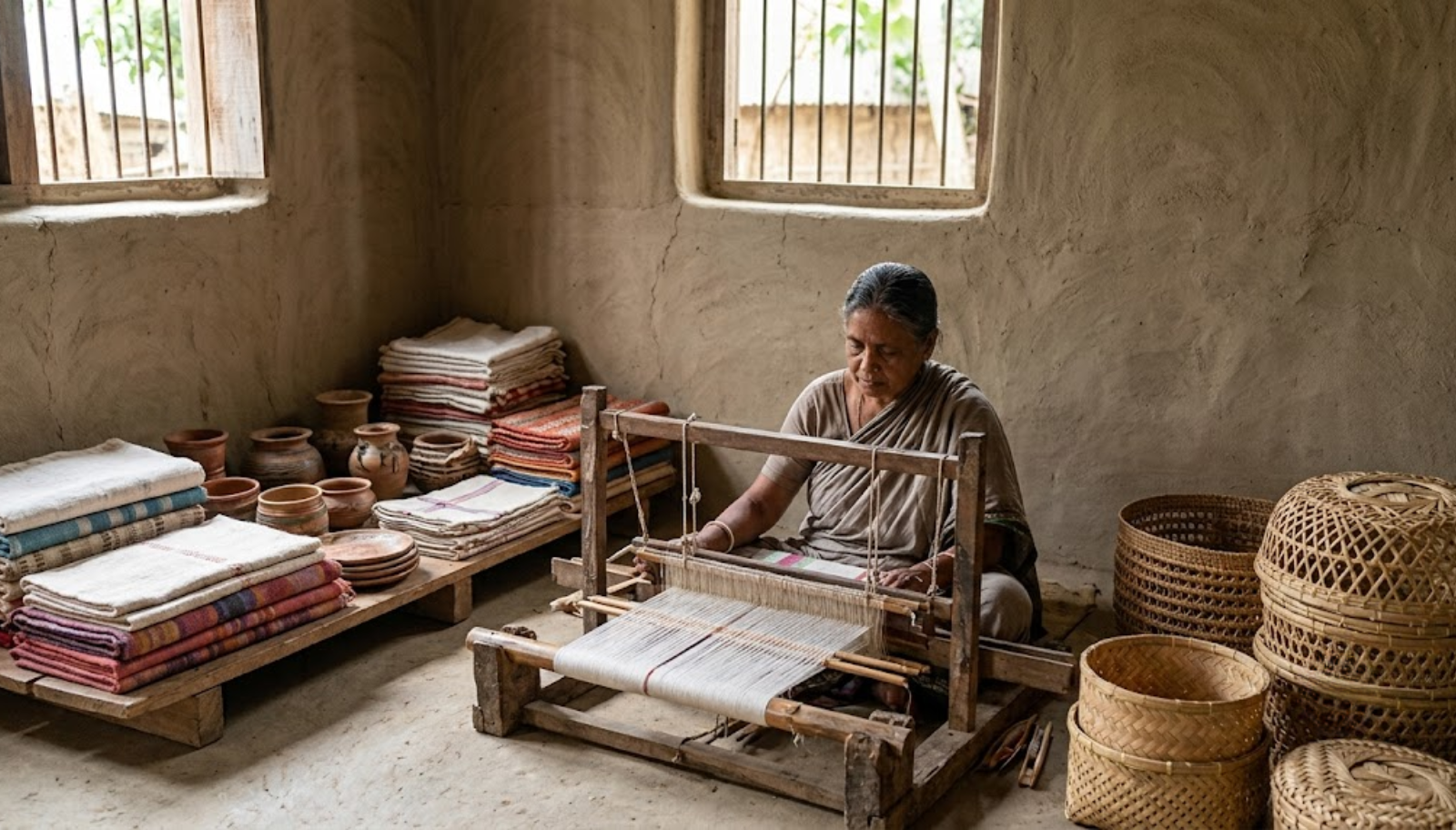
Following on from “Comilla’s Handicrafts: Weaving Modernity into a Canvas of Tradition”, an article published in the Oniket Bulletin, this article examines why Comilla’s centuries old handicraft traditions, terracotta and pottery from Mainamati and Bijoypur, and khadi weaving from Chandina, have not achieved the international brand recognition that comparable craft traditions enjoy elsewhere in the world. The purpose is to identify the gap between the genuine cultural and historical value of these crafts and the policy support currently available to project that value onto a global stage, and to consider what Bangladesh might learn from European and Indian approaches to heritage branding.
The key finding is simple. Comilla’s crafts carry a depth of documented history that rivals many internationally celebrated craft regions: Buddhist monastic art dating to the seventh through twelfth centuries, a cooperative pottery tradition formally established in 1961, and a khadi weaving culture tied to Mahatma Gandhi’s visit in 1921. Despite this rich history, these crafts remain largely absent from global cultural branding frameworks. Bangladeshi government policy has concentrated on export volume and the survival of cooperatives, rather than on building the heritage narrative, certification systems, and marketing infrastructure needed to turn a regional craft into an internationally recognized symbol of the nation.
A Heritage Rich Enough to Compete Globally
The craft itself is not the problem. Archaeological finds at Mainamati, terracotta plaques and sculptures documenting centuries of artistic sophistication, already testify to that depth, and the Bijoypur pottery tradition, kept alive by the Pal community, has proven its global appeal by reaching markets in Europe and Japan.
Comilla’s khadi tells a similar story: once a symbol of self-reliance during the anti-colonial movement, it has since been reimagined by designers such as Bibi Russell into a fabric with genuine claim to a distinctive national identity. What is missing, then, is not the craft but the architecture around it: geographical indication status, coordinated international marketing, museum partnerships, and the storytelling that links an object to its place of origin in the minds of global consumers.
The European Model of Craft Branding
European countries have long treated handicraft heritage as a matter of state policy rather than a private commercial concern. Countries such as Italy and France protect regional crafts, from Murano glass to Limoges porcelain, through legally recognized designations of origin, museum led promotion, and tourism integration that ties the craft to the region’s broader cultural identity.
These designations function similarly to protections for wine and cheese: the origin itself becomes part of the product’s value. Governments actively fund international exhibitions and trade fairs that keep these crafts visible to global buyers, treating heritage promotion as an ongoing national responsibility rather than a one-time cultural project.
India’s Geographical Indication Success
India offers a closer regional comparison. Crafts such as Banarasi silk, Kashmiri pashmina, and Madhubani painting have been registered under India’s Geographical Indication system, giving them legal protection and a recognizable global identity tied to specific regions. Indian state and national governments actively support craft clusters through export promotion councils, dedicated craft museums, and international cultural diplomacy, including highlighting these traditions at global fairs and through cultural missions abroad.
The result is that consumers in Europe or North America can often identify these crafts by name and region, an outcome that reflects deliberate, sustained policy investment rather than organic market growth alone.
Where Bangladesh Falls Behind
Bangladesh has yet to build an equivalent framework for Comilla’s crafts. No widely recognized geographical indication brands Bijoypur pottery or Chandina khadi the way Indian or European crafts are branded. Export activity does exist, but it moves largely through informal or cooperative channels rather than a coordinated national strategy that positions these crafts within global cultural tourism, design collaborations, or heritage diplomacy. Policy attention continues to treat these traditions primarily as local livelihood concerns, rather than as national assets with genuine international branding potential.
The Gap Against UNESCO Principles
UNESCO’s approach to intangible cultural heritage emphasizes safeguarding traditions through community involvement, documentation, transmission to younger generations, and international visibility as complementary goals rather than separate tracks. Judged against this standard, Comilla’s crafts meet the safeguarding and community criteria reasonably well, given ongoing transmission within families such as the Pal community. What is underdeveloped is the visibility dimension: nomination processes, international registers, and the accompanying branding effort that UNESCO recognition typically catalyzes.
Conclusion
Comilla’s handicrafts suffer from no shortage of authenticity or history; what they lack is the policy scaffolding that turns heritage into global brand recognition. The European and Indian examples make clear what closes that gap: legal protection, sustained government promotion, and alignment with international heritage frameworks are what convert a regional craft into an internationally known identity. For Bangladesh, closing it would mean treating Comilla’s terracotta and khadi not merely as export goods, but as cultural assets deserving the same institutional attention they receive elsewhere.
Reference:
The Oniket Bulletin, “Comilla’s Handicrafts: Weaving Modernity into a Canvas of Tradition”, https://bulletin.oniket.org/art-literature-history-national-heritage/comillas-handicrafts-weaving-modernity-into-a-canvas-of-tradition/editor/